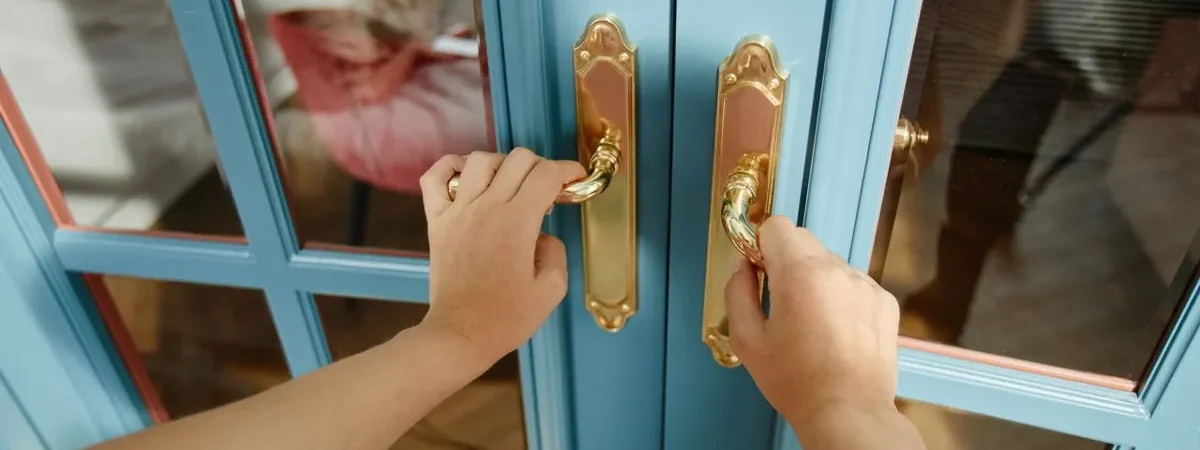
Door hardware is priced per opening, and commercial buildings have a lot of openings — a 200-room hotel easily carries a thousand door leaves once corridors, stairs, back-of-house and bathrooms are counted, each needing hinges, a closer, a lever or pull, and a lock body. At that multiplication, the difference between distributor pricing and factory pricing on ironmongery is a genuine line item. Door hardware sourcing from China gives hotel and apartment projects factory-direct access to the full ironmongery schedule — hinges, closers, handles, mortise locks and floor springs in matched finishes — and FBM Sourcing manages the category as a building material sourcing agent, from the door schedule through samples, production, inspection and consolidation. Where our door frames and hardware page covers buying complete fire-rated door sets with frames, this page covers the hardware scope itself — bought in project bulk, whether or not the doors travel with it.
Types of Door Hardware and Specifications for Commercial Projects
A commercial ironmongery package is built from a small number of repeating families, specified once per door type and multiplied across the schedule:
- Hinges — ball-bearing butt hinges in stainless steel, typically 4 inch and 4.5 inch, three per leaf on heavy commercial doors
- Door closers — surface-mounted and concealed overhead closers with adjustable closing and latching speeds
- Levers and pull handles — tube levers on roses for guest rooms and offices, back-to-back pulls for entrances
- Mortise lock bodies and cylinders — sashlocks, deadlocks and bathroom locks on euro or oval cylinder platforms, keyed-alike and master-keyed suites
- Floor springs and pivots — for heavy glass and timber entrance doors
- Accessories — door stops, kick plates, flush bolts, drop seals and signage
Specification is done in grades and cycle counts, not adjectives. Hinges for corridor and entrance doors should be specified to EN 1935 Grade 13 — tested to 200,000 cycles on a 120 kg door — or ANSI/BHMA A156.1 for US-referenced projects. Closers run to EN 1154 with an adjustable size range of EN 2–6 for variable door widths, while BHMA A156.4 Grade 1 closers are tested to 1,500,000 cycles. Mortise locks follow EN 12209 or BHMA A156.13. Material matters as much as grade: stainless 304 is the commercial default, moving to 316 for coastal and pool-adjacent buildings. And on every fire door, the hinges, closer and lock must carry fire ratings that match the leaf — a certified door with uncertified ironmongery fails as a set, a trap explained in our fire-rated door hardware certification guide.
How Does Door Hardware Sourcing from China Work?
The process runs off the door schedule. Each door type on the schedule is translated into a numbered hardware set — hinges, closer, lock, lever, stop, seals — and quantities roll up automatically from the door count. FBM prices the sets factory-direct, then produces one complete physical sample set per door type for approval: finish, lever feel and closer action are things a project team should handle before a thousand of them ship. Keying schedules — which doors are keyed alike, which sit under which master — are locked at this stage too, because they are wired into lock production.
Production for a full project ironmongery package typically runs 20–35 days after sample approval. Hardware almost never fills a container on its own; it is packed per door type, labelled to the schedule, and consolidated into the containers carrying the project’s doors or other building materials — the standard logic covered in our FCL vs LCL consolidation guide. Where doors and hardware are bought together, we align the two factories’ prep work — hinge recesses, lock mortises, closer fixing points — so the hardware drops into machined doors on site instead of being fitted by hand.
Quality Standards and Inspection
Ironmongery fails in small ways that multiply — a rough closer, a lever with play, a mismatched finish batch. FBM’s own inspection team checks the order in the factory before it ships: samples from each production batch are checked against the approved set for finish and markings, locks and cylinders are function-tested against the keying schedule, closers are cycle-checked for smooth action, and packing is verified against the door-type labelling so site distribution is sort-free. Every inspection stage is documented in photos and video and delivered to the client’s project team, with certification documents for fire-rated items included in the shipping file.
Why Source Door Hardware Through FBM Sourcing
Hardware is the scope that touches every door package on the project, so it pays to buy it inside the same pipeline. Through FBM the ironmongery schedule travels alongside the hotel room doors, the wooden door package and the rest of the building material order — one finish standard, one inspection regime, one container plan — on a transparent 5–8% service fee. One agent carrying doors, frames and hardware together also means one party is answerable when a lock case and a mortise don’t agree, instead of three factories pointing at each other.
Sourcing this for a commercial project?
FBM Sourcing works with project owners, developers, main contractors and FF&E contractors on hotel, apartment, school, office and other commercial building projects. Send us your BOQ, drawings or product list — our team will review it and get back to you.
Get a Quote for Your Project
Send us your door schedule, finish intent, keying requirements, destination port and programme dates. FBM Sourcing will return per-set pricing by door type, a sample plan, fire-certification confirmation for rated openings and a consolidation plan with the wider order — start on our project inquiry page.
Written by Spring Dan · Founder, FBM Sourcing
Sourcing building materials and FF&E in China for commercial construction projects since 2008. About Spring · LinkedIn