Glass partitions are the defining element of the contemporary office interior — and one of the most technically demanding packages to buy well. A single 2,000-square-metre office floor can carry 300–500 linear metres of glazed fronts, meeting-room enclosures and glass doors, every metre of which must arrive tempered, correctly sized and matched to its framing. Unlike commodity materials, a glazed partition is a system: processed safety glass, precision aluminum extrusions, gaskets, patch fittings and door hardware that only work when engineered together. Glass partitions sourcing from China puts the world’s largest glass-processing and aluminum-extrusion base behind a commercial project, and FBM Sourcing runs the category as a building material sourcing agent and sourcing partner — taking elevations and a panel schedule and returning one verified, crated, container-planned system rather than loose glass and loose profiles that meet for the first time on site.
Glass Partition Systems and Specifications for Commercial Projects
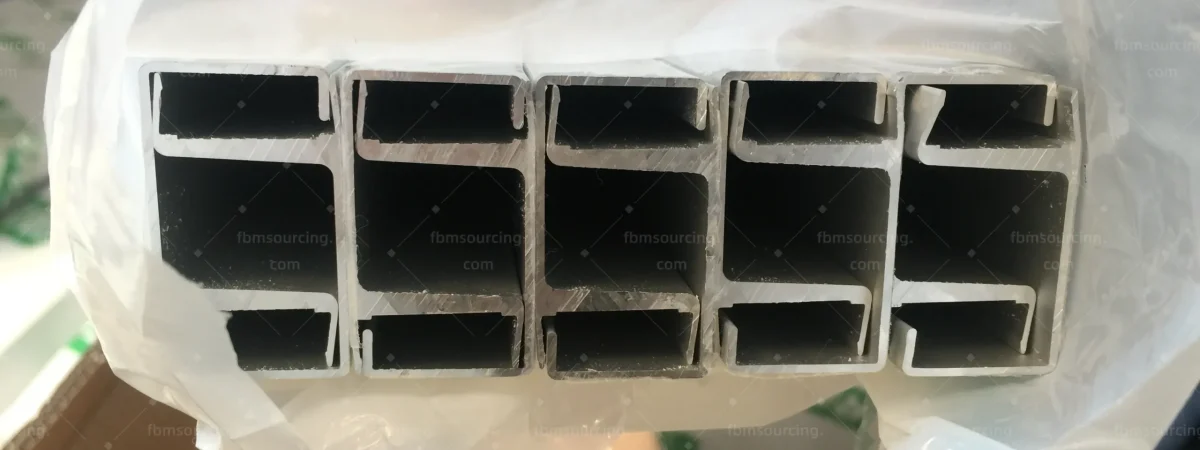
Commercial glazed partitions fall into a few clear families. Single-glazed framed systems — 10 or 12 mm tempered glass in slim aluminum perimeter frames — are the workhorse for office fronts and meeting rooms. Double-glazed acoustic systems put two panes, typically 5–6 mm each, into a 85–100 mm frame with an air cavity, lifting acoustic performance from roughly Rw 33–36 for single glazing to Rw 40–48 — the difference between a visible meeting room and a confidential one. Frameless systems run 10–12 mm toughened panes in discreet floor and head channels with polished joints for the most open look, and integrated blinds, applied manifestation film and back-painted glass cover the detail conditions. Doors come framed or as 10–12 mm frameless leaves on patch fittings, hinges or sliding tracks. Safety glazing is non-negotiable at commercial scale: panes are tempered to EN 12150 or ASTM C1048, impact performance is classified under EN 12600, and Australian-bound orders carry AS/NZS 2208 safety glazing marks, with laminated build-ups specified where overhead or barrier conditions demand them. The framing side is an aluminum extrusion package in its own right — anodized or powder-coated profiles with 1.2–2.0 mm wall thickness — which is why glass partitions are normally procured inside the wider ceiling and partition sourcing scope, alongside drywall partitions for the solid walls of the same fit-out.
Sourcing Process for Glass Partitions from China
Glass is unforgiving of guesswork, so the process starts with drawings. From your elevations and floor plans, FBM Sourcing’s team builds a panel schedule — every pane by width, height, thickness and edge condition, every door by handing and hardware set, every profile by cut length or stock length — and confirms it against site-critical dimensions before anything is processed, because a tempered pane cannot be recut: once toughened, a wrong size is scrap. The specification is then matched to glass processors and extrusion factories, and a corner sample — a section of frame with glass, gasket and finish exactly as ordered — plus powder-coat colour plates are approved before production. Manufacturing lead time for a standard commercial order runs 20–30 days, covering extrusion, surface finishing, glass cutting, tempering and edgework. Freight planning respects the physics of the product: 12 mm tempered glass weighs about 30 kg per square metre, so a 20-foot container weighs out at roughly 900 square metres of glass, packed vertically in plywood crates on A-frames, while aluminum profiles ship in protected bundles at stock lengths of up to 5.8–6 metres — the practical maximum that loads cleanly into a standard container. Where a project’s scope spans several systems, our office partitions page covers how glazed fronts, solid walls and demountable systems are planned as one shipment.
Quality Standards and Inspection for Glass Partition Orders
Inspection for glazed partitions splits into glass, frame and hardware. On the glass, every tempered pane is checked for its permanent safety stamp, and toughening certificates to EN 12150, ASTM C1048 or AS/NZS 2208 are verified against the production batch; dimensions and squareness are gauged against the panel schedule with tolerances in the ±1.5 mm range, and edges are examined for polish quality, chips and shells, because edge damage is where tempered glass fails. On the framing, powder-coat film thickness is measured — commercial specifications typically call for 60–80 microns — profile wall thickness is checked against the extrusion drawings, and gaskets and seals are counted against the system bill so the crates arrive complete. Door hardware is cycle-tested at the factory: hinges, patch fittings, locks and sliding gear operated and checked for smooth action before packing. All inspections are performed by FBM Sourcing’s own QC team at the factory, documented in photos and video, and delivered as part of the project record. Crating is inspected as its own line item — vertical packing, cork or foam separators between panes, and case marking by room or elevation so site distribution follows the drawings instead of a guessing game at the loading dock.
Why Source Glass Partitions Through FBM Sourcing
The risk in a glazed partition package is mismatch: glass cut to sizes the profiles were not machined for, a finish that varies between extrusion batches, hardware that does not suit the door thickness, certificates that belong to a different pane build-up. Buying glass, framing and hardware as separate line items multiplies those interfaces; buying the system through one accountable agent collapses them. FBM Sourcing works as a china sourcing agent across the full fit-out scope — glazed and solid partitions, ceilings, doors, flooring and FF&E — engineering the package once against the drawings and shipping it on the same consolidated container program as the rest of the project, the way our office building fit-out procurement programs run. For suppliers you nominate, we charge a 5% commission; for products we source for you, we quote a direct price. The service is built for hotels, apartment buildings, schools, offices and healthcare projects.
Sourcing this for a commercial project?
FBM Sourcing works with project owners, developers, main contractors and FF&E contractors on hotel, apartment, school, office and other commercial building projects. Send us your BOQ, drawings or product list — our team will review it and get back to you.
Get a Quote for Your Project
Send us your partition elevations or floor plans, the acoustic targets and glazing standards your market requires, destination port and program dates. FBM Sourcing will return one quotation covering glass build-ups, framing system, hardware, safety documentation, crating and container plan, and lead time. Start on our project inquiry page.