Aluminum ceilings are the workhorse of wet, humid and high-traffic commercial spaces — the ceiling that goes where mineral fiber and plasterboard cannot. Swimming pool halls, commercial kitchens, bathroom cores, airport-style corridors, canteens and exterior soffits all default to metal because it does not sag, rot or feed mould. China dominates global production of the category, with vertically integrated factories rolling coil, forming panels and powder-coating in one plant, which is why aluminum ceilings sourcing from China consistently lands strong value on commercial projects — provided panel system, carriers and trims are bought as one matched kit. FBM Sourcing manages the category as a building material sourcing agent for commercial construction projects, from specification matching through factory inspection to a consolidated container plan.
Aluminum Ceiling Types, Finishes and Specifications
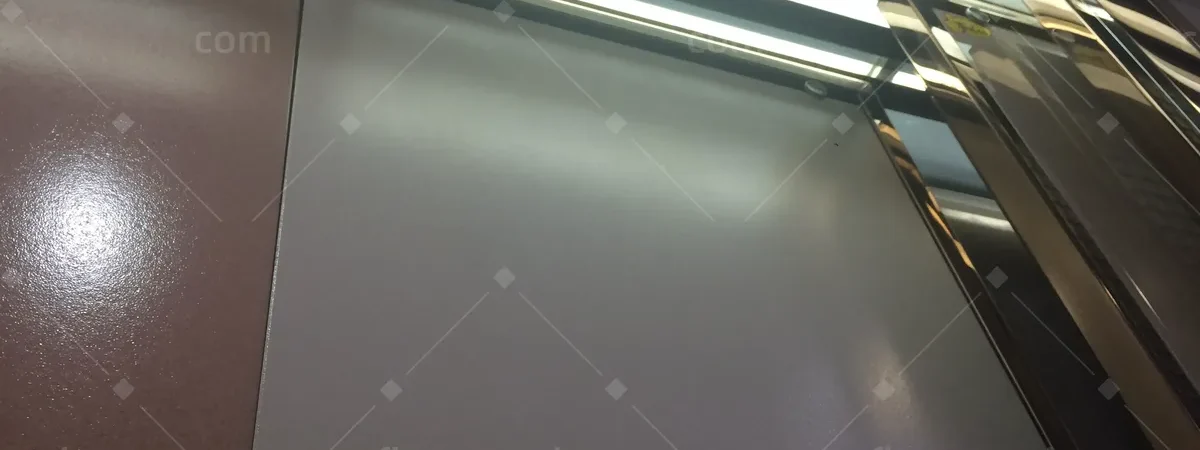
Commercial specifications draw from four main system families. Linear strip ceilings — C-shaped or G-shaped strips in 100–300 mm widths clipped onto carriers — suit corridors, canteens, pool halls and exterior canopies, and forgive irregular room shapes. Lay-in and clip-in square panels in 600 × 600 mm modules (595 or 603 mm actual for metric and imperial grids) are the standard for offices, kitchens and washrooms; clip-in gives a concealed-grid monolithic look, lay-in gives cheap ceiling access. Open-cell grille ceilings — aluminum egg-crate modules — ventilate freely and hide services in retail, transport and leisure buildings. Aluminum honeycomb panels, a coil skin bonded to a honeycomb core, deliver large flat modules up to 1200 × 2400 mm and beyond for lobbies and feature ceilings that must stay dead flat. Standard panel thicknesses run 0.5–1.2 mm depending on module size. Finishes are the specification’s second half: polyester or PVDF powder coating in any RAL colour for interior and exterior work, roller coating for high-volume standard colours, and film lamination for woodgrain and marble effects. Perforation with an acoustic fleece turns any of these panels into an absorber, which is how metal ceilings appear in acoustic specifications alongside the boards covered on our acoustic ceilings sourcing page. As bare metal, aluminum is non-combustible — A1 under EN 13501-1, Class A under ASTM E84 — and inherently moisture-proof, the property that wins it pool halls and kitchens. The category sits inside our wider ceiling and partition sourcing scope, and our comparison of mineral fiber vs gypsum vs metal ceilings shows where metal earns its premium by room type.
Sourcing Process for Aluminum Ceilings from China
The order starts from reflected ceiling plans or a BOQ. FBM’s team takes off areas by room and system, converts them into panel counts, carrier and suspension quantities and perimeter trims, and matches the specification — alloy and temper, panel thickness, coating system and colour, edge detail — to factories in the Guangdong metal ceiling cluster around our Foshan base. Sampling matters more in this category than most: physical panels are approved for colour against the RAL reference, coating gloss and film thickness, and a panel-on-carrier mockup confirms the clip engagement before production. Manufacturing lead time for a standard commercial order is 15–25 days, with custom colours at the longer end because coating lines batch by colour. Aluminum ceilings are light — a 0.6 mm 600 × 600 panel weighs around 1.6–2 kg — so containers cube out long before they weigh out. FBM plans mixed loads that fill a 40-foot high-cube’s practical 65–68 m³ with metal ceilings alongside heavy cargo such as gypsum ceilings or tile, balancing weight and volume across the same project shipment.
Quality Standards and Inspection for Aluminum Ceiling Orders
Metal ceilings fail on finish and fit, so the inspection concentrates there. Coating checks cover film thickness with a gauge against the specified microns, colour match against the approved sample under daylight, gloss consistency across the batch, and adhesion by cross-hatch test. Dimensional checks cover panel squareness and module size — a 600 mm clip-in panel more than a millimetre out of square telegraphs across a whole ceiling — plus flatness, burr-free edges and consistent perforation where specified. Material checks verify coil thickness against the order, and carrier and suspension components are inspected for section accuracy and clip spring force so panels seat and release correctly on site. All inspections are performed by FBM Sourcing’s own QC team at the factory, documented in photos and video, and delivered with the shipping documents. Packing is verified last: interleaving film on every finished face, foam corner protection and cartons palletised so panel edges carry no load in transit — because a dented aluminum panel, unlike a gypsum board, cannot be patched on site.
Why Source Aluminum Ceilings Through FBM Sourcing
The gap between a good and a bad metal ceiling order is invisible on a quote sheet: coil thickness a tenth of a millimetre under specification, a coating batch that drifts off the approved colour, clips that do not match the carrier. A sourcing agent exists to close that gap before the container ships. FBM works as a china sourcing agent across the full project scope — ceilings, partitions, flooring, doors, sanitary ware and FF&E — so the aluminum ceiling package is specified, inspected and shipped inside one consolidated program with the rest of the fit-out. The commercial model is a transparent 5–8% agency fee on verified factory pricing, and the service is built for project owners, developers, main contractors and FF&E contractors on hotel, apartment, school, office, healthcare and leisure projects.
Sourcing this for a commercial project?
FBM Sourcing works with project owners, developers, main contractors and FF&E contractors on hotel, apartment, school, office and other commercial building projects. Send us your BOQ, drawings or product list — our team will review it and get back to you.
Get a Quote for Your Project
Send us your ceiling drawings or BOQ with areas by system type, the coating specification and colours, destination port and program dates. FBM Sourcing will return a factory-direct comparison covering panel system, finish, carrier kit, container plan and lead time. Start on our project inquiry page.
Written by Spring Dan · Founder, FBM Sourcing
Sourcing building materials and FF&E in China for commercial construction projects since 2008. About Spring · LinkedIn