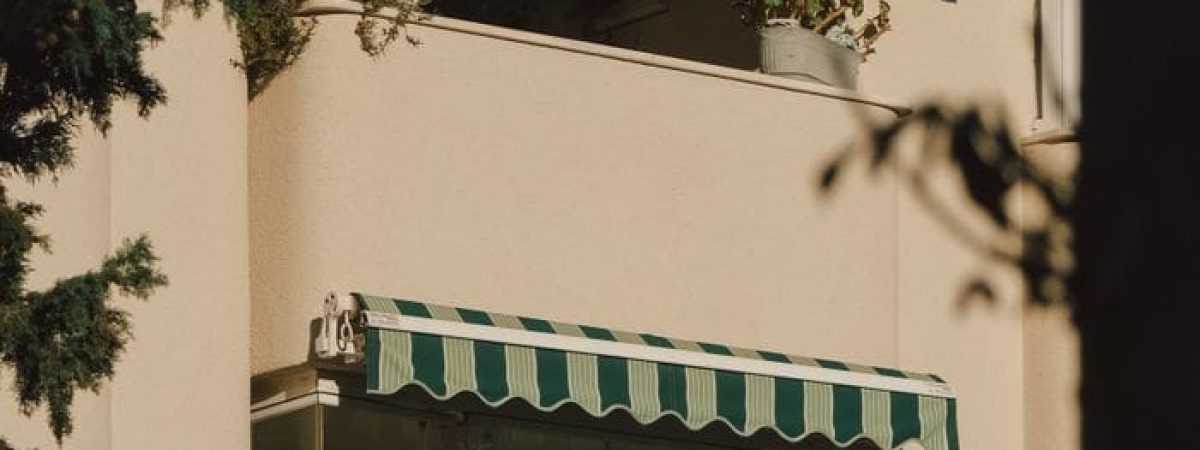
An apartment tower with 180 balconies needs 180 matching shade units — same fabric batch, same rail color, same fixing detail — and that repetition is exactly what makes balcony shades sourcing from China work. Zip-track roller screens, cable-guided drop shades and fixed perforated panels are all produced by Guangdong factories accustomed to project quantities, and a sourcing agent and sourcing partner turns that capacity into a delivered package: factory selection, engineering drawings, batch-consistent production, inspection and freight. FBM Sourcing manages the whole sequence for developers, contractors and FF&E contract firms building apartments, hotels and serviced residences.
Baseline figures for anyone drafting a balcony shade specification:
- Zip-track (side-retained) screens hold fabric stable in winds up to roughly 100–118 km/h when fully closed
- PVC-coated polyester mesh at 1–5% openness cuts solar heat gain by 80–95% while keeping the view out
- Guide rails and cassettes: 6063-T5 extruded aluminum, powder coated 60–80 μm
- Production: 25–35 days for a motorized multi-unit order after drawing approval
- Procurement cost through FBM Sourcing: one FBM Sourcing quotation covering the goods plus a 5% commission for suppliers you nominate (products we source for you are quoted at a direct price)
Balcony Shade Types and Specifications
Five system families cover almost every balcony condition on commercial residential and hospitality projects.
Zip-track roller screens
The default for new apartment and hotel balconies. The fabric edge carries a welded zip that runs captive inside the side rails, so the screen resists wind, seals against insects and never flaps. Standard widths reach 5–6 m per unit; drives are 230 V or 110 V tubular motors with optional group control, so a building manager can operate a whole elevation together. Cassette boxes of 95–150 mm suit drops from 2.5 m to 6 m.
Cable- and rod-guided drop shades
A lighter, lower-cost format where the fabric runs on stainless cables or slim rods instead of zip rails. Appropriate for sheltered balconies and budget-driven schemes; wind tolerance is a fraction of a zip system, and the specification should say so honestly.
Fixed perforated panels and sliding shutters
Where the architect wants a permanent facade element rather than an operable screen, factories fabricate perforated or expanded aluminum panels (1.5–3.0 mm sheet) and sliding shutter frames on top-hung tracks. These behave more like facade products — the engineering logic overlaps with aluminum sunshades, and the two are often packaged in one tender.
Drop-arm and vertical awnings
Pitched drop-arm units shade a balcony opening while preserving the outlook below the arm line; a compact alternative where a full retractable awning would oversail the balustrade.
Clear PVC café blinds
For hotel and restaurant balconies that trade in winter: 0.5–1.0 mm clear PVC panels with zip or strap closure, converting a balcony into usable covered area in cold months.
A quick orientation across the five families:
| System | Wind Behavior | Drive | Best Fit |
|---|---|---|---|
| Zip-track roller screen | Retained to ~100–118 km/h closed | Tubular motor, group control | New apartment towers, hotel balconies |
| Cable/rod-guided drop shade | Sheltered positions only | Motor or crank | Low-rise, budget-driven schemes |
| Fixed perforated panel / sliding shutter | Engineered as facade element | Manual slide or fixed | Architect-led facades, permanent screening |
| Drop-arm / vertical awning | Moderate; auto-retract advisable | Motor or crank | Balconies needing pitched shade with view |
| Clear PVC café blind | Strap/zip secured | Manual roll | Hospitality balconies traded year-round |
Fabric selection drives both performance and compliance. PVC-coated polyester mesh (340–420 g/m², the Ferrari Soltis class) is the workhorse; fiberglass-core mesh adds dimensional stability and better fire behavior for high-rise use; blockout PVC suits privacy screens between adjoining balconies. Openness factor is the number to argue about: 3% blocks more heat, 5% keeps more view, and the choice should be made from a physical sample held against the actual outlook, not from a catalogue.
One adjacent item worth bundling into the same order: balcony privacy dividers. Most towers need a fixed blockout or frosted panel between adjoining balconies, and the screen factories produce them from the same extrusion and fabric families — ordering dividers separately from a second source is how mismatched anodizing ends up photographed in the handover defect list.
Sourcing Process for Balcony Shades from China
Balcony screens are a repetition product, so the process front-loads effort into one perfect approved unit and then protects that standard across the batch.
Sourcing this for a commercial project?
FBM Sourcing works with project owners, developers, main contractors and FF&E contractors on hotel, apartment, school, office and other commercial building projects. Send us your BOQ, drawings or product list — our team will review it and get back to you.
Hotels run a slightly different calculus from apartment developers. A resort retrofitting shade onto guest-room balconies cares about operating noise, guest-proof controls and a fabric that reads consistently across the elevation in marketing photography; a serviced-apartment operator cares about parts commonality so one spare motor model services the whole building for a decade. Both concerns are specification lines, both are free to state at inquiry, and both are expensive to bolt on after the order is cut — which is why FBM Sourcing’s inquiry template asks for the operating context, not just the opening sizes.
Week 1 — inquiry and pricing. Useful inquiries include balcony elevation drawings or at minimum a schedule of opening sizes, the count of units per size, fabric direction, drive type and destination port. FBM Sourcing returns comparative factory pricing with the specification differences spelled out: motor brand, rail wall thickness, zip type, mesh brand.
Weeks 2–3 — sample and engineering. One complete unit is produced and either shipped to the buyer or inspected and filmed by FBM Sourcing in the factory. In parallel the factory issues fixing drawings — balustrade-mount, soffit-mount or face-fix — which the project engineer confirms against the structure. On high-rise work this step also covers wind-load calculations for the local code, since a screen rated for a courtyard is not automatically fit for level 30.
Weeks 4–8 — production. Motorized zip systems for a mid-size project (50–200 units) run 25–35 days. Fabric for the entire order is cut from consecutive rolls of one dye lot; on a 180-balcony facade, lot-to-lot color drift is visible from the street, so single-batch fabric is written into the purchase contract.
Measurement discipline deserves its own sentence. On new construction, balcony openings are ordered from structural drawings with a confirmed fixing detail, and the factory builds to nominal sizes with an agreed tolerance; where as-built variation is expected — precast balustrades, post-fixed glazing channels — the contract splits the order so a first shipment proves the sizing before the balance is cut. That one decision has saved more balcony projects than any inspection ever has.
Shipping. Screens pack efficiently — long cartons racked in one container tier — and typically share a container with other project freight such as carport shade structures or door packages. Allow 18–22 days on the water to the US West Coast, 28–35 to the East Coast, 12–18 to Australia, plus a week of inland clearance and haulage at each end.
Quality Standards and Inspection
Because every unit is identical, one undetected defect usually means two hundred of them. Inspection is carried out by our own team on the factory floor, with a full inspection before shipment on a sampled basis across the finished batch.
The checklist FBM Sourcing runs on balcony shade orders:
- Fabric verification — roll labels checked against the approved brand, weight and dye lot; UV stability per the datasheet (quality mesh carries 5–10 year fabric warranties and UPF 50+ ratings); flame-retardant certificates to NFPA 701 for US projects or EN 13501-1 class B/C where the local code requires them, issued against the actual batch.
- Extrusion and coating — rail and cassette wall thickness measured against drawings; powder coat at 60–80 μm with cross-hatch adhesion pass; for coastal towers, salt-spray evidence to ASTM B117 of at least 500 hours.
- Drive and controls — every motorized unit powered on destination voltage (110 V/60 Hz or 230 V/50 Hz), limits set, remotes paired and labeled by apartment number; CE documentation for European and Australian destinations, recognized-component motors where a North American spec demands them.
- Zip retention test — sampled units cycled under load to confirm the fabric stays captive in the rail, the failure mode that separates real zip systems from imitations.
- Packing — unit-per-carton with fixing kits enclosed, cartons numbered to the balcony schedule so site distribution needs no sorting.
Inspection reports with photographs and measurements go to the buyer before the balance payment is released — the commercial lever that keeps the standard honest.
Two compliance areas justify extra attention on residential towers. First, motors and controls: group-controlled screens on a rental or serviced-apartment building will be operated by tenants, not trained staff, so obstacle-detection motors and childproof control positioning are worth specifying even where no code demands them. Second, acoustics: a zip screen that rattles in a night breeze generates complaints at a rate facilities managers remember for years. The fix is mechanical — correctly tensioned fabric, bottom-bar end caps, brush seals in the rails — and it is verifiable on the sample unit long before two hundred of them are hanging on a facade. FBM Sourcing adds both checks to the standard inspection scope on residential orders.
Why Source Balcony Shades Through FBM Sourcing
Balcony shading punishes casual buying in a specific way: the product is modular, the quotes look interchangeable, and the real differences — motor origin, zip engineering, dye-lot discipline — only surface after installation, thirty floors above the street, where replacement is scaffolding-expensive. A china sourcing agent with people in the factories closes that gap for a 5% commission for suppliers you nominate (products we source for you are quoted at a direct price): FBM Sourcing audits and shortlists the factories, locks the approved sample as the contractual standard, verifies the batch during and after production, and consolidates the screens with everything else the project is buying from China.
Timing is the quieter half of the value. Balcony screens install late — after glazing, usually after external scaffold or BMU access decisions are locked — which tempts teams to order late, and late orders are the ones that get whatever fabric is in stock rather than the fabric that was specified. Because FBM Sourcing tracks the construction program alongside the factory calendar, the order is placed against the install window rather than against panic: drawings approved while the frame is still climbing, production timed so containers arrive as the facade trades demobilize, and no premium paid for air-freighting cassette boxes that should have sailed.
The category rarely travels alone. Apartment and hotel projects that specify balcony screens usually carry other lines from the sunshade sourcing range — terrace awnings, facade louvers, car park shading — and running them through one agent means one drawing cycle, one inspection program, one container plan and one point of accountability instead of four courier-thin trading relationships.
Get a Quote for Your Project
To price a balcony shade package, send FBM Sourcing your balcony schedule or elevations, unit quantities, destination port and required-on-site date. We will respond with a factory comparison, a sampling plan and a delivered timeline — drawings first, commitments after you have seen the numbers. Contact us by form, WhatsApp or email to start.