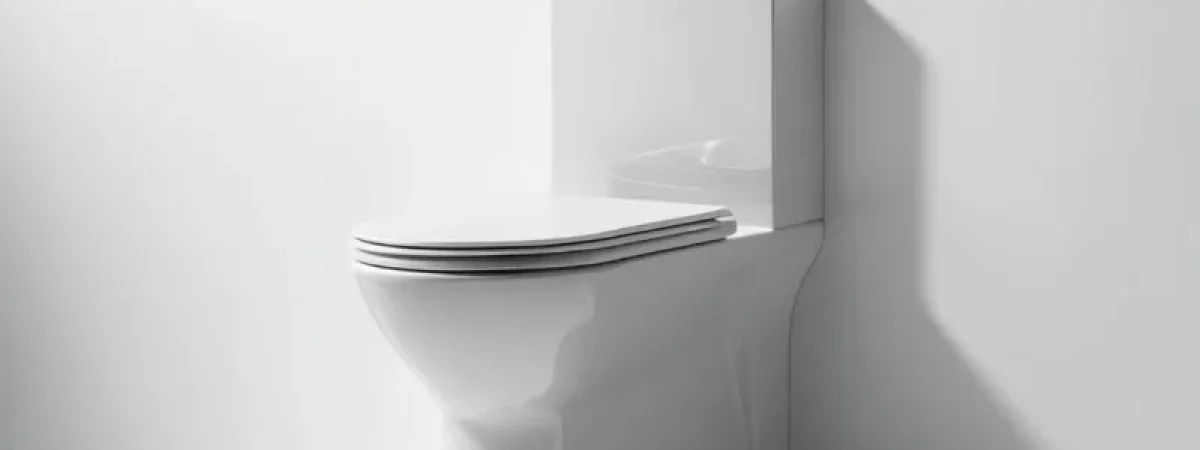
Concealed cisterns sourcing from China has moved from a niche buy to a standard line on commercial bathroom schedules, because wall-hung toilets are now the default look in mid-to-high-end hotels and apartment projects — and every wall-hung pan needs an in-wall frame and cistern behind it. It is also one of the least forgiving categories in the sanitary package: the cistern is plastered or tiled into the wall, so a leaking inlet valve or a cracked tank discovered in year two means opening finished walls in an operating hotel. That asymmetry — a modest component buried behind expensive finishes — is what should drive how you specify and inspect it, and it is exactly the category where a sourcing agent earns their fee on verification rather than price negotiation.
The price case is straightforward. European-brand frame systems retail at a level that adds real money across 200 keys or 300 apartments; Chinese factories build functionally equivalent systems — powder-coated steel frame, blow-moulded HDPE tank, dual-flush valve, pneumatic or mechanical flush plate — for a fraction of that, and several of them manufacture components for the European brands under contract. The engineering is mature. The risk sits entirely in which factory you buy from and whether the certification paperwork matches the plant that actually made your tanks.
Concealed Cistern Types and Specifications
A commercial schedule usually needs two or three variants from the same range, and buying them from one factory keeps flush plates, spares and rough-in dimensions consistent across the project:
- In-wall frame systems for wall-hung toilets — the core product: a self-supporting powder-coated steel frame carrying the cistern, pan fixings and drainage bend, for stud walls or against solid walls. Frame heights typically 820 mm (short, for under-window installs) and 1,140–1,180 mm (standard). Pan fixing centres at 180/230 mm suit the wall-hung pans on the same schedule.
- Frames for solid-wall and in-ceramic installation — slimmer cistern-only units, 80–90 mm deep, for masonry construction where the frame does not carry the pan load.
- Frames for wall-hung bidets and urinals — hotels and office projects often need a handful; ordering them from the same range keeps the rough-in consistent for the plumber.
- Dual-flush mechanisms — 3/6 L standard, 3/4.5 L where water-efficiency ratings drive the specification (WELS in Australia, EPA WaterSense-aligned specs in North America). Fill and flush valves are the wear components: ask for the valve maker by name, and confirm spares availability for ten years.
- Flush plates — mechanical or pneumatic actuation, in ABS chrome, brushed stainless, matte black, brushed gold and tempered glass. This is the only visible part of the system, so plate finish must be coordinated with the tapware and accessory finishes on the same wall.
On construction, the specification that matters: a one-piece blow-moulded HDPE tank with no glued seams (seamed tanks are where slow leaks start), factory-fitted protective duct sleeves for the flush pipe and plate aperture, a steel frame in 40×40 mm or equivalent profile with a static load rating of 400 kg on the pan fixings tested to EN 14055 / EN 997 methods, and zinc or powder-coat protection on all steel that will live inside a potentially damp wall cavity. Condensation matters in tropical and coastal projects — specify tanks with anti-condensation consideration and confirm the cavity ventilation detail with your services engineer.
For apartment towers and hotels built with prefabricated bathroom pods, concealed cisterns are ordered earlier than the rest of the sanitary package because the pod factory installs them at the pod stage, months before site fit-out. If your project is pod-built, flag it at enquiry: the delivery sequence, packing (frames racked for pod-line handling, not retail boxed) and spares split all change.
How Concealed Cisterns Sourcing from China Works
Cistern mechanism and frame manufacturing clusters around Xiamen in Fujian — home to the plants that supply flush valves to much of the world market — with additional frame and tank capacity in Zhejiang and the Pearl River Delta. The pans that hang on these frames come from the Chaozhou ceramic cluster, and buying frame and pan through one china sourcing agent is the cleanest way to guarantee they actually fit each other. Our process:
Sourcing this for a commercial project?
FBM Sourcing works with project owners, developers, main contractors and FF&E contractors on hotel, apartment, school, office and other commercial building projects. Send us your BOQ, drawings or product list — our team will review it and get back to you.
- Schedule review. You send the bathroom schedule, wall construction details and destination market. We flag frame-height conflicts, pan compatibility, water-efficiency requirements and the certification set the destination demands.
- Factory shortlisting and quotation. We quote from audited factories that export complete systems under current certification — not assemblers bolting generic tanks to unrated frames. Quotations itemise tank construction, valve maker, frame load rating and plate options so systems compare like for like.
- Sampling and model room. One complete frame system plus the matched wall-hung toilet goes to the model room. We recommend a full wet install: actuate the flush a few hundred cycles, check plate feel, confirm the rough-in dimensions against the drawings before 300 units are committed.
- Production and QC. The factory confirms the lead time in writing for each container-quantity order. Frames, tanks and plates are inspected against the points in the next section before anything is sealed into cartons.
- Consolidation. Frames are bulky but light and load efficiently with the rest of the bathroom scope — pans, faucets and mixers, bathtubs — as one consolidated sanitary container with one packing list.
Spares planning is not optional on this category. We build in attic stock of fill valves, flush valves, seals and a margin of flush plates as standard — the parts that will be needed in year three, when opening a tiled wall is the alternative. It is the line item the chief engineer will thank you for in year three.
Quality Standards, Certifications and Inspection
Concealed cisterns are regulated as water-using plumbing products in every major destination market, and the certificates are checked at plumbing approval:
- WaterMark plus WELS registration for Australia and New Zealand — the cistern must be WaterMark certified and the flush volumes registered under WELS with a current star rating, listed under the actual manufacturer.
- WRAS approval (or Regulation 4 equivalent) for the UK — covering the fill valve, flush valve and tank materials in contact with water.
- cUPC / ASME A112.19.2-aligned listings for the US and Canada, with flush volumes meeting the destination code (1.28 gpf where required).
- CE marking to EN 14055 for European projects — the harmonised standard for WC and urinal flushing cisterns.
Which of these applies, how to read the listings, and the common frauds — borrowed certificates, expired listings, certified valve in an uncertified tank — are covered in our guide to sanitary ware certifications for commercial projects. We verify every listing against the producing factory before any deposit is paid.
Physical inspection covers what certificates cannot: tank pressure and leak testing on sampled units, flush and fill valve cycle testing, frame weld quality and coating thickness, pan-fixing load spot checks, plate actuation feel and finish consistency across the batch, completeness of fixing kits and duct sleeves (a missing sleeve is discovered by a plasterer, expensively), and carton drop tests. We also verify that rough-in templates and installation instructions in the destination language are actually in the boxes — the difference between a plumbing crew installing frames steadily and a site full of guesswork.
Why Source Concealed Cisterns Through FBM Sourcing
- Frame and pan bought as one system. The most common failure in this category is a frame from one seller and a pan from another that meet for the first time on site. As a building material sourcing agent we buy both under one specification and test-fit them before shipment, within the full sanitaryware sourcing scope.
- Certification verified at the source. WaterMark, WRAS and cUPC listings checked against the factory nameplate, not the exporter’s letterhead.
- Model-room discipline. A wet-installed sample and a few hundred flush cycles before mass production — cheap insurance on a product that gets tiled into walls.
- Finish coordination. Flush plates matched to tapware and accessories in the same container, so brushed nickel means the same brushed nickel across the wall.
- Ten-year spares in the container. Valves, seals and plates in attic stock from day one, labelled for the maintenance store.
Run this way, concealed cisterns sourcing from China gives the project team a system that installs floor by floor without opened claims: frames that fit the studwork, pans that fit the frames, paperwork that passes plumbing inspection on the first pass, and the only visible component — the plate — matching everything else on the wall. The plumbing contractor never learns how many things could have gone wrong, which is the point.
Get a Quote for Your Project
If your hotel, apartment or mixed-use project specifies wall-hung toilets, send us the bathroom schedule or drawings, unit quantities, wall construction type, destination port and programme dates. our team will review your requirements and get back to you. Submit your project details through our China building materials and FF&E procurement page and our team will review it and get back to you.