Floor drains sourcing from China is one of those line items that looks trivial on a bathroom schedule and becomes very expensive when it goes wrong. A hotel with 200 keys needs at least 200 shower drains plus drains for balconies, plant rooms, laundries and kitchens — and every one of them sits under waterproofing that costs far more to reopen than the drain itself. Specified correctly, Chinese-made stainless linear drains and brass point drains land at a fraction of European brand pricing with equivalent metallurgy; specified loosely, a batch of 201-grade “stainless” bodies will tea-stain within a year of handover and put the flooring contractor and the waterproofer in a claims dispute. FBM Sourcing acts as your sourcing partner from specification through to shipment.
China produces the large majority of the world’s stainless steel bathroom drainage, concentrated in a handful of Guangdong and Zhejiang clusters that also feed the European brands. The factory-gate price gap is real, but so is the quality spread between plants running 304/316 coil with proper passivation and plants stamping whatever coil is cheap that month. The job of a sourcing agent on this category is less about finding a low price — prices are low everywhere — and more about pinning down material certificates, trap performance and load class before a container of drains gets buried under tile in a building you cannot easily reopen.
This guide covers what commercial projects — hotels, apartment towers, schools, hospitals, restaurant chains — actually need to specify, how the procurement runs, and where the inspection effort belongs.
Floor Drain Types and Specifications for Commercial Projects
A full drainage schedule for a mixed-use or hospitality project usually spans four or five distinct product families, and it pays to buy them as one package rather than let each trade source its own:
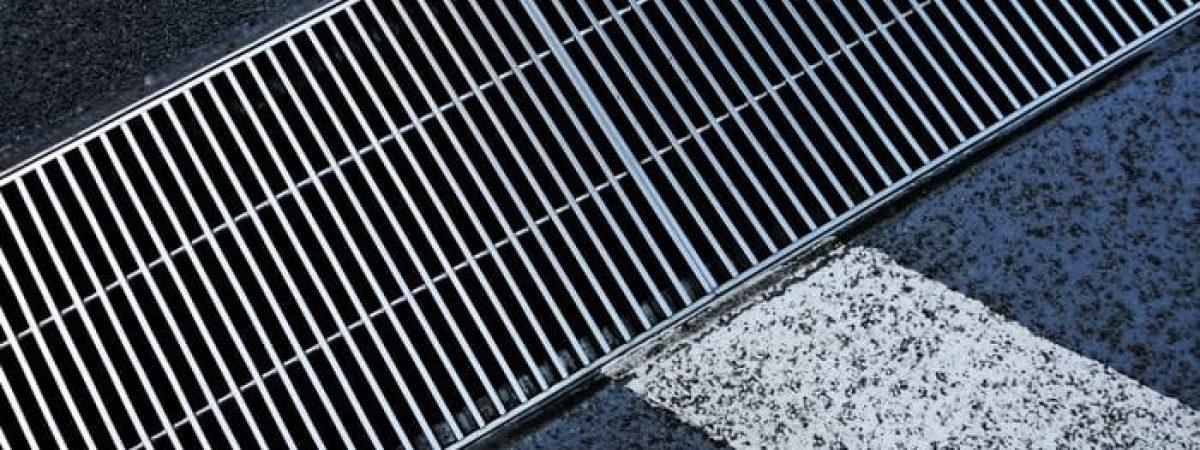
- Linear shower channel drains — the default for barrier-free hotel bathrooms and accessible rooms. Standard lengths run 600 mm to 1,200 mm with custom lengths available at surprisingly low MOQs (typically 100–200 pieces per size). Grate options include tile-insert (the tile sits in the channel for a near-invisible drain line), slotted, and pattern grates. Bodies are folded or deep-drawn stainless with adjustable feet and a waterproofing flange.
- Point drains — 100 mm and 150 mm square or round drains for standard showers, balconies, laundries and plant rooms. Available in stainless, chrome-plated brass and HDPE-bodied versions with stainless grates.
- Commercial kitchen drainage — heavy-duty gullies and trench drains with sediment baskets, removable foul-air traps and load-rated grates for back-of-house kitchens in hotels and restaurant chains. These are a different product from bathroom drains and should be quoted from a different factory line.
- Balcony and podium deck drains — two-stage drains that pick up water at both the membrane level and the finished surface, plus scupper and parapet outlets. On apartment towers these are quantity items: a 30-storey building can need 400–600 units across balconies alone.
- Cleanouts and access covers — tile-filled recessed access covers that the flooring package always forgets until the plumber asks for them.
On materials, the specification that separates a ten-year drain from a two-year drain is short: SUS 304 stainless for interior bathrooms, SUS 316 for coastal projects, pool surrounds and anywhere chloride exposure is real, DZR brass for plated point drains, and virgin (not regrind) HDPE for plastic-bodied balcony drains. Insist on mill certificates for the coil, because 201-grade stainless is visually identical on day one and cheaper — which is exactly why it appears in uncertified shipments.
Trap design deserves as much attention as the body. EN 1253 requires a 50 mm water seal for gullies inside buildings; where slab depth will not allow it, membrane-type dry traps (silicone duckbill or magnetic flap) are the standard answer for low-height renovations and balcony drains that would otherwise lose their water seal to evaporation. Flow rate matters too — a rain-shower head at 20 L/min will overwhelm a decorative drain rated at 0.4 L/s, so match the drain’s tested flow to the tapware schedule.
Load class is the specification most schedules omit. EN 1253-1 classes run from K3 (pedestrian, bathrooms) through L15 to M125 for trafficked areas; the US equivalent framework is ASME A112.6.3 for floor and trench drains. A bathroom-grade drain in a hotel loading dock or a podium driveway is a guaranteed failure, so tag every drain position on the schedule with its load class before quoting.
Sourcing this for a commercial project?
FBM Sourcing works with project owners, developers, main contractors and FF&E contractors on hotel, apartment, school, office and other commercial building projects. Send us your BOQ, drawings or product list — our team will review it and get back to you.
How Floor Drain Sourcing from China Works
Stainless bathroom drainage clusters in the Jiangmen–Kaiping corridor of Guangdong — the same region that produces the country’s export tapware — with additional linear-drain capacity around Foshan and brass drain bodies coming out of Zhejiang. A building material sourcing agent working these clusters directly can hold quotes from three or four audited plants against one specification sheet, which is the only honest way to compare, because catalogue photos of drains are indistinguishable.
The process we run for project clients:
- Schedule review. You send the drainage schedule or bathroom drawings. We flag missing load classes, trap seal conflicts with slab depths, flow-rate mismatches against the shower specification, and destination-market compliance requirements.
- Factory shortlisting and quotation. Quotations itemise steel grade with mill certificate, wall thickness, trap type and tested flow rate — line by line, so a 1.2 mm 304 channel is never compared against a 0.8 mm 201 lookalike on price alone.
- Sampling. One sample per drain type goes to your team or the model room. For tile-insert channels we recommend sampling with the actual project tile, because grate depth and tile thickness tolerance is where installations go wrong.
- Production and QC. The factory confirms the production lead time in writing for container-quantity drain orders; custom-length linear channels take longer. Inspection points are detailed in the next section.
- Consolidation. Drains are compact and load with the rest of the sanitary package — toilets, faucets and mixers and bathroom accessories — as one consolidated container per shipment rather than a separate loose-freight nuisance.
Because drains are cheap per unit and brutal to replace after tiling, we also build in overage as standard practice: a small allowance of spare units per SKU, agreed at order stage, plus spare grates and traps for the maintenance store. On a container-level order the cost of the spares is noise; the cost of matching a discontinued grate three years later is not.
Quality Standards and Inspection
Certification requirements track the destination, and they are checked at plumbing sign-off, not at customs — which means a paperwork failure surfaces at the worst possible moment in the construction programme. Depending on the market we verify:
- WaterMark for Australia and New Zealand — floor wastes and shower channels require current WaterMark listing under the actual manufacturer, and Australian certifiers do check.
- EN 1253 test reports for European and Middle East projects — water seal, flow rate and load class from an accredited lab, not a factory self-declaration.
- ASME A112.6.3 / ASME A112.18.2 compliance for North American commercial work, with cUPC listing where the plumbing code demands it.
- Material certificates — mill certs for the stainless coil and, for brass-bodied drains going to the US, low-lead compliance on any potable-adjacent components.
How these approvals interact across a whole bathroom package — and which certificates are routinely faked — is covered in our project guide to sanitary ware certifications (cUPC, WaterMark, WRAS, CE).
Physical QC at the factory covers the failures that paperwork will not catch: spectrometer or acid-test verification of steel grade on random units, weld and fold quality on channel bodies, grate fit and rattle, trap assembly and water-seal function, flow-rate spot tests, flatness of tile-insert trays, plating thickness on brass drains, and packing drop-tests — because a dented channel edge telegraphs straight through the tile line. On custom-length channels we measure every dimension against the cutting list before the container closes; a 1,185 mm channel delivered against a 1,200 mm tile recess is scrap.
Why Source Floor Drains Through FBM Sourcing
- One package, one standard. Drains rarely justify their own procurement effort, which is why they get delegated to whoever is cheapest and go wrong. We fold them into the full sanitaryware sourcing scope — toilets, tapware, drainage, accessories — under one QC regime and one consolidated container.
- Material verification on the ground. A china sourcing agent with inspectors in the Guangdong clusters can spectrometer-test coil at the plant. A purchase order sent to a catalogue cannot.
- Specification hygiene. We push back on schedules before quoting — load classes, trap seals against slab depth, 316 where the project is coastal — because the cheapest change order is the one that never happens.
- Certification diligence before deposit. WaterMark and cUPC listings verified against the producing factory, not a trading company’s borrowed paperwork.
- Finish coordination. Brushed stainless, matte black and brushed gold drain grates are matched against the tapware finish in the same shipment, so the shower reads as one design rather than three purchase orders.
The result the installing contractor sees is unglamorous and exactly right: drains that fit the recesses, seals that hold, grates that match the mixers, and a spares carton in the maintenance store. That is the outcome floor drains sourcing from China should produce when a sourcing agent runs it as part of the project package rather than as a leftover purchase order.
Get a Quote for Your Project
If your hotel, apartment, school or restaurant project has a drainage schedule to price — or a bathroom package that should include one — send us the drawings or schedule, quantities by type and length, steel grade and finish requirements, destination port and delivery timeline. Our team will review it and get back to you. Submit your project details through our China building materials and FF&E procurement page and our team will review it and get back to you.