Glass for curtain wall and window packages sourced from China must be tempered and certified to the safety glazing standard of the destination market: EN 12150 for Europe and the UK, ANSI Z97.1 and CPSC 16 CFR 1201 for the USA, and AS/NZS 2208 under AS 1288 for Australia. Compliant panels carry a permanent stamp identifying the standard and the manufacturer, and major Chinese glass processors hold current certification to all of these — but the stamp on every delivered panel, not the factory’s framed certificate, is what your site inspector will look for.
Why Safety Glazing Standards Exist — and Where They Apply
Safety glazing standards govern how glass breaks. Ordinary annealed glass fails into large shards; thermally toughened (tempered) glass fragments into small, relatively blunt particles, and laminated glass holds its fragments on an interlayer. Building codes in every major market require safety glass in “human impact” locations — doors and sidelites, glazing near floor level, bathrooms, balustrades — and in curtain wall applications the requirement extends to thermal stress performance and post-breakage behaviour at height. For a project buyer, this means the glazing specification is set by the destination building code, and the Chinese processing factory must manufacture and mark to that code’s referenced standard, whatever its domestic GB 15763 certification says.
Key Facts: Glass Safety Standards by Market
- EN 12150 (EU/UK): The standard for thermally toughened soda lime silicate safety glass — defines the fragmentation test (particle count in a 50×50 mm grid), surface stress and dimensional tolerances; CE/UKCA marking for construction use flows from it.
- ANSI Z97.1 (USA): Impact test standard for safety glazing materials, Class A and B by drop height; CPSC 16 CFR 1201 (Cat I/II) is the federally mandatory version for doors, enclosures and similar hazardous locations.
- AS/NZS 2208 (Australia/NZ): Safety glazing materials standard applied through AS 1288, which dictates where Grade A safety glass must be used in buildings.
- EN 12600: The pendulum impact classification (e.g. 1(B)1, 1(C)1) used in European and UK specifications to state the required breakage class for a glazed location.
- Heat soak testing (EN 14179): A furnace process that provokes nickel-sulfide inclusions to failure before delivery — specified for tempered glass in facades and curtain wall to reduce spontaneous breakage on the building.
What Should a Curtain Wall or Window Glass Specification Say?
A specification a Chinese factory can actually execute names four things: the glass build-up (e.g. 8 mm tempered outer / 12 mm argon cavity / 6 mm laminated inner), the safety standard and class per location (EN 12150 with EN 12600 class 1(C)1, or ANSI Z97.1 Class A / 16 CFR 1201 Cat II for door glass), the insulated glass unit standard where double glazing is involved (EN 1279 or ASTM E2190 for edge-seal durability), and heat soak testing for any tempered panels installed at height. Leaving the standard implicit — “toughened glass” with no reference — is how a curtain wall package arrives tempered to the Chinese domestic standard with no destination-market stamp, technically sound but unable to pass site inspection.
The permanent mark matters as much as the test itself. Under all three regimes, each safety glass panel must carry an indelible stamp showing the standard, the classification and the manufacturer or certifying scheme (in the US, typically the SGCC certification number). During pre-shipment QC we photograph the stamp on sampled panels from every batch, because an unstamped compliant panel and a non-compliant panel are indistinguishable on site — and building inspectors treat them identically. Framing systems carry their own parallel requirements, covered in our guides to specifying fixed glass and curtain wall panels from China and CE marking for doors and windows from China.
Sourcing this for a commercial project?
FBM Sourcing works with project owners, developers, main contractors and FF&E contractors on hotel, apartment, school, office and other commercial building projects. Send us your BOQ, drawings or product list — we’ll come back with a sourcing plan and budget estimate.
How Is Compliance Verified During Production and QC?
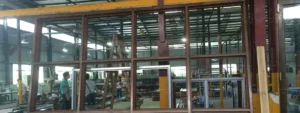
Verification runs at three points. At factory selection, the china sourcing agent audits the processor’s certification file: current EN 12150 CE/UKCA documentation or SGCC listing for the US, the tempering furnace’s process records, and — where heat soak is specified — the heat soak furnace and its EN 14179 logs. Many trading companies quote “certified glass” while the actual processing is subcontracted to an uncertified workshop, which an on-site audit exposes in an afternoon.
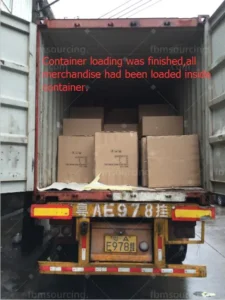
During production, in-process checks confirm the fragmentation test is run per batch (counting particles from a sacrificial panel), surface compression is spot-measured, and IGU units are gas-filled and sealed within the certified process window. At pre-shipment inspection, sampled panels are checked for the permanent stamp, dimensions against shop drawings, edgework quality, roller-wave distortion and packing — tempered glass cannot be re-cut, so a dimensional error found after arrival is a full remake, typically 4–6 weeks plus ocean transit. That asymmetry is why glass packages justify tighter inspection sampling than most building materials, following the method in our guide to pre-shipment inspection and AQL sampling.
Balustrades, Shopfronts and Other Glass on the Same Project
Curtain wall and windows rarely travel alone. The same project usually includes glass balustrades — where laminated tempered glass and post-breakage retention rules add another layer of specification, covered in our article on specifying glass balustrades from China — plus shower enclosures, mirrors, glass partitions and aluminum glass doors. Consolidating these lines with one accountable sourcing scope keeps the safety glazing standard, stamp requirements and packing method consistent across every factory feeding the project, and lets the whole glass and glazing package share containers and inspection visits instead of arriving as six uncoordinated shipments. The full catalogue of US safety glazing requirements, including the scope of 16 CFR 1201, is maintained by ANSI and the certifying schemes that operate under it.
Get a Quote for Your Glazing Package
FBM Sourcing works as a building material sourcing agent for developers, curtain wall contractors and main contractors buying glass, windows and facade components from China for projects in the USA, Australia, the UK and Europe. We audit processor certification, lock the safety standard into the technical agreement, and run production and pre-shipment QC through to container loading. Send us your glazing schedule, shop drawings, destination port and timeline through our China building materials and FF&E procurement page for a compliant sourcing plan and quotation.