On a rooftop terrace or an exposed coastal site, how outdoor furniture behaves in wind is decided by four things: how much each piece weighs relative to the surface it presents to the wind, whether it is fixed down, what the operator does with it when the wind rises, and how parasols are managed. The outdoor furniture standards most often quoted in specifications test strength, durability and stability in use, not wind, so these rules have to be written into the project specification and confirmed by the project’s structural engineer rather than assumed from a product label.
This guide is written for developers, general contractors, builders, commercial project owners, interior design and construction companies and FF&E solution providers who are specifying or procuring outdoor seating, tables, loungers and shade for hotel rooftops, rooftop bars, beach clubs, pool decks and waterfront restaurants. It covers what the standards do and do not cover, and how weight, anchoring, stacking and parasol rules become an order a factory in China can quote against.
Why Is Wind a Specification Problem Rather Than a Product Rating?
Project teams sometimes ask for “wind-rated” outdoor furniture and expect a certificate in return. It is worth reading the scope of the relevant standards before writing a tender clause around them.
What the EN 581 series covers
In Europe and the UK, contract outdoor seating and tables are usually specified to the EN 581 series. As of September 2026, BSI lists three current parts:
- BS EN 581-1:2017 – general safety requirements for outdoor seating and tables for camping, domestic and contract use.
- BS EN 581-2:2026 – mechanical safety requirements and test methods for seating, published on 31 May 2026. It replaced BS EN 581-2:2015, which BSI shows as withdrawn on 21 May 2026.
- BS EN 581-3:2026 – mechanical safety requirements and test methods for tables, also published on 31 May 2026, replacing BS EN 581-3:2017.
The published scope of the 2026 seating part describes minimum requirements for general safety and structural safety, “which include strength, reliability and stability”, and states that the test requirements are based on use by persons weighing up to 110 kg. The same scope says the standard does not apply to street furniture and does not include requirements for resistance to ageing and degradation caused by light, temperature and moisture. The tables part carries similar exclusions. Neither scope mentions wind, so a pass tells you about strength and stability in use, not about how an empty chair behaves in a gust on an exposed roof.
What BIFMA says about outdoor furniture
For US projects, BIFMA standards are the usual reference for commercial furniture. In its Outdoor Furniture Whitepaper (BIFMA OF-2025, dated July 14, 2025), BIFMA explains that its subcommittee found it was not possible at that time to develop a material-agnostic exterior furniture standard linking weathering tests to safety and performance tests, and published guidance instead. It points manufacturers to the applicable existing ANSI/BIFMA standards, such as X5.4 for public and lounge seating and X6.4 for occasional-use seating, alongside accelerated weathering tests. The whitepaper states that it should not be referenced in a contract or bid specification.
In practice: ask for the ANSI/BIFMA or EN 581 test report that matches the product type, and handle wind separately through weight, fixing and operating rules.
Where Do the Wind Figures for a Site Come From?
Wind speeds and pressures for a building are set by structural loading codes, and they are applied by the project’s structural engineer, not by a furniture factory.
- United States: ASCE/SEI 7-22, Minimum Design Loads and Associated Criteria for Buildings and Other Structures, is the edition presented on the ASCE 7 page of the American Society of Civil Engineers as of September 2026.
- UK and Europe: wind actions are covered by Eurocode 1, EN 1991-1-4. As of September 2026, BSI lists BS EN 1991-1-4:2005+A1:2010 as current, together with a new BS EN 1991-1-4:2026 edition published in June 2026. Which edition and national annex a given project works to is for the structural engineer to confirm.
How these codes apply to fixed outdoor elements on a roof – bolted benches, parasol sleeves, ballast planters – is an engineering judgement for the project. What the furniture package needs from it is a short list: which items must be fixed, how, what the fixing points must withstand, and which roof or deck build-up the fixings go into. We do not publish wind speeds or weight thresholds for “safe” furniture, because height, exposure, parapets and the position of each seating zone all change the answer.
Weight: What Does Heavier Furniture Solve, and What Does It Not?
Weight against exposed surface
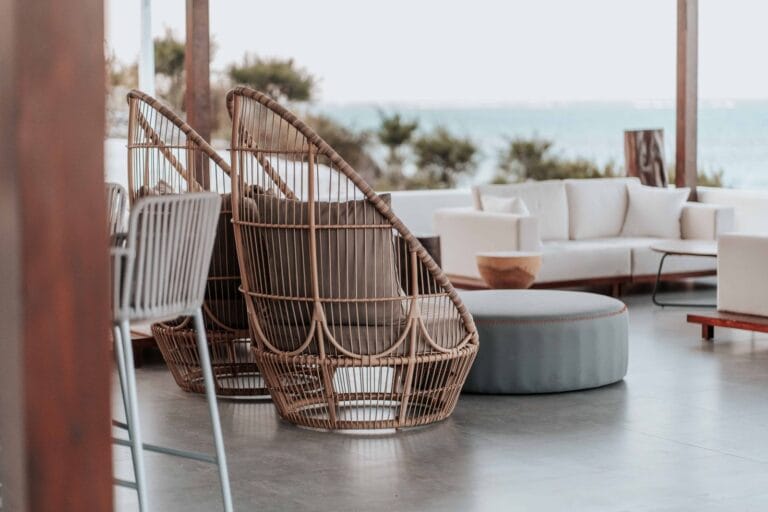
A piece resists wind through its weight and its footprint, while the wind acts on the surfaces it presents. A solid-backed chair or a table with a closed apron catches more wind than a slatted, open-weave or rope design of similar size. Weight on its own is therefore not a useful specification line; shape and exposure matter as much.
Material choice sets the starting point. Cast or extruded aluminum frames are light, which makes daily rearranging easy but makes loose pieces more vulnerable on exposed decks. Teak is heavier but needs its own maintenance plan. Our comparison of aluminum, teak and rope outdoor furniture for resort projects covers these trade-offs, and our guide to synthetic PE rattan versus natural rattan covers woven options.
What extra weight costs you
- Roof loading: heavy pieces, weighted bases and ballast planters add load to the roof. Whether the roof can take them is a structural question to settle before the schedule is frozen.
- Surface damage: heavy steel or concrete bases dragged across pavers, decking or a membrane will mark or damage the finish. Specify protective feet or glides to suit the surface.
- Operations: if the operating plan depends on staff clearing furniture when the wind rises, the pieces have to be light enough for that to happen.
How to write weight into the order
Rather than a blanket “heavy-duty” clause, list a target weight per item where the engineer or operator needs one, state whether it includes cushions, and require the factory to state the weight of the approved sample, which then becomes the reference for the finished goods.
Specifying outdoor furniture for a rooftop or coastal site?
Send us your outdoor furniture schedule and the engineer’s fixing requirements, and we will write weight, anchoring and stacking into the factory brief.
Anchoring: Which Fixing Methods Suit Rooftop and Coastal Sites?
Where the engineer decides that items must be fixed, the furniture has to be designed to receive the fixing. Otherwise the factory builds a free-standing product and the site team finds nowhere to put a bolt.
| Approach | What the furniture must provide | What the project must confirm | Trade-off |
|---|---|---|---|
| Bolted to slab or deck | Base plates or feet with pre-drilled holes at stated positions; frame welds and connections designed for the fixing | Anchor type, embedment and how roof or deck penetrations are sealed and waterproofed | Fixed layout; layout changes mean new holes |
| Fixed into built elements | Mounting brackets or rails to connect benches or seating to planters, walls or plinths | That the built element itself is designed to take the load | Coordination between the furniture and the built works |
| Tethered to anchor points | Tether points designed into the frame, not added afterwards | Anchor point positions and capacity | Visible hardware; tethers must not become a trip hazard |
| Ballast and weighted bases | Base geometry that accepts the ballast; covers or cladding if the ballast is visible | Roof loading and the placement of ballast | Adds weight to the roof; moving pieces becomes harder |
| Loose with an operating plan | Stackable or foldable design and suitable storage | A written wind procedure and a storage room of the right size | Depends entirely on staff following the procedure |
Three points belong in every rooftop or coastal specification:
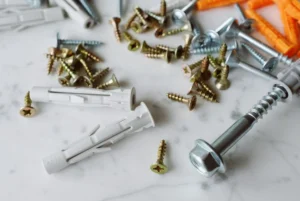
- Fixing interface drawings: ask the factory for a drawing of each base plate or fixing point with hole positions and sizes, and have it checked against the site drawings before bulk production starts.
- Fastener material: on a coastal site, fixings and base hardware should be specified in a stainless grade and finish suited to salt exposure, compatible with the frame metal.
- Who supplies the site anchors: state clearly whether the furniture package includes anchors and fixings, or whether they come from the installer.
Stacking and Storage: What Should the Operating Rules Be?
For many rooftop and beach venues, the most practical protection is not fixing but clearing: chairs are stacked, cushions are taken in and loungers are stored when the wind rises.
- Stackability as a requirement: if chairs are meant to stack, say so in the specification and state how many high the operator expects to stack them. Confirm the stack on the approved sample.
- Stable stacks: a tall stack is itself a wind target; the operator decides stack height and position, and the specification says whether a trolley or strap is needed.
- Cushions: far lighter than the frames they sit on; specify ties or clips where the operator wants them, and plan dry storage.
- Storage room size: check the stacked footprint of every loose piece against the storage room drawing.
The wind procedure itself – when staff clear the terrace and what they clear first – belongs to the operator. Procurement makes sure the furniture supports it.
How Should Parasols and Shade Canopies Be Managed?
An open parasol canopy acts like a sail, so the base, the pole and the closing rule all matter.
Bases and mounting
- Weighted free-standing bases: movable, but heavy for large canopies and subject to roof loading.
- Surface-mounted plates: bolted down, with the same penetration questions as fixed furniture.
- In-deck sleeves: built into the deck or a planter, so the parasol can be lifted out and stored.
Whichever base is chosen, the fixing between pole and base, the pole section and the canopy size should all be specified as a matched set.
Operating limits
Ask the parasol manufacturer for written operating guidance, including the conditions in which the canopy must be closed, for the exact model quoted, and hand it to the operator so that the closing rule in the wind procedure is based on the product actually installed. Shade sails and fabric pergola roofs should be engineered as part of the structure, not bought as furniture.
What Should the Specification Say for Each Outdoor Item?
A rooftop or coastal schedule is easier to quote accurately when each item carries these fields:
- Location and exposure: the zone on the drawings, and whether it is rooftop, pool deck or beachfront.
- Structural standard: the EN 581 part or ANSI/BIFMA standard the item must be tested to, and a request for the test report for the quoted model.
- Weight: target weight where required, with or without cushions, and the requirement for the factory to state the sample weight.
- Fixing: free-standing, stacked and stored, ballasted, tethered or bolted; for fixed items, the fixing interface drawing and whether anchors are in or out of the package.
- Stacking and folding: required or not, and how many high.
- Materials: frame, coating, fastener grade and cushion fabric, with the site’s salt and UV exposure stated.
- Parasols: model, canopy size, base type and the manufacturer’s operating documentation.
For shortlists of the manufacturer types that supply these packages, see our overviews of outdoor furniture manufacturers in China for hotel and resort projects and outdoor furniture manufacturers in China for US hospitality projects. For the wider waterfront package, see our guide to FF&E and building materials for resort and beach club projects.
How Does FBM Sourcing Handle a Rooftop or Coastal Outdoor Package?
As a sourcing partner in China, FBM Sourcing works from the project team’s schedule, drawings and the engineer’s fixing requirements. We do not set wind criteria; our job is to make sure the factory builds what the project has specified, including what a catalogue product would not cover.
- Specification into the factory brief: weight targets, fixing interfaces, stacking, fastener material and packing are written into the request, so quotations are for the same product.
- Documentation: where the specification calls for EN 581 or ANSI/BIFMA compliance, we request the test reports for the quoted models, plus parasol operating documentation, for the project team to review.
- Samples and fixing drawings: samples are checked for weight, stacking and fixing positions, and fixing drawings go to the project team for coordination before bulk production starts.
- Inspection: one inspection by our own team at the factory once bulk production is finished, before shipment, with photo and video records, checking the goods against the approved samples and the specification. Your own project team is welcome to attend the inspection with us.
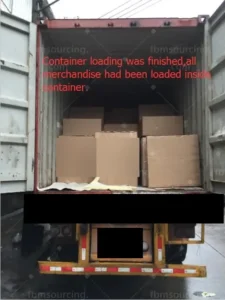
- Loading: Sometimes, on a large project, the outdoor furniture pieces alone fill full containers; sometimes the outdoor furniture pieces share containers with the other product categories of the same project; and sometimes, in one batch, we combine a dozen or more product categories from several projects of the same client into a few containers — always full containers, and for us this is routine, well-practised work.
Specifying outdoor furniture for a rooftop or coastal site?
Send us your outdoor furniture schedule and the engineer’s fixing requirements, and we will write weight, anchoring and stacking into the factory brief.
Frequently Asked Questions
Does EN 581 test outdoor furniture for wind?
Not according to its published scope: as of September 2026, the scopes of BS EN 581-2:2026 for seating and BS EN 581-3:2026 for tables cover general and structural safety, including strength, reliability and stability, and neither mentions wind, so wind behaviour has to be handled through the project specification.
Is there a BIFMA standard for outdoor furniture?
BIFMA’s Outdoor Furniture Whitepaper (BIFMA OF-2025), dated July 14, 2025, explains that its subcommittee could not at that time create a material-agnostic outdoor standard and issued guidance instead, pointing manufacturers to existing ANSI/BIFMA standards such as X5.4 and X6.4 together with accelerated weathering tests; the whitepaper itself states that it should not be referenced in a contract or bid specification.
How heavy should rooftop outdoor furniture be?
There is no single safe weight, because it depends on roof height, exposure, parapets and layout, so any target weight should come from the project’s structural engineer or operator and be written into the schedule item by item.
Who decides whether outdoor furniture on a roof must be bolted down?
The project’s structural engineer, working from the applicable wind loading code such as ASCE/SEI 7-22 in the United States or EN 1991-1-4 in the UK and Europe, decides which items must be fixed and how; the furniture specification then requires the base plates and fixing points that make it possible.
Can FBM Sourcing supply outdoor furniture designed for bolting or ballast?
Yes: we write the fixing, weight and stacking requirements into the factory brief, check them on the samples, and inspect the finished goods against the approved samples once bulk production is finished and before shipment, while anchor design and roof penetrations stay with the project’s engineer and installer.
About FBM Sourcing
FBM Sourcing manages the entire China procurement package for overseas construction projects. Since 2014 we have worked with developers, general contractors, builders, commercial project owners, interior design and construction companies and FF&E solution providers across more than 20 countries and over 1,000 containers, as their sourcing partner in China — from the schedule or BOQ through factory selection, sampling, one inspection by our own team once bulk production is finished and before shipment, consolidation and shipping. All quotations, invoices and shipping documents are issued by FBM Sourcing, and sea freight is quoted to you before shipment. If you have an outdoor furniture package to price, start at China building materials and FF&E procurement.
If your package is mainly commercial outdoor furniture, see commercial outdoor furniture on fbmfurniture.com, the site of FBM Furniture, the furniture sourcing line of FBM Sourcing Limited.