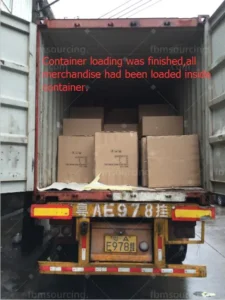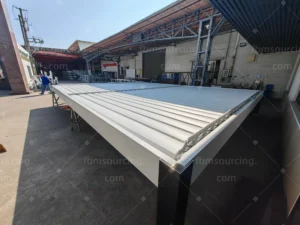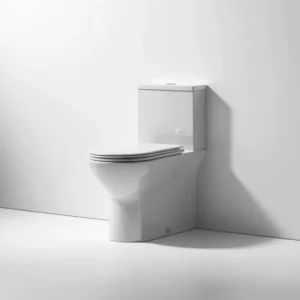
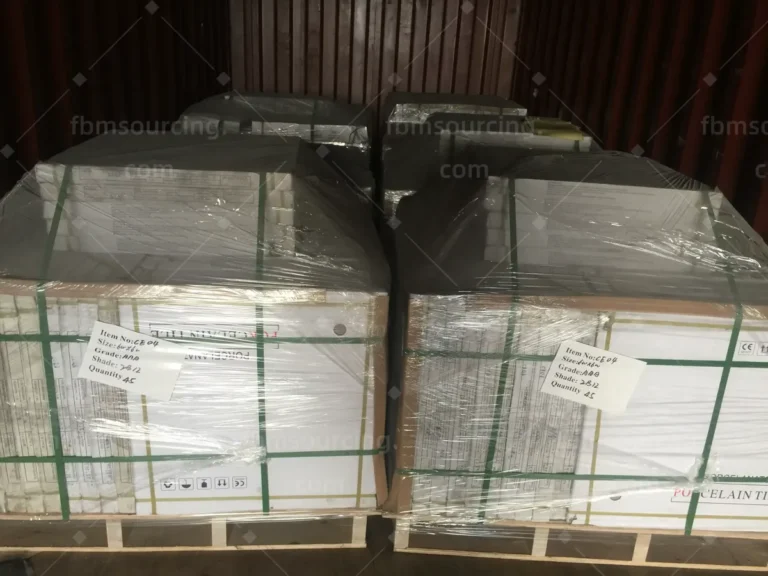
FCL (Full Container Load) means your goods fill an entire container that ships directly to your destination port; LCL (Less than Container Load) means your goods share container space with other shippers’ cargo, consolidated at an origin warehouse and deconsolidated at destination. Most project-scale building material and furniture orders qualify for FCL, but LCL matters when a single-category order — one sample shipment, one small product line — doesn’t fill a container on its own.
FCL: One Container, One Buyer
With FCL, the entire container is loaded with your goods only, sealed at the origin warehouse, and shipped without opening until it reaches your destination. This is the standard method for hotel, apartment and commercial project orders — tiles, cabinetry, furniture and fixtures across multiple product categories consolidated from several factories into one or more 20ft or 40ft containers. FCL gives full control over load sequencing (so goods arrive in the order you need them for installation), no risk of damage from other shippers’ cargo, and no waiting for a consolidator to fill remaining container space.
LCL: Sharing Container Space
LCL is used when an order is too small to justify a full container — a sample shipment ahead of a bulk order, a single product category reorder, or a small residential-scale purchase. Your cargo is palletised and combined with other shippers’ goods at a consolidation warehouse, then split apart again at the destination port. LCL costs more per cubic metre than FCL (consolidation and deconsolidation handling fees apply on both ends), takes longer (waiting for enough cargo to fill the container), and carries slightly higher handling risk since your goods are loaded and unloaded around other shipments.
Sourcing this for a commercial project?
FBM Sourcing works with project owners, developers, main contractors and FF&E contractors on hotel, apartment, school, office and other commercial building projects. Send us your BOQ, drawings or product list — we’ll come back with a sourcing plan and budget estimate.
Key Facts for Choosing Between FCL and LCL
- Volume threshold: If your order fills roughly 60%+ of a 20ft container (around 25–28 CBM), FCL is usually more cost-effective than LCL.
- Multi-factory consolidation: A sourcing agent can combine goods from several factories into one FCL shipment — this is standard for whole-project orders spanning tiles, cabinetry, sanitary ware and furniture.
- Transit time: FCL ships as soon as loading is complete; LCL waits for the consolidator’s container to fill, adding days to weeks depending on route and volume.
- Damage risk: FCL cargo is not handled again until destination unpacking; LCL cargo is loaded and unloaded multiple times alongside other shippers’ goods.
How Does Multi-Factory Consolidation Work for FCL Orders?
Most whole-project procurement — a full villa fit-out, a hotel FF&E package, an apartment building’s worth of cabinetry and fixtures — draws on multiple specialist factories that each produce one category. A building material sourcing agent receives finished, inspected goods from each factory at a consolidation warehouse, sequences them for loading (heavier or floor-level items like tile pallets first, fragile or crated items like cabinetry and sanitary ware stacked and blocked above), and loads everything into one or more FCL containers — turning several separate factory outputs into a single, trackable shipment.
Get a Quote for Your Project
Send us your product list, estimated volume and destination port, and we will confirm whether your order suits FCL or LCL and return a sourcing and shipping plan for your China procurement project. See a multi-category FCL consolidation in practice in our villa building materials case study.