Overview of the Project
Purchased Products
- Aluminum glass entrance doors and sliding door systems
- Aluminum windows with double glazing (dark powder-coated frames)
- Flat and curved tempered glass panels
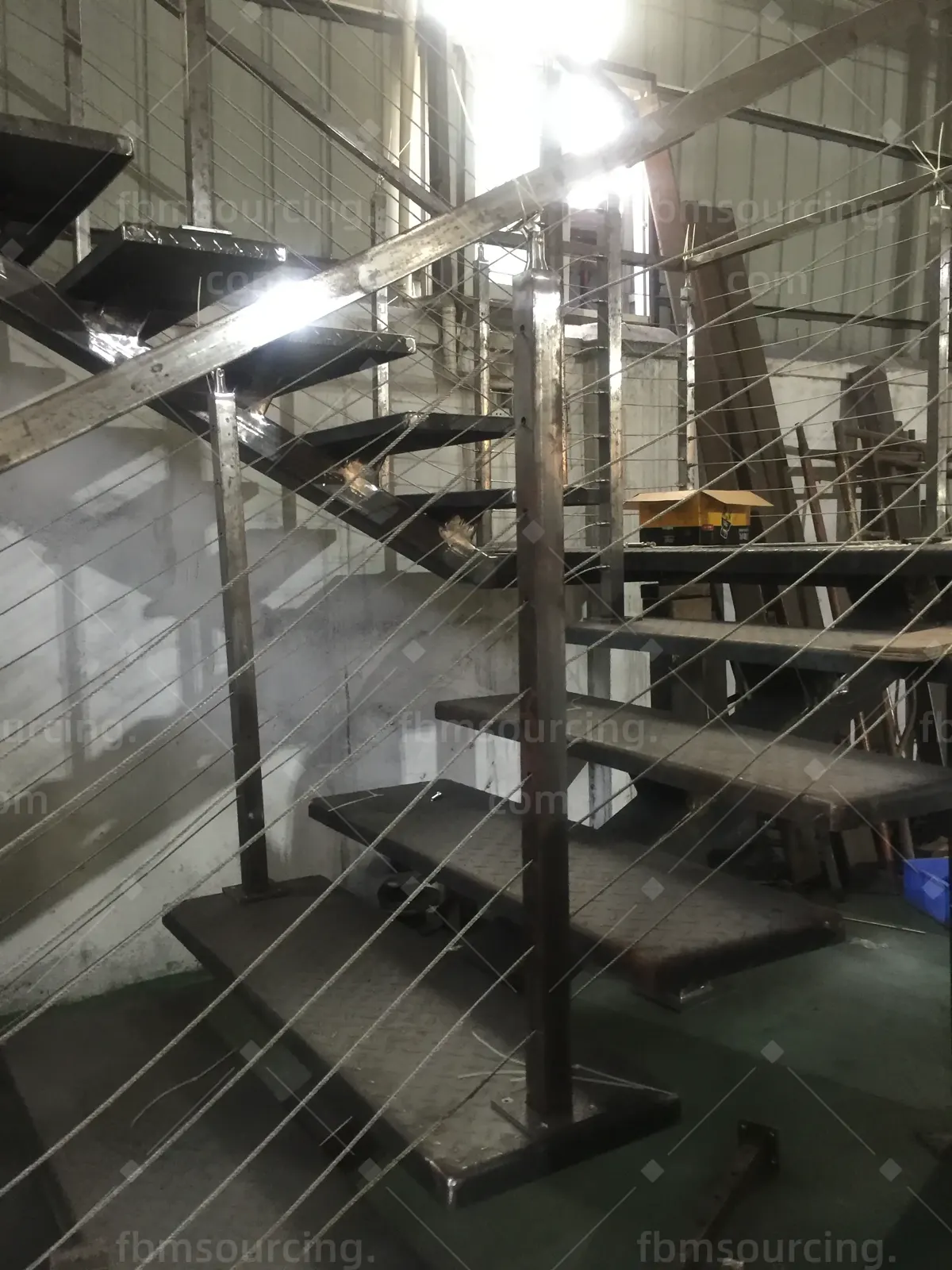
- Steel staircases with stainless steel cable railings
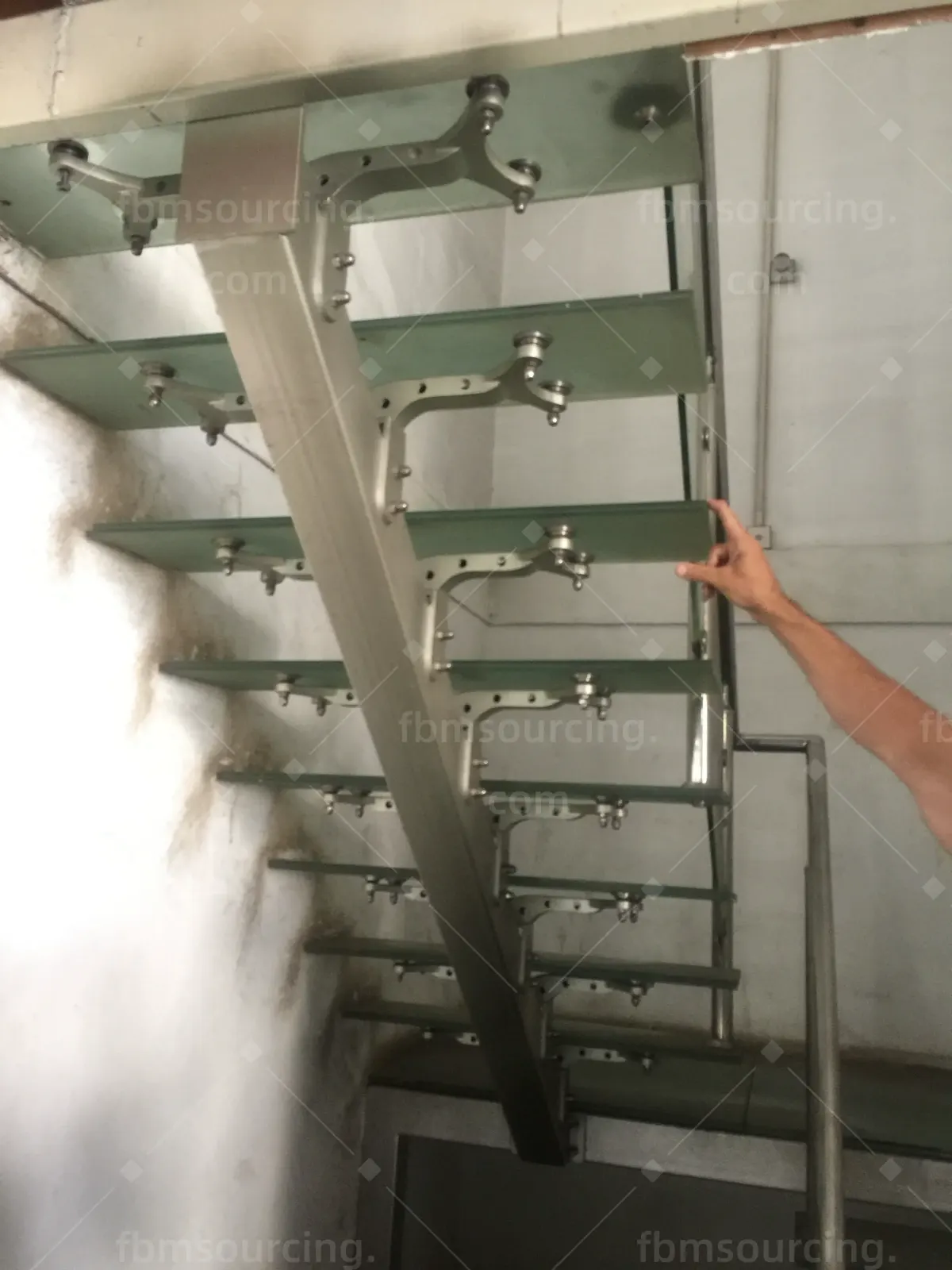
- Glass tread staircase systems and stair hardware
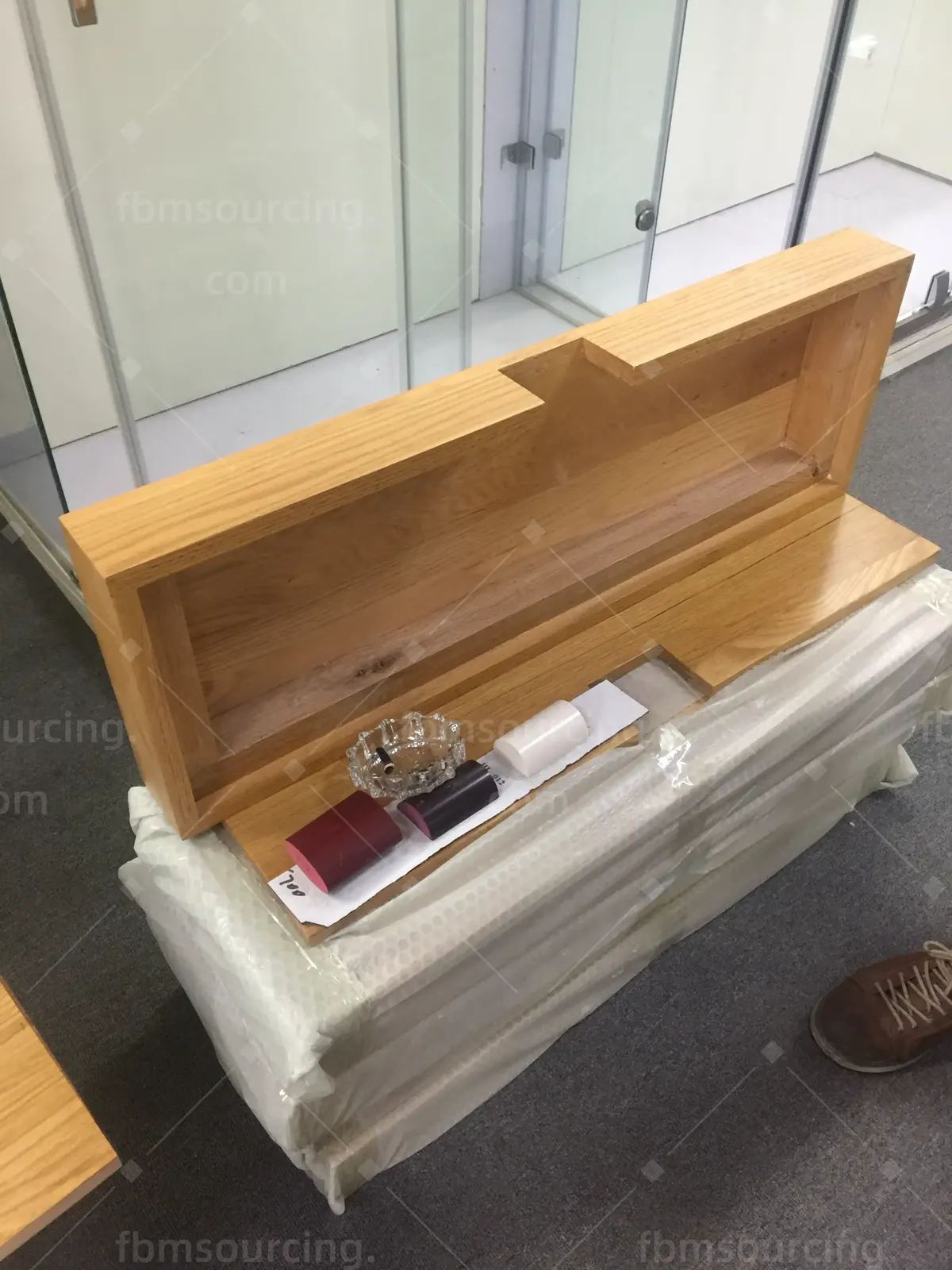
- Solid oak joinery and veneered wood components
Project Background
In 2017, a US general contractor engaged FBM Sourcing as its building material sourcing agent in China for a multi-category commercial fit-out package. Instead of managing five or six separate Chinese factories on his own — each with different specifications, payment terms, packing standards and lead times — the contractor handed the full package to one accountable procurement team in Foshan. We sourced the factories, negotiated pricing, ran sample approvals, carried out one quality inspection at the factory once bulk production was finished, before shipment, and consolidated all categories into containers shipped to the United States in early 2018.
General contractors face a specific problem when buying building materials from China: the products they need for a single project rarely come from a single factory. Aluminum doors and windows come from one industrial cluster, tempered and curved glass from another, steel staircases and cable railings from metalwork fabricators, and oak joinery from wood factories. Each supplier quotes differently, packs differently, and works to its own production schedule. For a contractor working against a construction program, coordinating all of this from the other side of the Pacific is a real risk — one late category can hold up an entire site milestone.
Foshan was the natural base for this package. The city and its surrounding districts in Guangdong form the densest building materials manufacturing cluster in China: aluminum profile extruders, door and window assemblers, glass processors, metalwork fabricators and joinery factories operate close to each other. For a multi-category order, that geography translates directly into lower inspection costs, faster sample turnaround and simpler consolidation — one QC team can cover several factories in a day, and all categories can truck to a single consolidation warehouse without long-haul domestic freight. It is the same reason most of our building material projects, whatever the destination country, are produced within this cluster.
The third route — a China-based procurement partner working for the buyer, not for any factory — bought from the factories that run the production lines while adding the things a contractor actually needs: local factory vetting, specification control in Chinese, inspection before shipment with photographic evidence, consolidated container planning, and one accountable point of contact. That is the model this project ran on, and it is the model we operate for every developer and contractor client.
Project Type
Commercial fit-out managed by a US general contractor — building envelope and interior circulation package
Location
United States — produced in Foshan and Guangzhou, consolidated at origin
Project Highlights
Multi-category package under one contract; accompanied factory visits; inspection before shipment; supervised multi-container loading with photographic reports
Project Delivery Time
Production late 2017; loaded and shipped early 2018
How It Works?
Understanding Client Needs
This contractor came to us with drawings and a mixed bill of materials. His concerns were the ones we hear from almost every contractor and developer sourcing from China: Will the products match the drawings and US site dimensions? Who checks quality before the goods are sealed in a container? And who takes responsibility if something arrives wrong? Our answer was to act as a single china sourcing agent for the whole package — one point of contact, one consolidated QC and shipping plan, full responsibility from factory floor to port of loading.
Market Sourcing and Factory Selection
Because the client wanted to see the supply chain for himself, he traveled to Foshan during the sourcing phase. We arranged and accompanied factory visits across the door and window, glass, staircase and joinery suppliers shortlisted for his package, so he could compare workshops, materials and finish quality in person before any deposit was paid.
Planning a similar commercial project?
FBM Sourcing works with project owners, developers, main contractors and FF&E contractors on hotel, apartment, school, office and other commercial building projects. Send us your BOQ, drawings or product list — our team will review it and get back to you.
Order Confirmation and Production Scheduling
Multi-category procurement lives or dies on specification control. After the factory visits, we froze the technical details for each category — profile sections, glass build-ups, powder-coat colors, hardware brands, timber species and finishes — and had each factory produce approval samples. The oak joinery factory, for example, prepared finished samples with the hardware and finish options laid out for side-by-side review, so the client approved exactly what would go into production rather than a catalog photo.
Production Follow-Up and Quality Checks
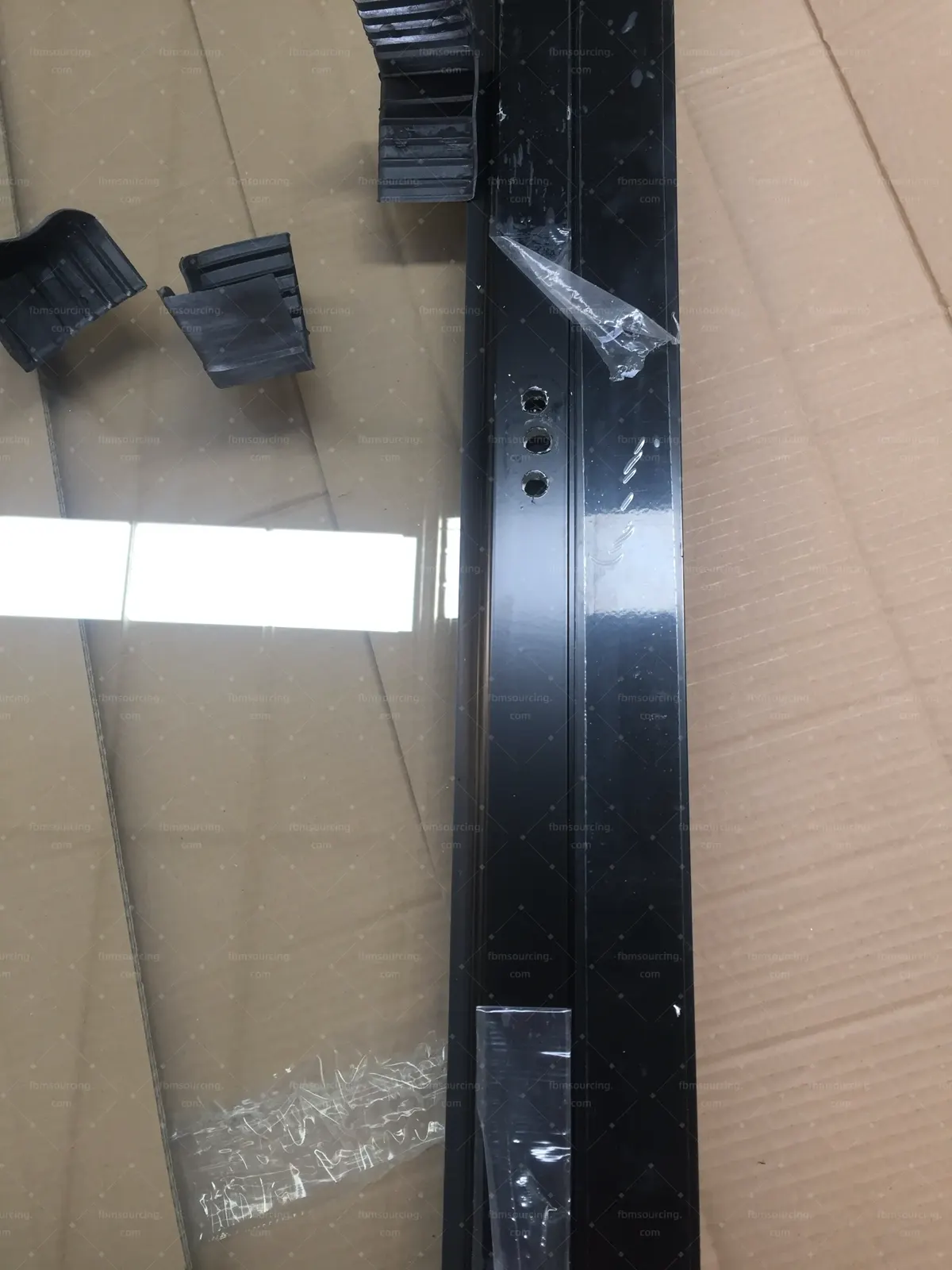
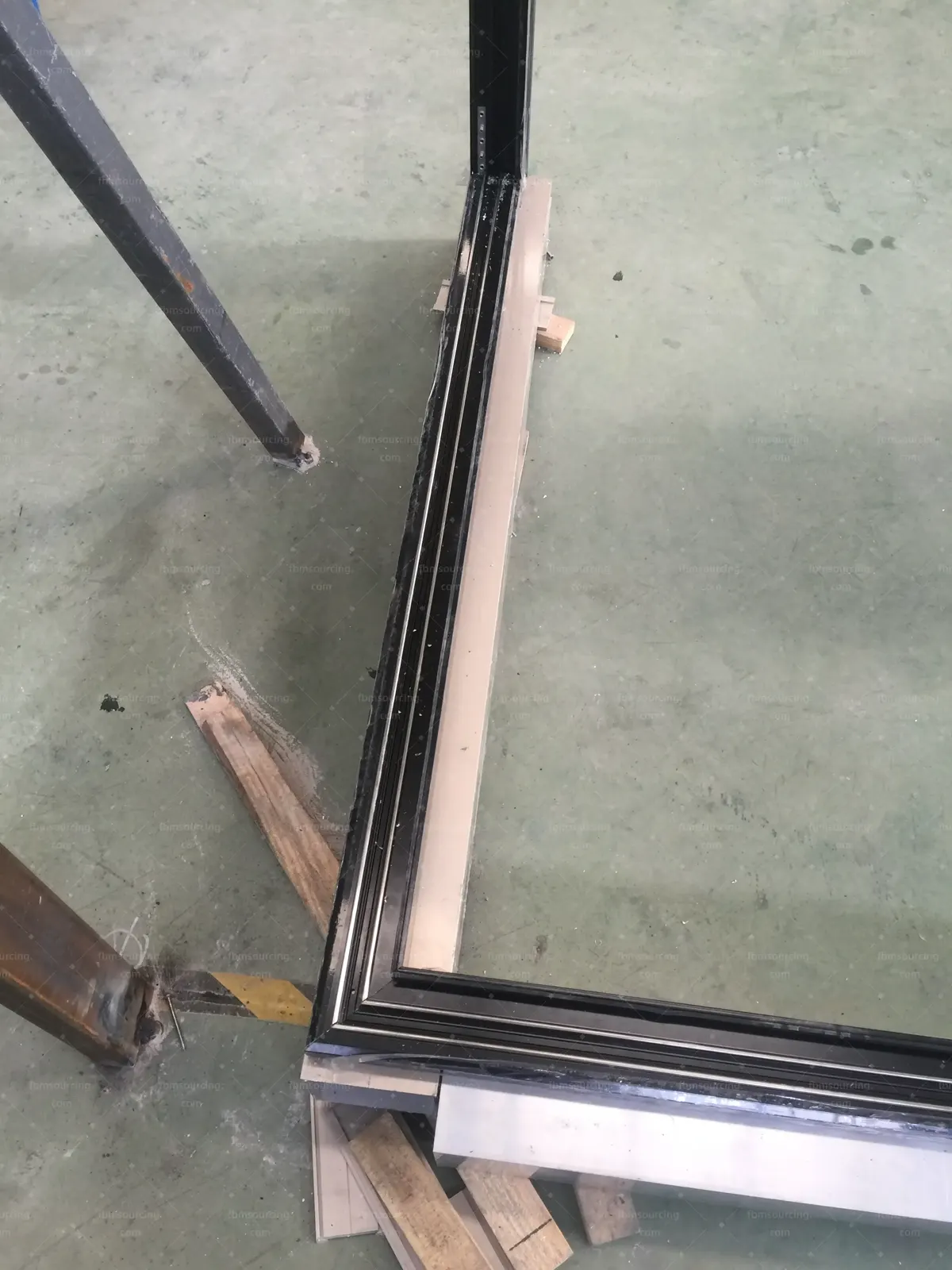
For the aluminum doors and windows, the largest category in the package, inspection was carried out once by our own team at the factory when bulk production was finished, before shipment:
Pre-packing inspection: assembled doors and windows were measured against the approved drawings — overall dimensions, diagonals, corner joint tightness, gasket seating, hardware operation. Corner joints and seal lines were checked piece by piece on the assembly benches, because a frame that racks out of square by a few millimeters becomes an installation problem on a US job site where the openings are already built.
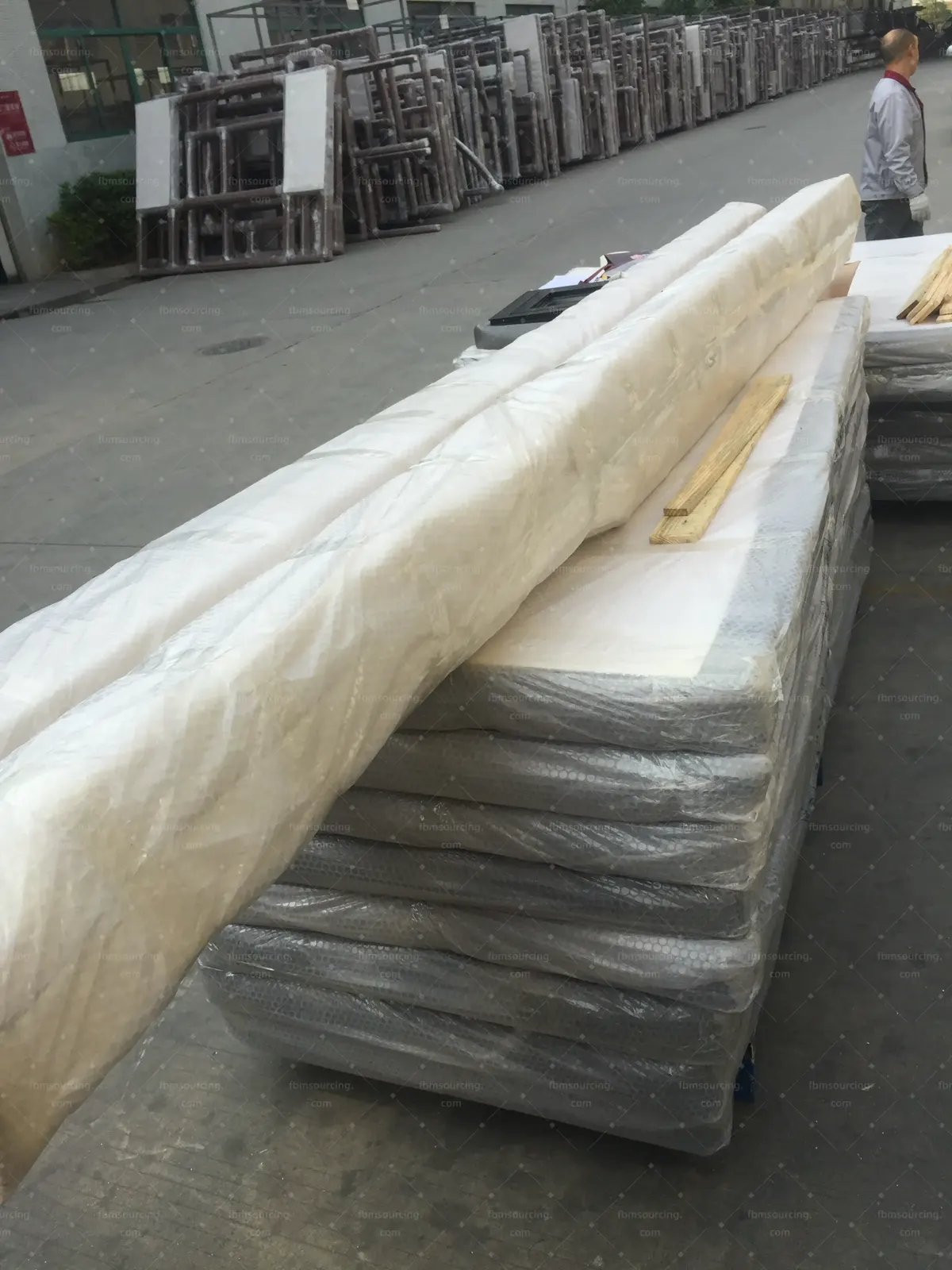
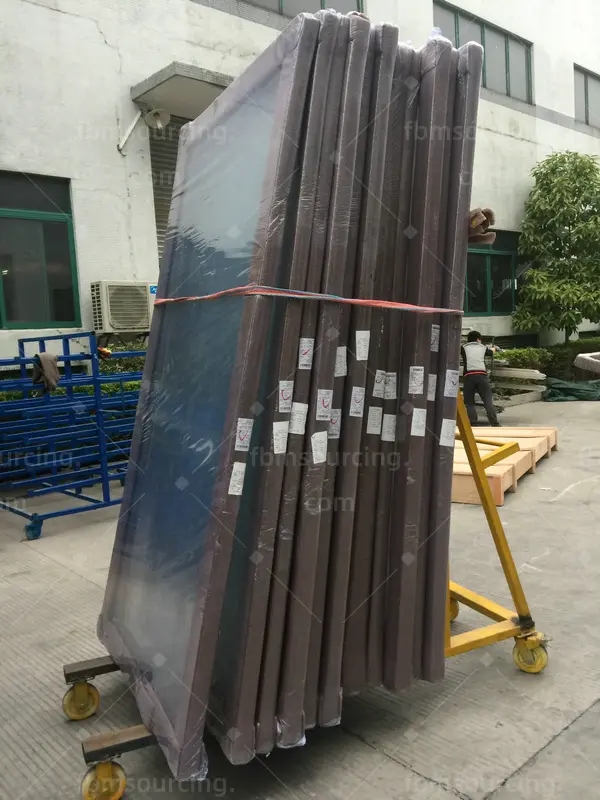
Packing verification: large frames were foam-wrapped, corner-protected and packed with rigid board facings; oversize and fragile items went into custom wooden crates. We photographed the packing method for every category and sent the client a full inspection report before authorizing the factories to close a single crate.
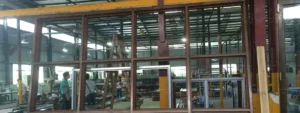
The staircase and railing package was fabricated in parallel at a specialist metalwork factory — welded steel stringers and treads, stainless steel posts and tensioned cable infill, plus a glass tread staircase system on a stainless central column. Staircases are unforgiving products: every rise, going and baluster spacing has to match the site drawings, and US crews expect bolt-together assemblies that fit the first time. Our team checked the trial-assembled staircases in the workshop against the drawings before disassembly and packing. This is the same QC before shipment discipline we apply on every project — you can see it in our building materials procurement case for a five-star hotel in a hurricane zone.
Container Loading and Shipping
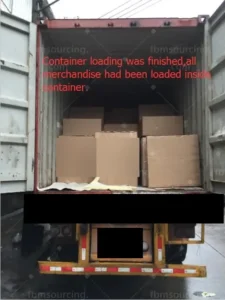
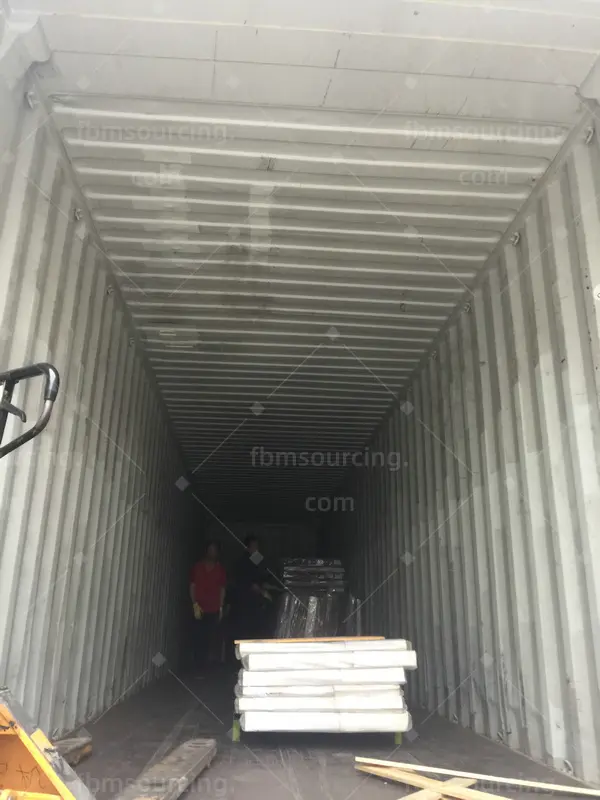
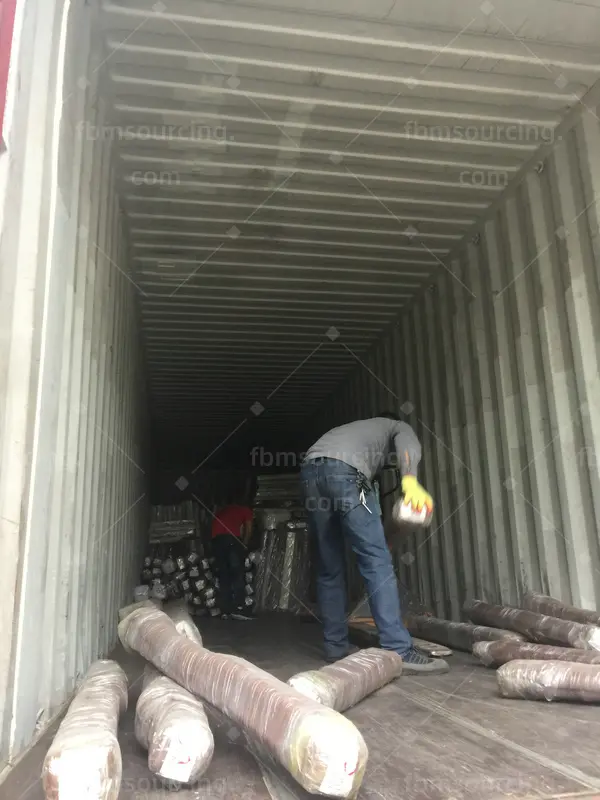
Consolidation is where multi-category projects usually go wrong, so we planned the container stowage before the first truck arrived. Finished glass door panels were staged on A-frame trolleys, window units were palletized flat with board separation, wrapped aluminum profiles and railing components were bundled, and joinery and hardware went into wooden crates. Heavy crates were floor-loaded first, palletized frames stacked with dunnage, and fragile glazed panels secured upright against the container walls.
Our team supervised the loading of every container at the factories and consolidation warehouse, photographing each stage so the contractor had a complete loading record — what went into which container, in what condition, and how it was braced. The containers were sealed under our supervision and trucked to the port for the sailing to the United States, with the full document set (packing lists, inspection reports, loading photos) issued to the client before departure.
Two details in the loading plan mattered more than they might appear. First, categories were grouped by installation sequence where possible, so that the trades who needed materials first on site were not waiting behind crates destined for later phases. Second, every crate and pallet carried a numbered label cross-referenced to the packing list, which meant the contractor’s site crew could locate a specific staircase stringer or window unit without opening half the shipment. These are small disciplines, but they are the difference between a container that unloads in an afternoon and one that turns into a site inventory exercise.
After-Sales Support
After shipment, FBM Sourcing remained the client’s single point of contact for the order. If any item arrived with a transit or quality issue, our team handled the claim directly with the factory concerned — arranging replacement parts or corrective action on the factory’s account — so the client never had to negotiate with a Chinese supplier from overseas. This after-sales accountability is part of every procurement engagement we run.
Project Completion Photos
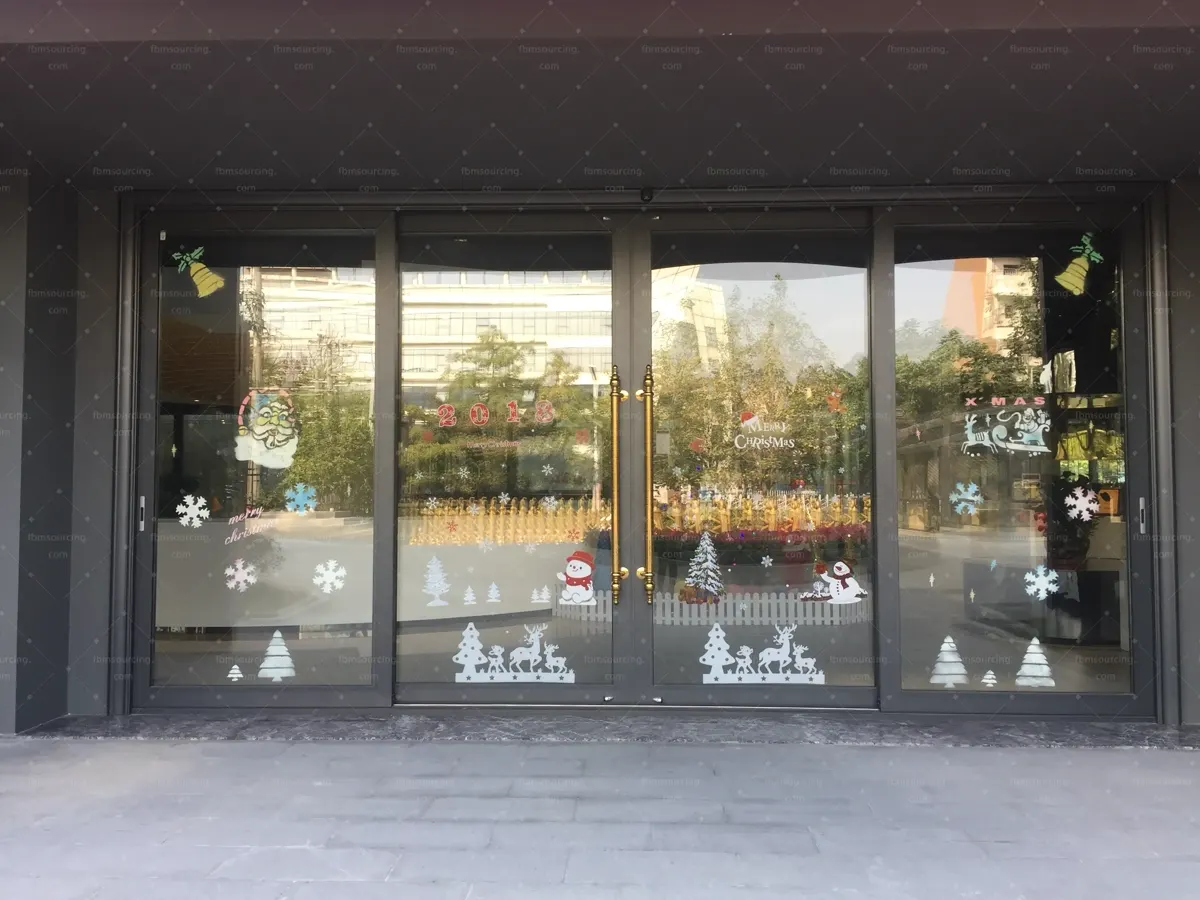
All product categories — aluminum entrance doors and sliding systems, glazed windows, flat and curved tempered glass, steel and glass staircases, cable railings, and oak joinery — were produced, inspected and shipped in multiple containers to the United States on the agreed schedule, loading in January 2018. The contractor received a single coordinated shipment program instead of six separate supplier relationships, with inspection before shipment reports and loading photos for every container.
Looking back at this project, three outcomes stand out for any contractor evaluating China procurement. Cost: the multi-category package was bought from the factories that run the production lines in every category, with the savings most visible on made-to-order items like the staircases and curved glass, where US-side alternatives carry heavy fabrication premiums. Quality: inspection before shipment meant defects were corrected at the factory, on the factory’s account, before packing — not negotiated as claims after arrival. Schedule: production across all factories was tracked against one master timeline, and the client knew the real status of every category every week, not the optimistic version a factory tells its own customer. For a project of this scale, that visibility is worth as much as the price advantage.
For a general contractor, that is the practical value of working through a sourcing agent and sourcing partner in China: one team owns specification control, factory management, quality inspection and consolidation, and the goods that arrive on site match the drawings that were approved. If your project includes door and window packages, we also publish a detailed guide to aluminum glass door sourcing from China. For a hospitality project with a similar door and window scope, see our case study on hotel construction materials Florida procurement.
Related reading
Have a similar project on your desk?
Send us your BOQ, drawings or product list — our team will review it and get back to you. Every order is inspected by FBM Sourcing’s own team at the factory before shipment, with photo and video records.