Quick Navigation
Procurement fit
Bedroom wardrobes from China require clear dimensions, internal layout, door type, board material, finish, hardware and packing plan. On projects like this, FBM Sourcing works as your dedicated sourcing partner.
This guide should be used together with FBM Sourcing’s China building materials and FF&E procurement service, building material sourcing agent China, hotel FF&E procurement from China and China procurement cost planning.
Specification checklist before supplier quotation
| Item to confirm | Why it matters | Buyer action |
|---|---|---|
| Application area | Wardrobe dimensions, internal layout and door type | Confirm project type, room or area, and installation context |
| Dimensions and quantity | Wrong sizes or quantities create rework and shipment problems | Prepare BOQ, drawings, schedule or room count |
| Material and finish | Supplier prices vary greatly by material grade and finish standard | Provide reference photos, samples, finish board or technical standard |
| Performance requirement | Wardrobes must fit room plans and withstand daily use. | Confirm code, durability, moisture, fire, load or cleaning requirements |
| Packing and shipment | Export damage can erase factory price savings | Confirm packing method, carton marks, pallet or crate needs and loading plan |
QC and delivery checks
- Confirm room dimensions and wardrobe opening direction.
- Check carcass material, door finish, edge banding and hardware.
- Approve finish sample and internal layout.
- Inspect panels, drawers, hinges, rails and packing.
Procurement workflow
| Step | Main work | Output |
|---|---|---|
| 1. Scope review | Review drawings, quantities, target budget and destination | Sourcing brief and risk questions |
| 2. Supplier comparison | Compare factory capability, quotation terms and lead time | Shortlist with comparable quotation basis |
| 3. Sample or spec approval | Check finish, dimensions, hardware and material standard | Approved sample record or correction list |
| 4. Production follow-up | Track factory progress and open questions | Production updates |
| 5. Inspection and loading | Check quality, quantity, packing and shipping readiness | QC comments and loading coordination |
Buyer FAQ
Can wardrobes be customized in China?
Yes. Wardrobes can be customized by size, internal layout, door type, finish and hardware when drawings are clear.
What information should buyers send first?
Send the item list or BOQ, drawings or dimensions, reference photos, quantity, target quality level, destination port, expected delivery date and budget range.
How can FBM Sourcing help?
FBM Sourcing can help compare suitable China suppliers, clarify specifications, coordinate samples, follow production, check quality before shipment and prepare export loading.
Need a project procurement review?
For wardrobes, send room layout and wardrobe drawings. Send your BOQ, drawings, reference photos, quantity, destination port and timeline so FBM Sourcing can review supplier fit, cost risk, QC points and shipment planning.
Bedroom Wardrobe from China: What Developers and Project Managers Need to Know
Sourcing bedroom wardrobes from China is standard practice for hotel developers, apartment builders, and FF&E contractors procuring at volume. China — and Foshan specifically — produces the majority of wardrobe cabinets installed in commercial hospitality and residential projects across Australia, the Middle East, and Southeast Asia. This guide covers how to specify, evaluate, and procure bedroom wardrobes from Chinese factories at commercial scale.
Why Chinese Wardrobes Dominate Commercial Projects
The economics are straightforward. A hotel guestroom wardrobe sourced from a domestic supplier in Australia or the UK can be sourced ex-factory in Foshan at a materially lower level depending on specification. At 100–500 rooms, this difference directly affects project viability.
Beyond cost, Chinese wardrobe factories offer a degree of customisation that domestic suppliers cannot match at volume. Carcase dimensions, door configurations, internal fitments, surface finishes, and hardware selections can all be specified to the millimetre. For hotel developers working to tight guestroom footprints, this flexibility is essential — a 10mm variation in wardrobe depth changes what the room layout can accommodate.
Foshan’s concentration of cabinet factories, hardware suppliers, and surface finishing companies also means that multi-component wardrobes — sliding door systems, integrated safes, minibar housing, and pull-out fitments — can be sourced and assembled within the same supply chain, rather than coordinating multiple vendors.
Sourcing this for a commercial project?
FBM Sourcing works with project owners, developers, main contractors and FF&E contractors on hotel, apartment, school, office and other commercial building projects. Send us your BOQ, drawings or product list — our team will review it and get back to you.
Wardrobe Specification Tiers
Not all wardrobes sourced from China are the same. Three broad tiers apply to commercial projects:
Budget tier: 15mm standard particleboard carcase, PVC-wrapped MDF doors, basic soft-close hinges. Suitable for budget hotels (2–3 star) and affordable residential where a 5–10 year service life is acceptable. Factory-gate price: a specification-dependent figure per unit.
Commercial tier: 18mm E1 moisture-resistant particleboard or MDF carcase, lacquer or acrylic door faces, Blum or Hettich hardware, 2mm ABS edge banding. This is the standard for 3–4 star hotels and mid-market apartment developments. Factory-gate price: a specification-dependent figure per unit.
Premium tier: 18mm E0 or solid wood carcase, veneer or solid wood doors, full Blum hardware package, aluminium frame sliding door system with soft-close. Suitable for 5-star hotels and luxury residential. Factory-gate price: a specification-dependent figure+ per unit depending on configuration.
Mis-specifying the tier — usually by under-specifying for a higher-end project — is the most common and costly mistake in wardrobe procurement from China.
Hotel Guestroom Wardrobe: Key Specification Points
When briefing a wardrobe sourcing agent, specify these items explicitly:
Safe compartment: Standard hotel electronic safes are 300×200×200mm (laptop-size) or 400×300×200mm. The safe compartment needs a 20mm clearance on all sides for installation and a rear ventilation slot. Do not assume the factory knows this — specify the safe model and let them design the compartment around it.
Minibar housing: If the minibar sits inside the wardrobe, confirm the cutout dimensions and ventilation clearance against the minibar model specified by the hotel brand. Insufficient ventilation will cause the minibar compressor to overheat.
Luggage shelf height: Standard is 400–500mm above finished floor level, full-width. Confirm it is rated for 30kg minimum — a guest placing a large suitcase on an under-rated shelf creates a warranty claim on day one.
Iron and board provision: Some brands require a built-in fold-down ironing board or a pull-out shelf. Clarify this at brief stage — retrofitting after production is expensive.
Hang rail length and height: Standard hang rail for a full-size wardrobe is 900–1200mm at 1800–1900mm AFF. For wardrobes with upper and lower hang, specify both rail heights against the clothing types expected (suits vs. shirts).
Factory Evaluation for Wardrobe Orders
When evaluating a Chinese wardrobe factory directly, the key checks:
Export history in your target market: A factory that has never exported to Australia will have gaps in knowledge around formaldehyde emission standards (E1/E0), Australian building code clearance requirements for furniture, and export packing for long-haul sea freight. Ask for a reference list of completed export projects.
Production capacity vs. your timeline: Small factories often quote fast lead times but subcontract production during busy periods. Subcontracted production introduces finish inconsistency. Confirm the factory has in-house lacquering or laminating capability, not just assembly.
Door finish sample: Request a physical door sample before approving production. Lacquer finish quality and sheen level cannot be assessed from a photo. Check the sample under both natural and artificial light for colour consistency, surface texture, and edge banding join.
Hardware testing: Ask the factory to demonstrate all hinges, drawer runners, and sliding door systems on the sample. Soft-close should engage smoothly without slamming. Drawer runners should extend fully and return without side play.
QC Inspection for Wardrobe Orders from China
Pre-shipment QC inspection is essential for wardrobe orders above 20 units. The inspection should cover:
- Dimension check: Random sample measured against approved drawings. Acceptable tolerance ±2mm on width, height, and depth
- Finish inspection: Doors and panels inspected under raking light for lacquer defects — orange peel, dust inclusions, colour variation between batches
- Hardware function: All hinges, runners, and sliding door systems tested on a sample of completed units
- Internal fitments: Safe compartment, minibar housing, and luggage shelf checked against specification drawings
- Packing inspection: Confirm foam protection, corner guards, and carton labelling match the shipping requirements
Any defect found at pre-shipment inspection should be rectified before container loading — not credited after delivery.
Lead Times for Bedroom Wardrobes from China
- Factory selection and quotation: once complete drawings and quantities are received
- Sample production and approval: until the samples are signed off in writing
- Production: confirmed by the factory in writing for each order; the premium tier with custom profiles takes longer than the standard commercial tier
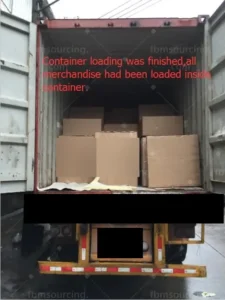
- QC and container loading: one inspection by our own team once production is finished, then loading
- Sea freight: transit time confirmed by the carrier at booking
As a planning allowance, plan around four months from deposit to shipment (around two months for drawings and around two months for production), then sea freight. Co-shipping wardrobes with kitchen cabinets and bathroom vanities in the same container fills the box better and lowers per-unit freight cost on apartment and hotel orders.
FBM Furniture
If your package is mainly apartment and student accommodation furniture, see apartment and student accommodation furniture on fbmfurniture.com, the site of FBM Furniture, the furniture sourcing line of FBM Sourcing Limited.
Get a China Procurement Quote for Your Project
FBM Sourcing handles bedroom wardrobe procurement from China for hotel, apartment, and commercial projects. We manage factory selection, sample approval, production monitoring, pre-shipment QC, and export logistics.
For full specification and pricing, see our wardrobe cabinet sourcing page. For the full cabinet range including kitchen and bathroom vanity, visit our Kitchen & Wardrobe Cabinet page.
Related reading
- Bedroom Furniture from China: Cost, Lead Time and QC Guide for Developers
- Hotel Lobby Furniture Procurement from China: Guide for Hospitality Developers
- Hotel Furniture Sourcing Agent in China: Complete Buyer Guide for Developers and Contractors [2026]
Where the same wardrobe module repeats across hundreds of apartments, the selection problem changes from measuring to repeatability. Our list of built-in wardrobe and closet system manufacturers in China compares the six listed producers by what their own annual reports report in the wardrobe category, and sets out the board, emission and hardware evidence a multifamily or build-to-rent package has to fix before production.