Overview of the Project
Purchased Products
- Walnut-finish bathroom vanities with ceramic basins and wall-hung toilets
- Matte black and brushed brass tapware, kitchen mixers and shower sets (WaterMark certified)
- Porcelain floor tiles, feature tiles and full-body outdoor pavers
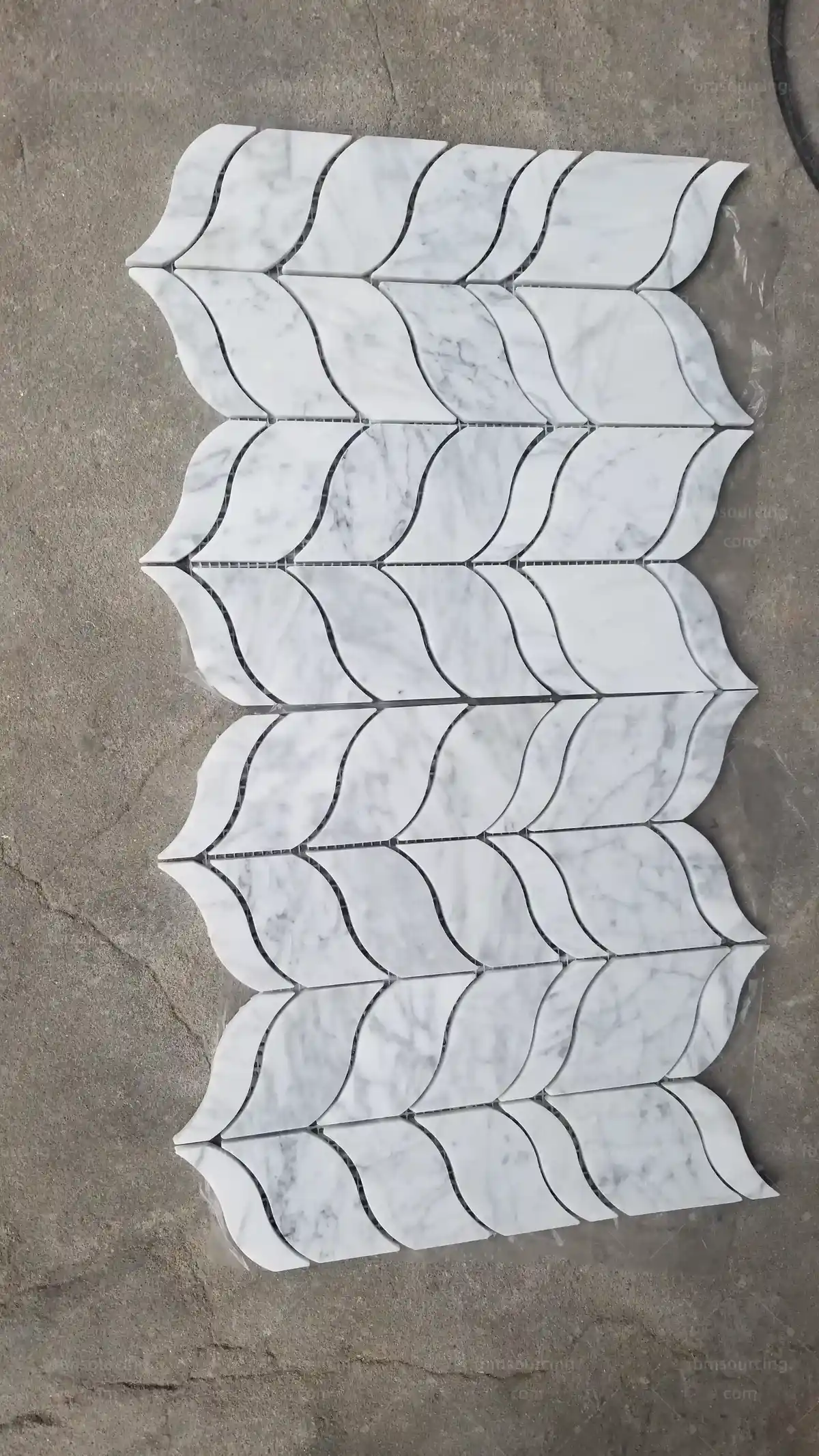
- Carrara marble mosaics (fish-scale, leaf and rhombus) and crackle-glaze pool mosaics
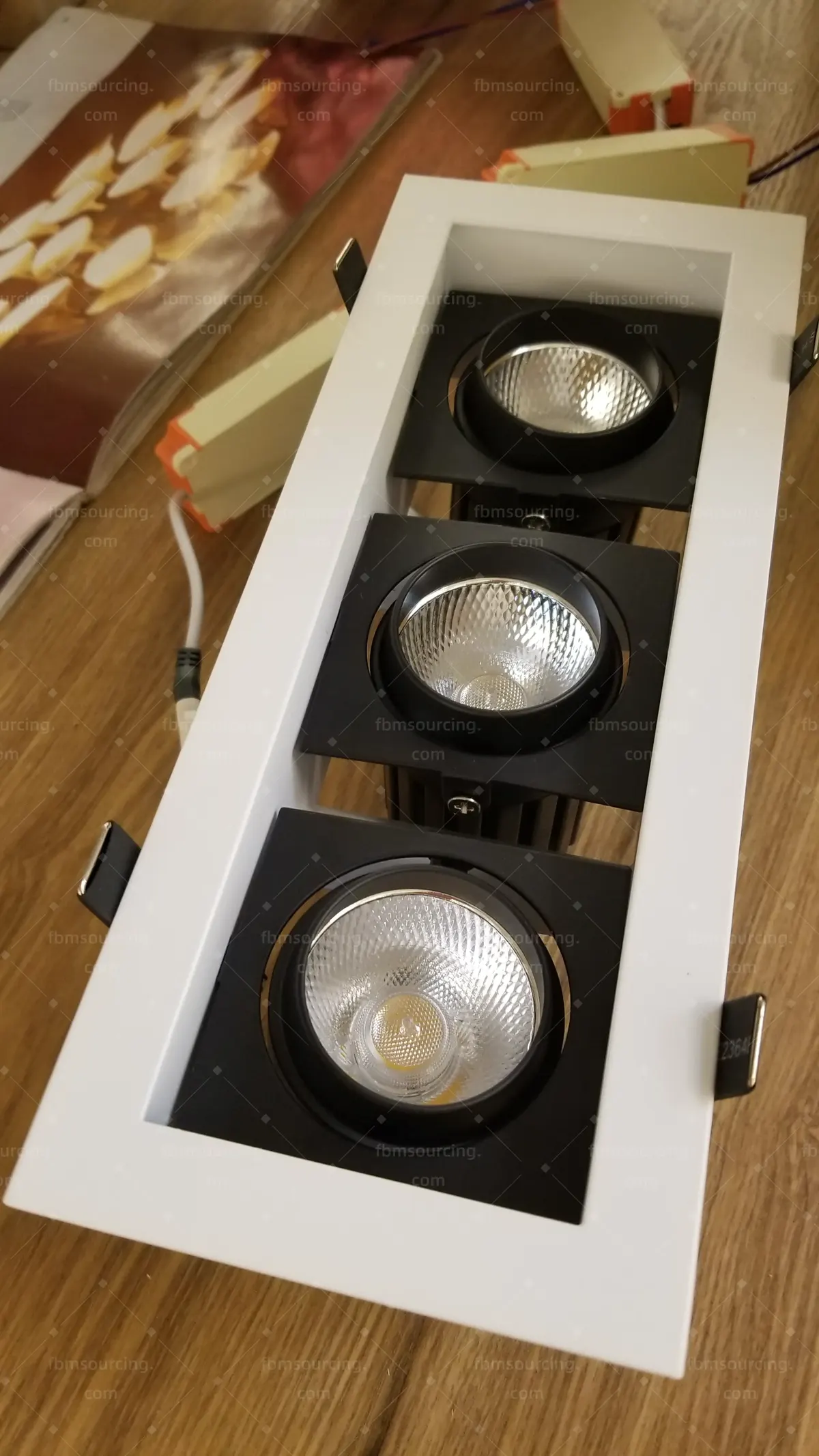
- LED grille downlights, brass pendant and wall lights, DC ceiling fans
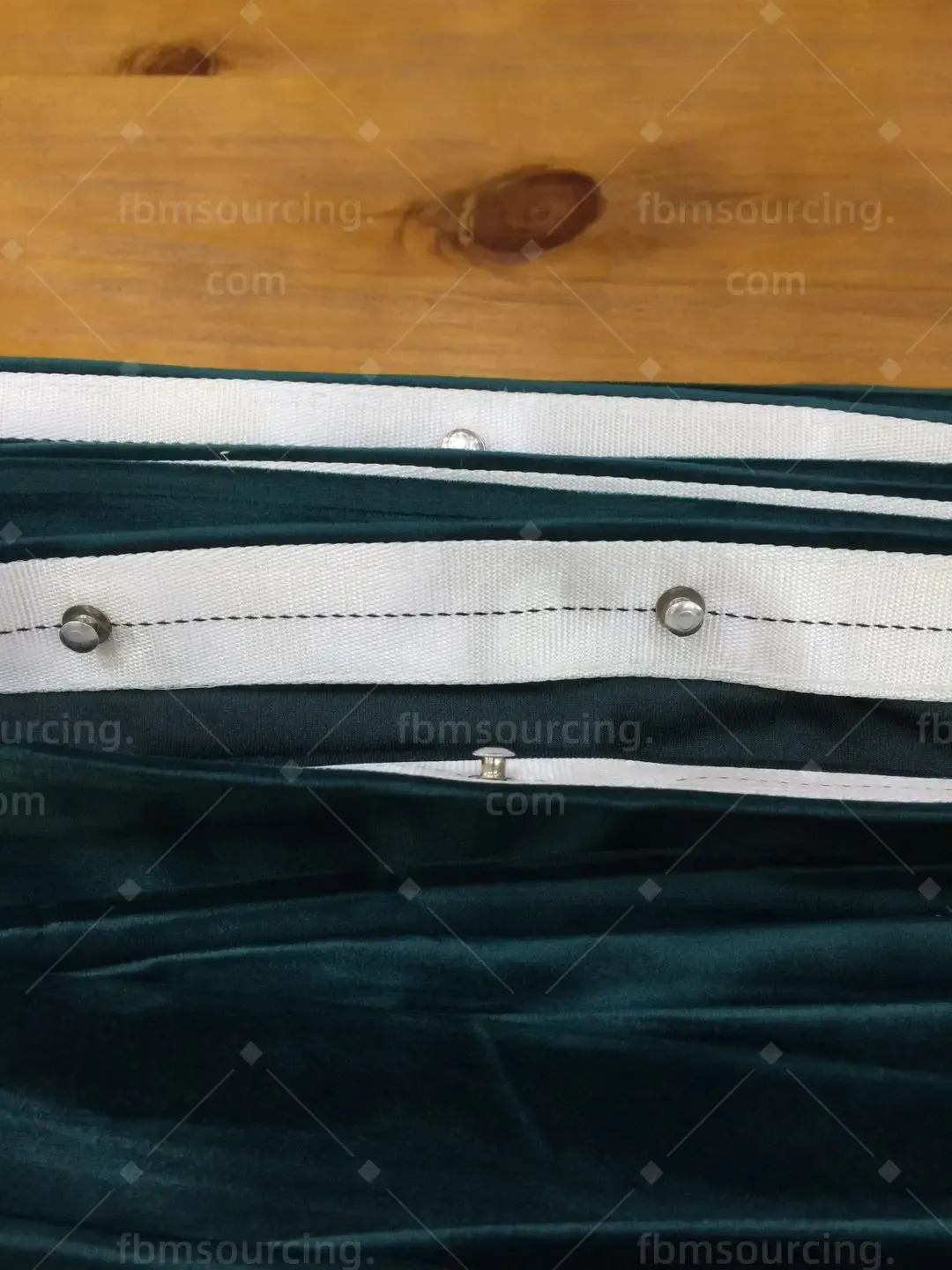
- Velvet curtains with custom headings and hardware
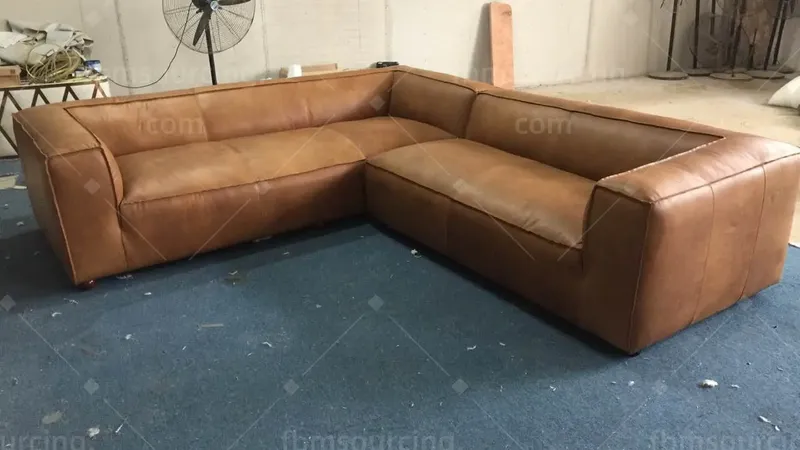
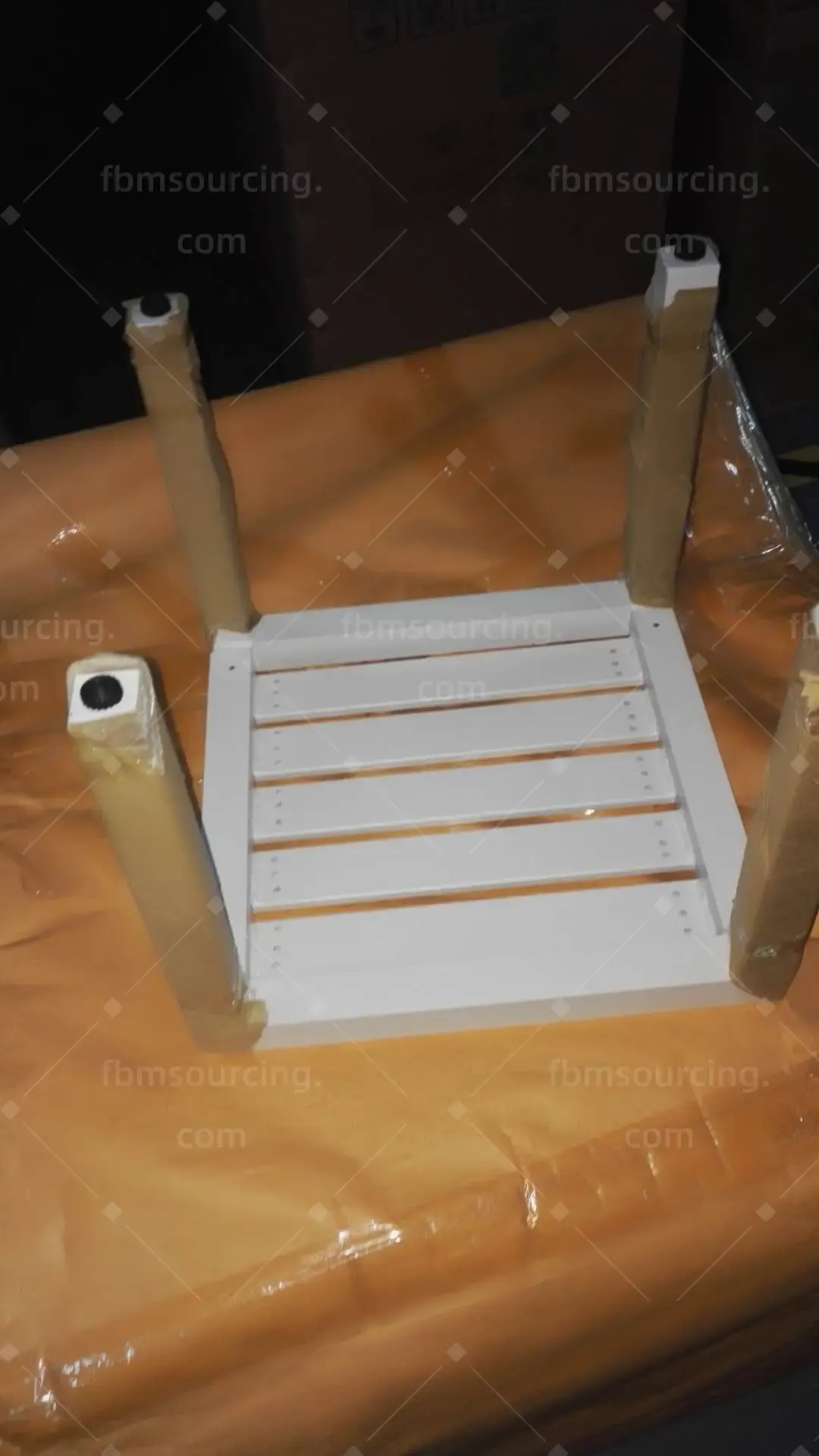
- Leather sectional sofa, dining chairs and powder-coated aluminium outdoor furniture
- Kitchen and wardrobe cabinet carcasses
Project Background
An Australian project owner building a new residence appointed FBM Sourcing as their single China sourcing agent for the complete building materials and FF&E package — bathroom vanities and sanitary ware, WaterMark-certified tapware, porcelain tiles and marble mosaics, lighting, ceiling fans, curtains, cabinets and indoor-outdoor furniture — sourced in Foshan, inspected item by item and delivered in two 40HQ containers.
For developers, builders and FF&E contractors, the real cost of buying construction materials from China is rarely the unit price — it is the risk of coordinating ten-plus unknown suppliers, mismatched lead times, uncertified plumbing products and freight surprises from the other side of the world. This project shows how a single accountable building material sourcing agent removes that risk: one supplier shortlist, one QC standard, one consolidation plan and one point of responsibility from the Foshan wholesale markets to an Australian port — including a destination port change absorbed mid-project without delaying the build program.
Project Type
New home full-house building materials and furniture procurement
Location
Australia
Project Highlights
Ten-plus product categories from one sourcing program, WaterMark-certified tapware, and a mid-project destination port change absorbed without delay
Project Delivery Time
2018
How It Works?
Understanding Client Needs
The client arrived with a complete new-build specification: more than ten product categories covering bathroom vanities, basins and wall-hung toilets, kitchen mixers and shower sets, floor and feature tiles, marble mosaics, pool mosaics, downlights and decorative lighting, DC ceiling fans, custom curtains, cabinet carcasses, and indoor plus outdoor furniture. Each category carried its own technical requirements — WaterMark certification for tapware and toilets to meet Australian plumbing standards, exact tile formats and calibres taken off the floor plan, curtain drops measured to the window schedule, and furniture finishes matched to the interior design intent.
Before any factory was approached, every requirement was consolidated into one master procurement list: quantities from the drawings, finish boards, compliance standards and the on-site delivery window. That list became the single reference for supplier selection, sample approval, China quality inspection and the final packing plan — the same discipline we apply to hotel and apartment FF&E programs. For project buyers, this is the step that decides whether a mixed-category order arrives as one coordinated delivery or as a year of chasing loose ends.
On a mixed-category order the specification format matters as much as the specification itself. Quantities were structured the way a bill of quantities reads on site — per room, per elevation, per wet area — then converted into factory order units: square metres of tile with cutting and breakage allowances, curtain fabric by the roll against the window schedule, tapware and sanitary ware by fixture count with attic stock for maintenance. Structuring the master list this way meant every later decision — sample approval, inspection sampling, carton labelling — could be traced back to a room on the drawings, which is what allows an overseas owner or contractor to receive two full containers and know exactly where every carton belongs on site.
Market Sourcing and Factory Selection
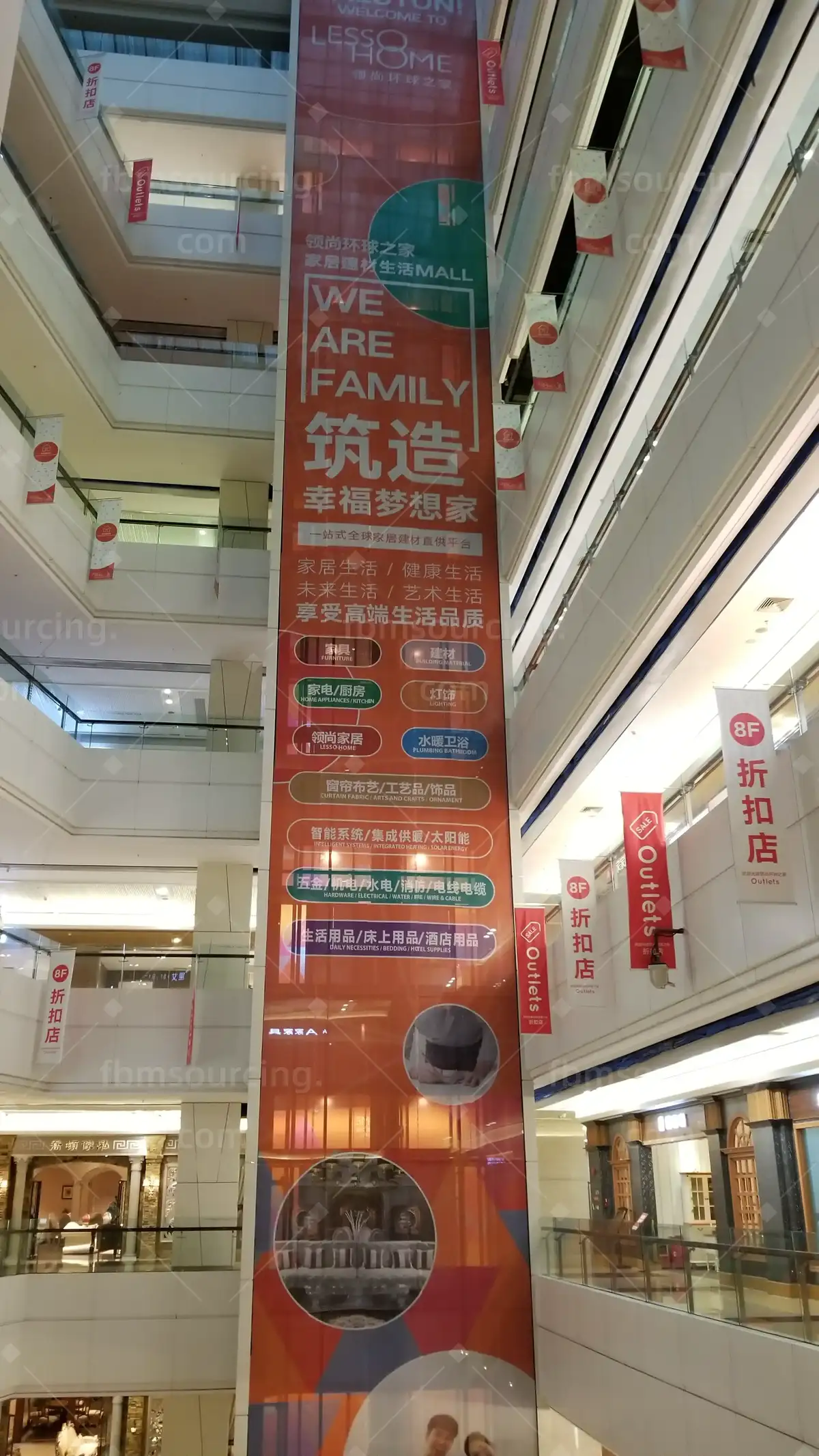
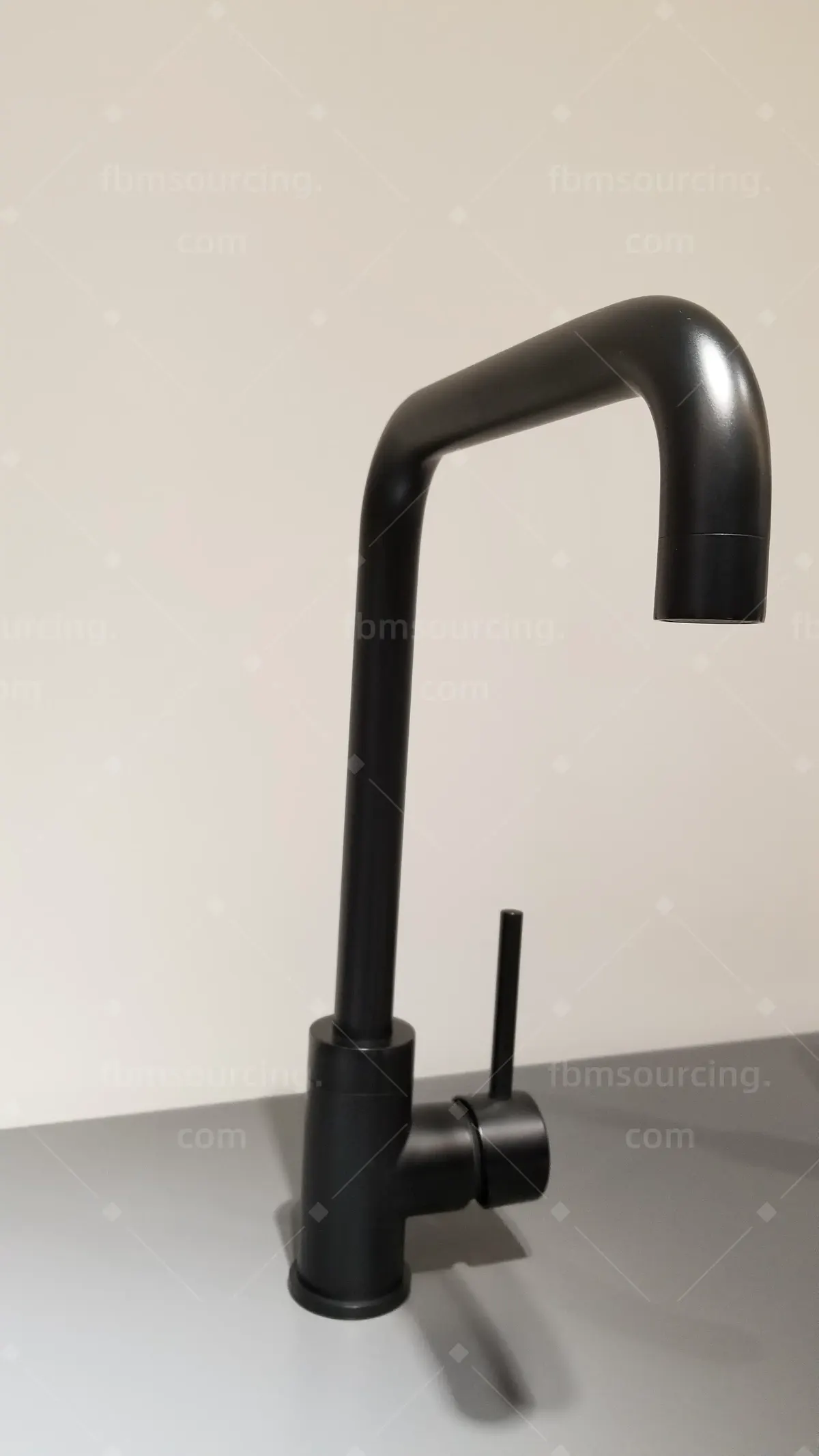
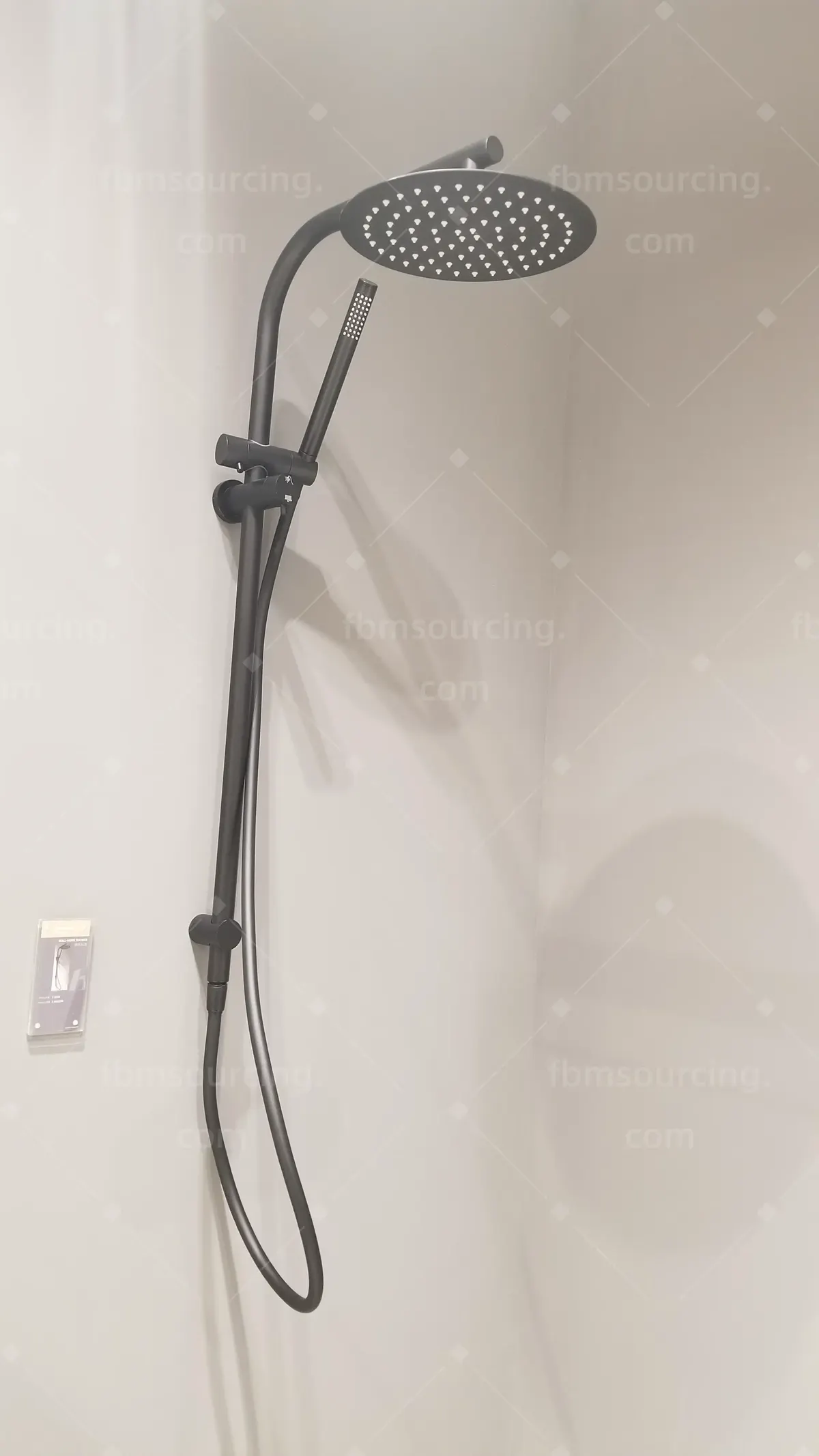
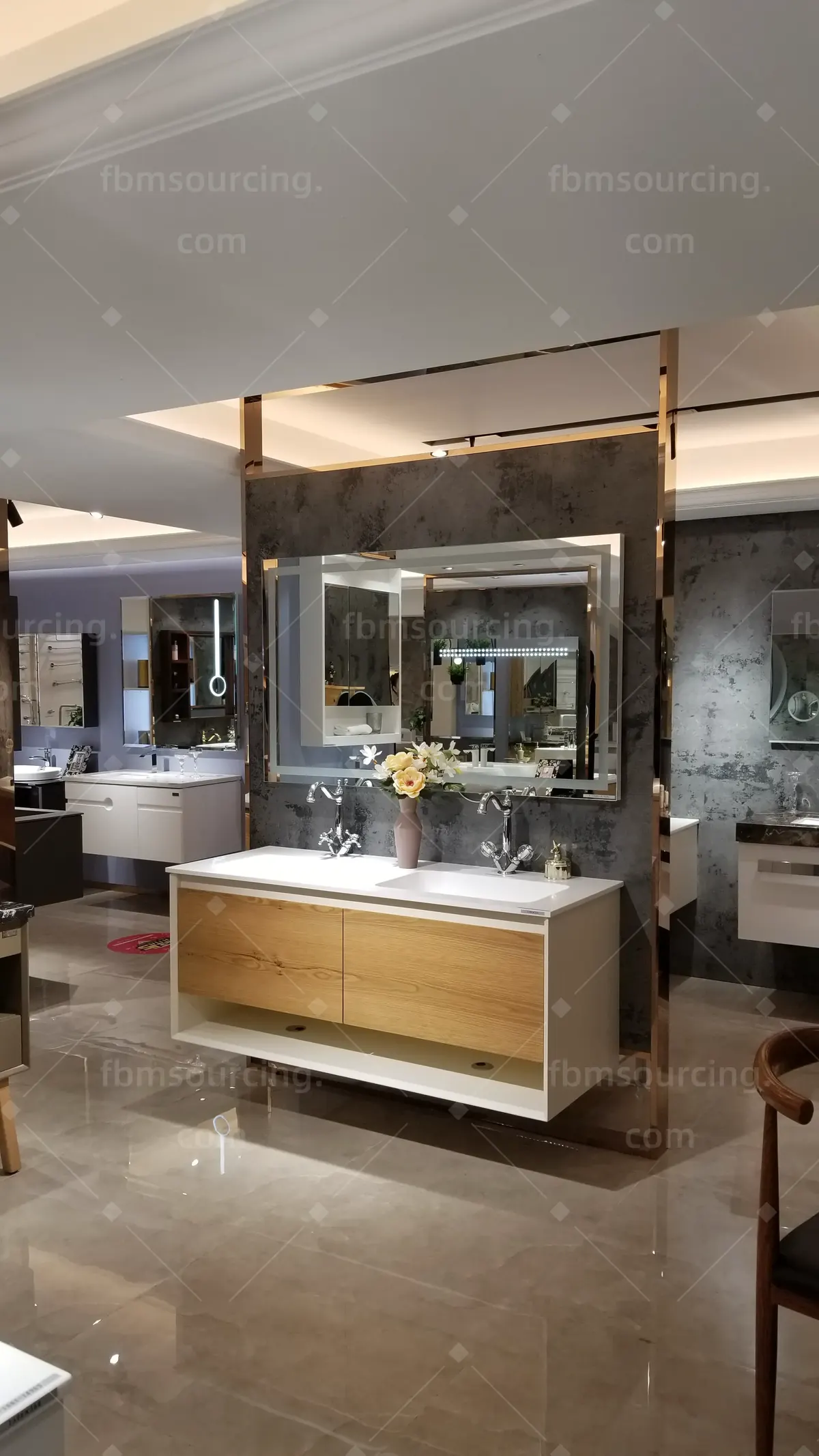
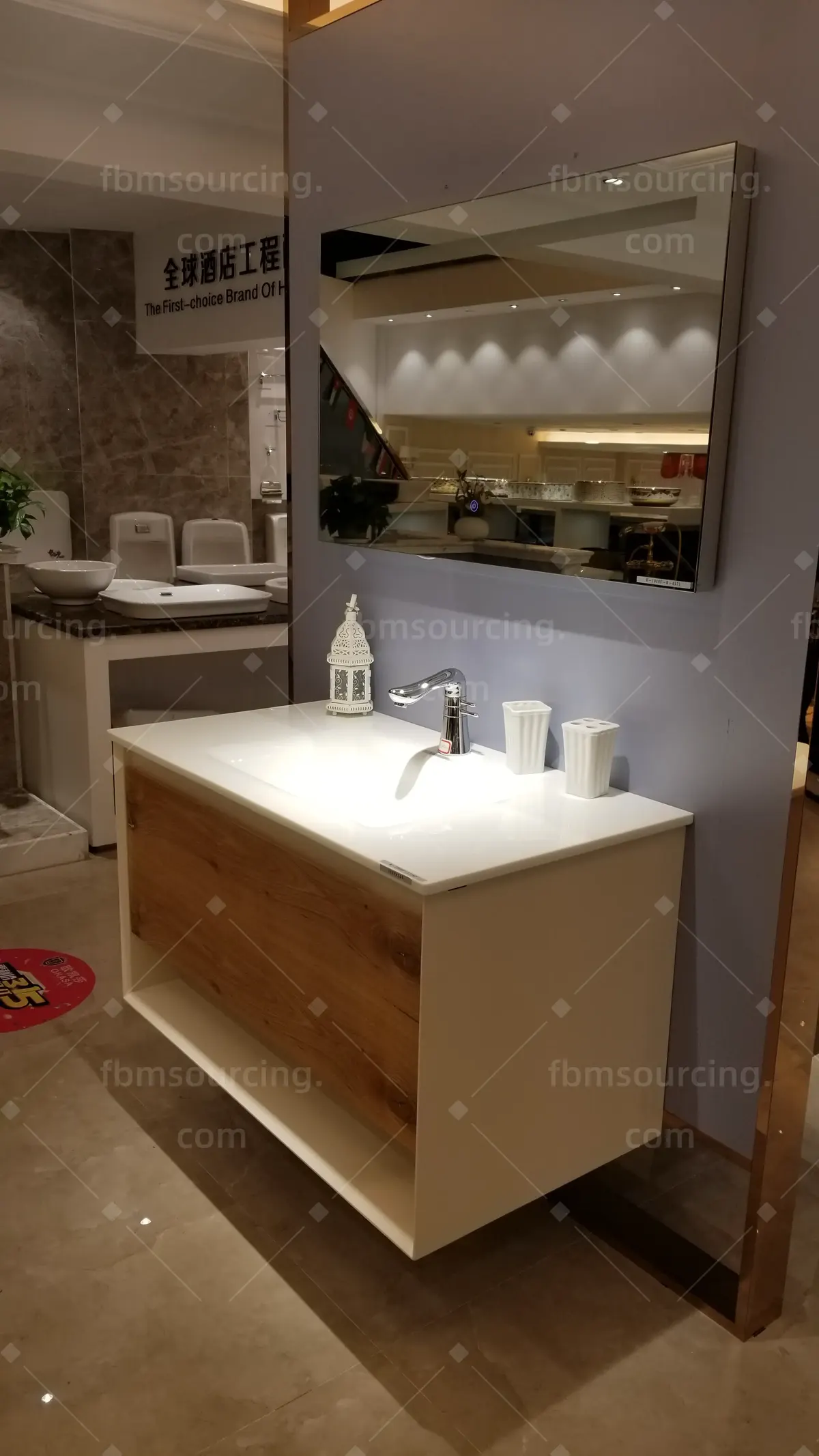
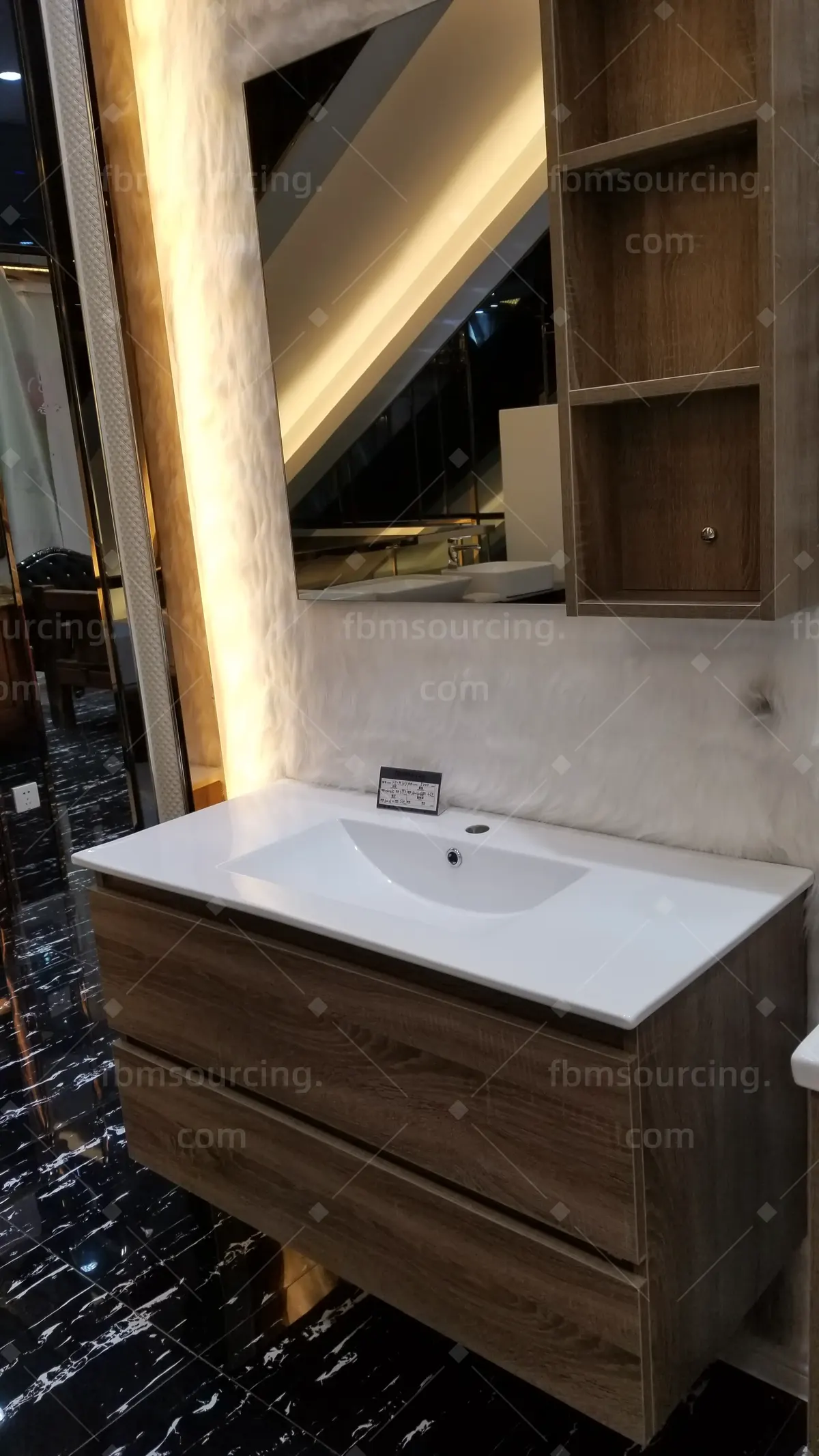
Foshan is the world’s densest concentration of building material and furniture manufacturing, and it is FBM Sourcing’s home ground. The client flew in and walked the wholesale markets with our team — tile halls, sanitary ware showrooms, lighting malls and furniture districts — confirming every product physically instead of gambling on catalogue photos. Foshan building materials selection covered marble-look porcelain tiles, geometric feature tiles, Carrara fish-scale, leaf and rhombus mosaics, and crackle-glaze pool mosaics checked slab by slab and sheet by sheet. Sanitary ware was shortlisted with Australian compliance in mind: matte black and brushed brass tapware, rain shower sets, basins, freestanding bathtubs and wall-hung toilets, all WaterMark certified.
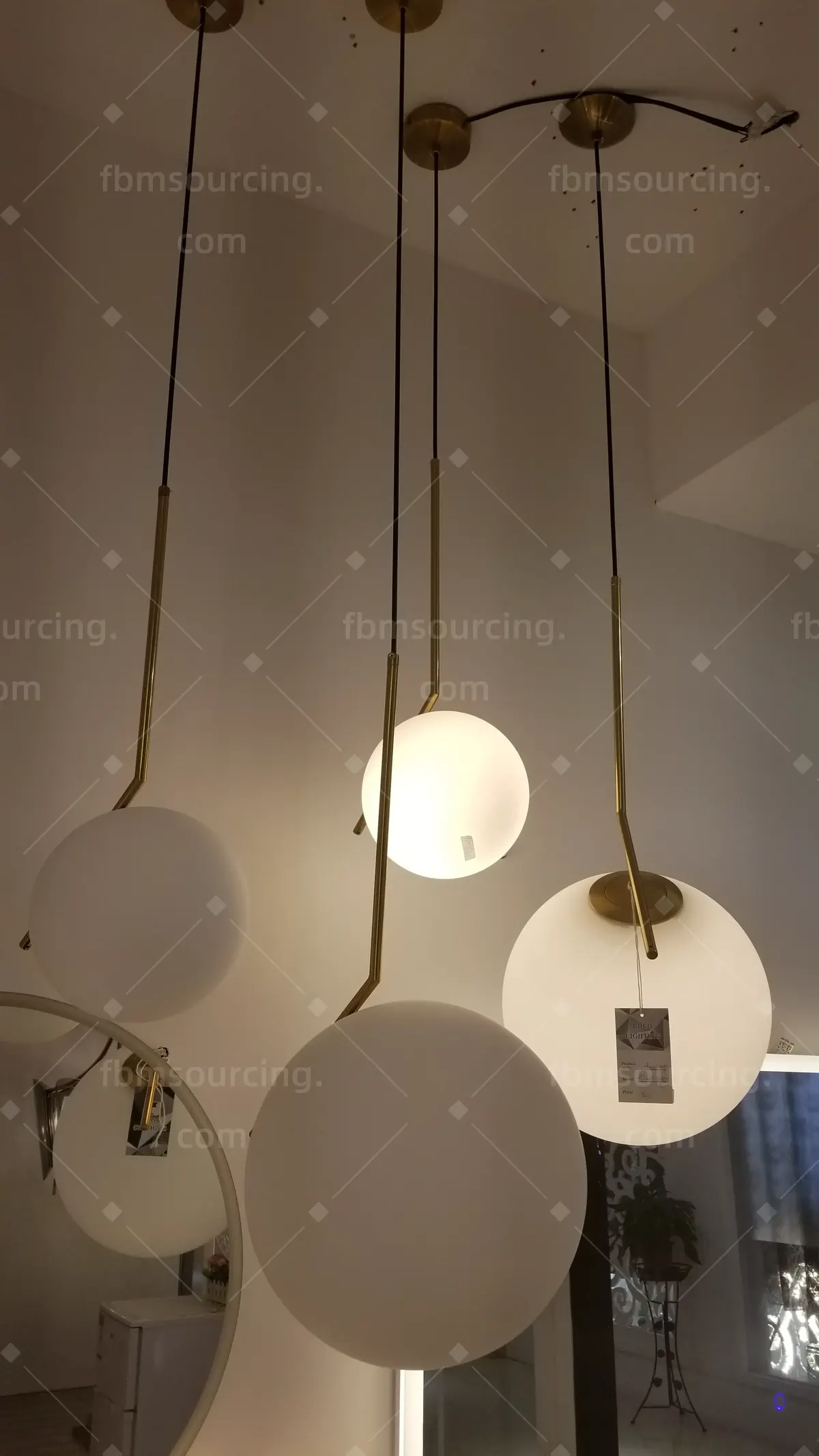
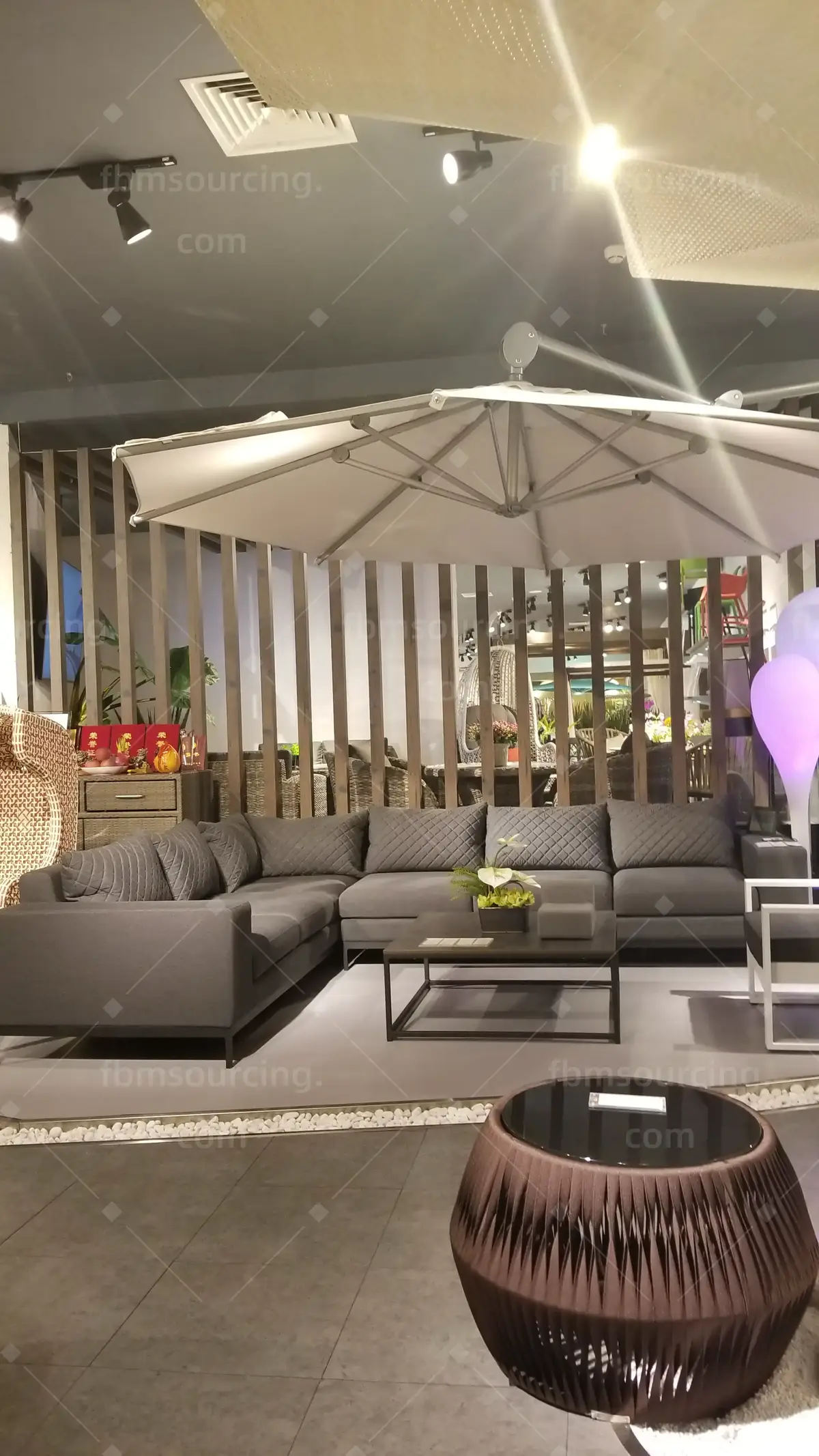
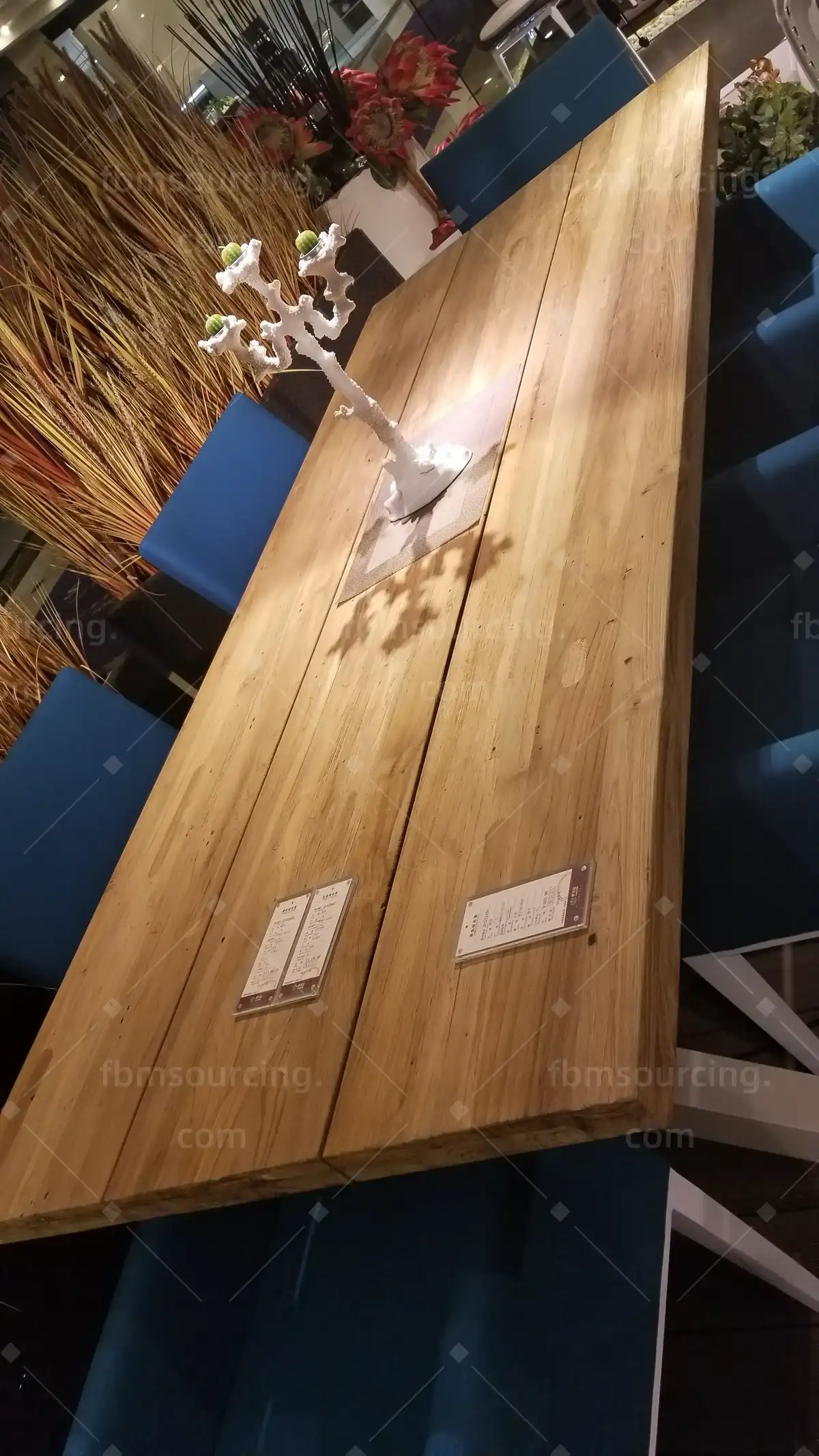
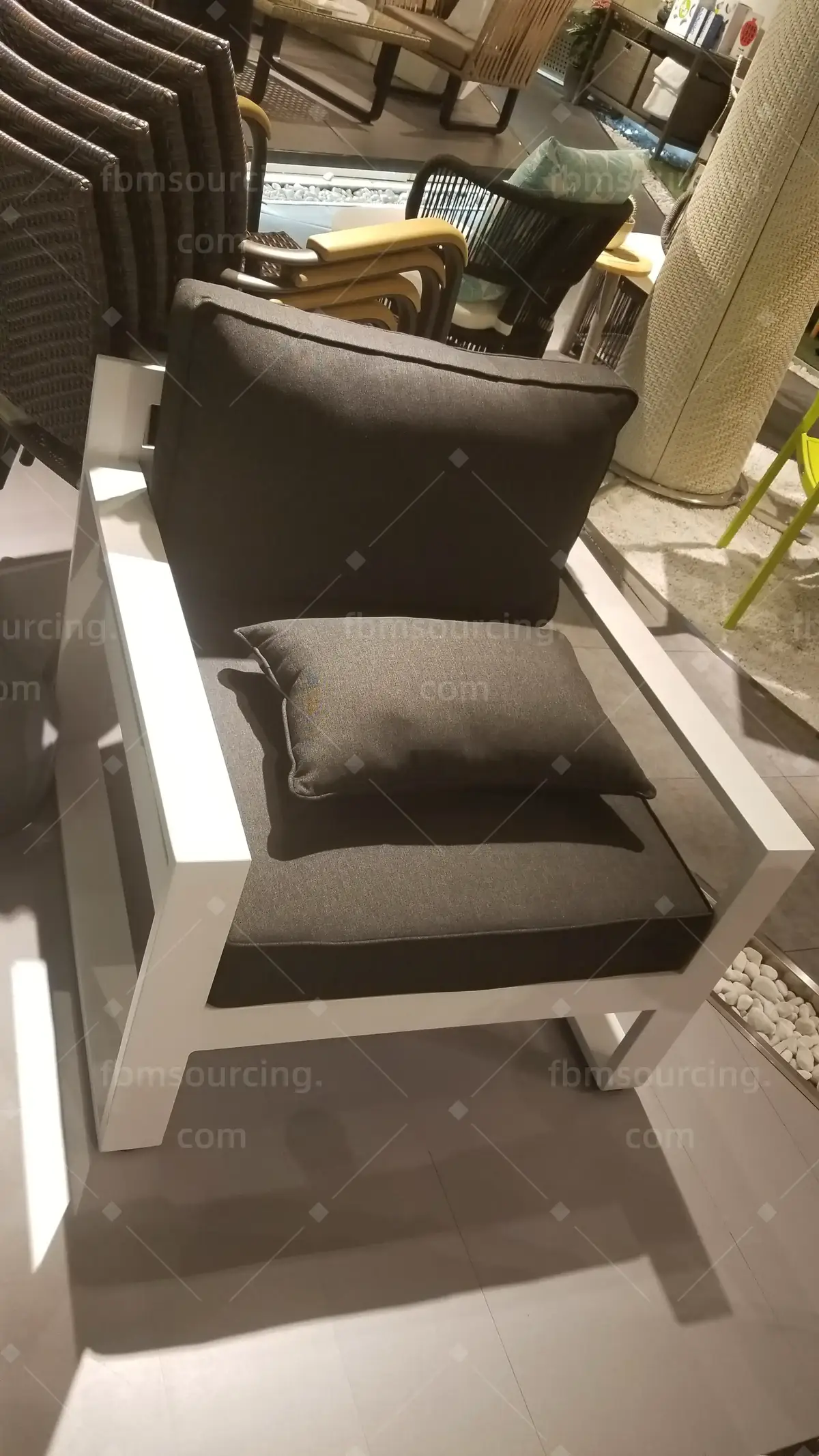
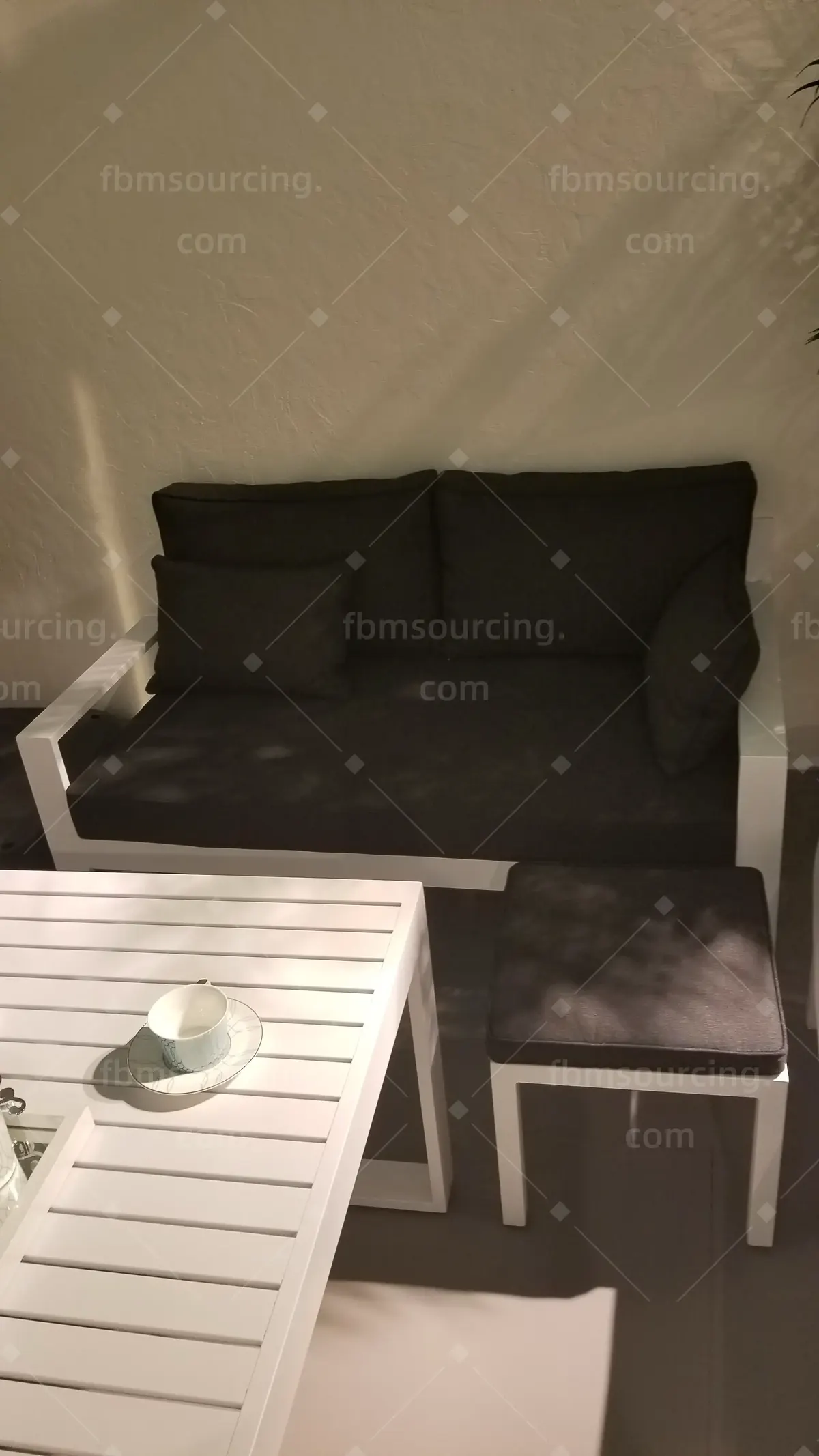
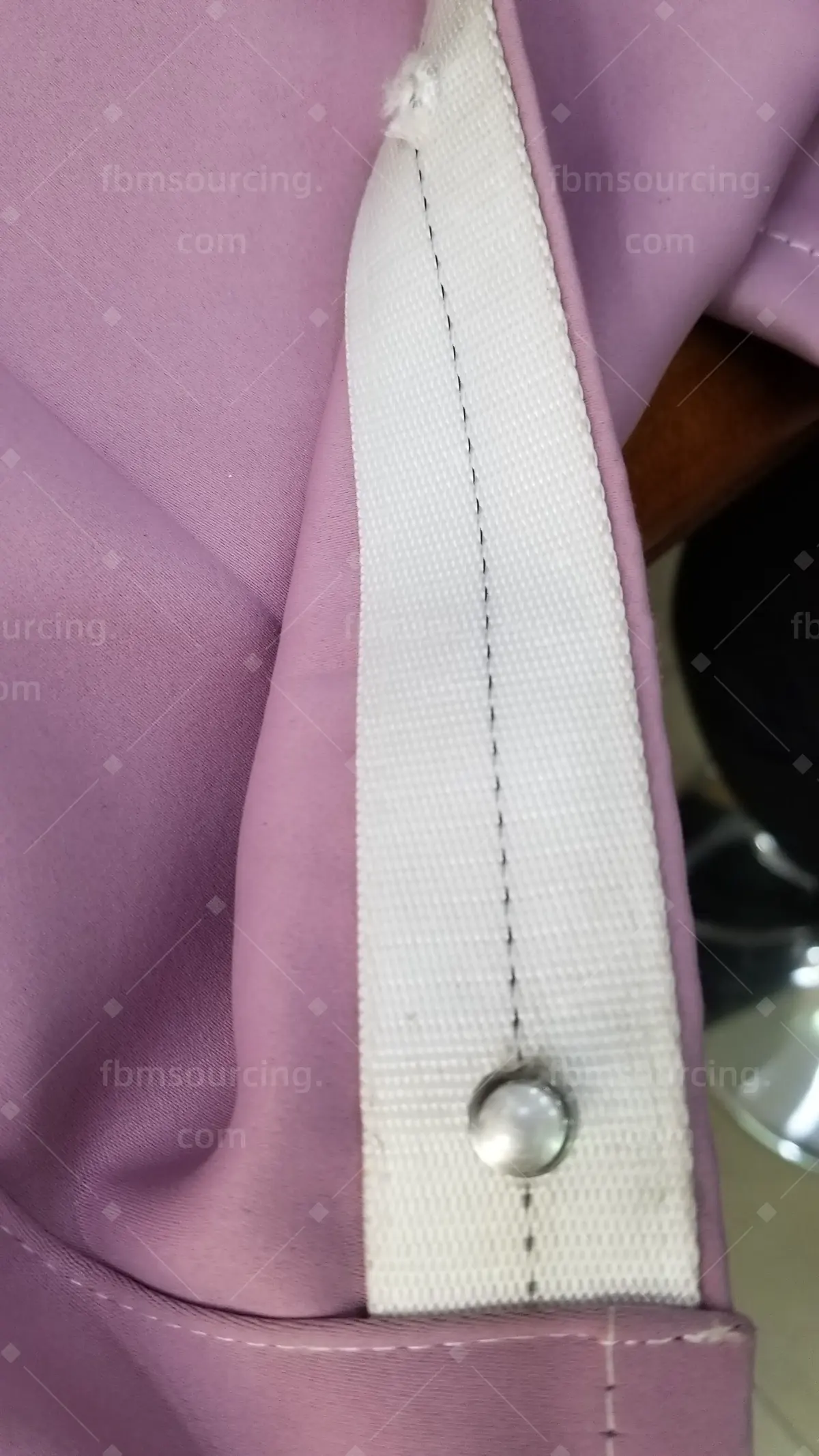
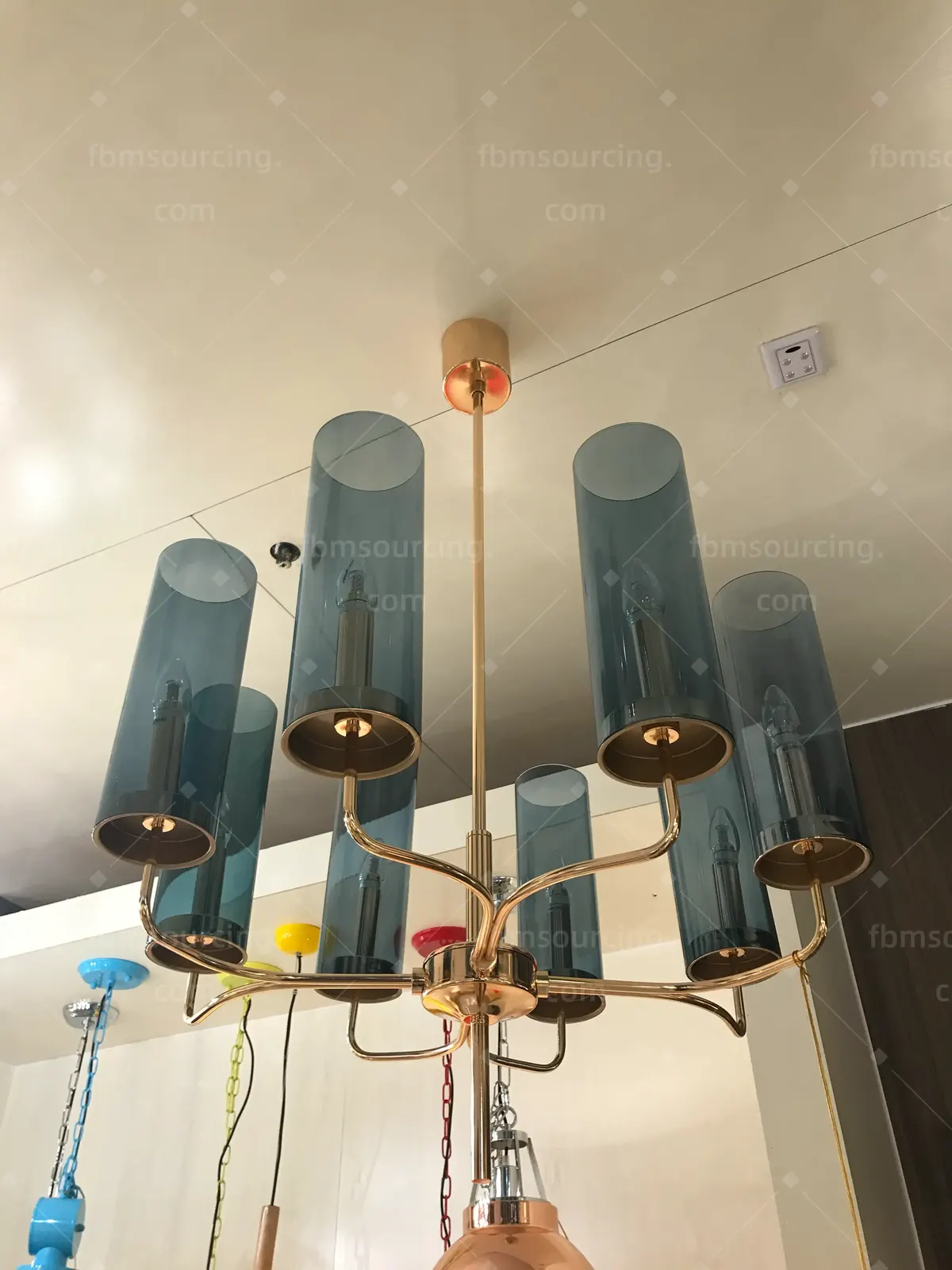
Lighting and electrical selections included LED grille downlights, brass and glass pendants, wall lights and remote-controlled DC ceiling fans. Velvet curtain fabrics were confirmed against the window schedule, and the furniture package — leather sectional sofa, timber-frame dining chairs, teak and powder-coated aluminium outdoor pieces — was selected from specialist showrooms. Each confirmed item was then traced back to its manufacturer, and our team negotiated pricing, lead time and export packing terms factory by factory. This is the working advantage of a sourcing agent in China with fifteen years of Foshan supplier relationships: the client saw two days of showrooms; behind it sat a vetted factory network.
Two practical realities decide cost on this kind of package. First, market showrooms and their factories quote differently: the showroom price includes retail margin, while the factory behind it will quote export terms once volumes are on the table — knowing which door to knock on is worth more than any negotiation technique. Second, minimum order quantities differ sharply by category: porcelain tiles and mosaics are flexible at project volumes, custom vanities and curtains are made to order at any quantity, while tapware and lighting carry model-level MOQs that need to be balanced against the fixture schedule. Because FBM Sourcing manages both sides — market selection with the client, factory negotiation afterwards — the final supplier list reflected export pricing and realistic MOQs, not showroom retail.
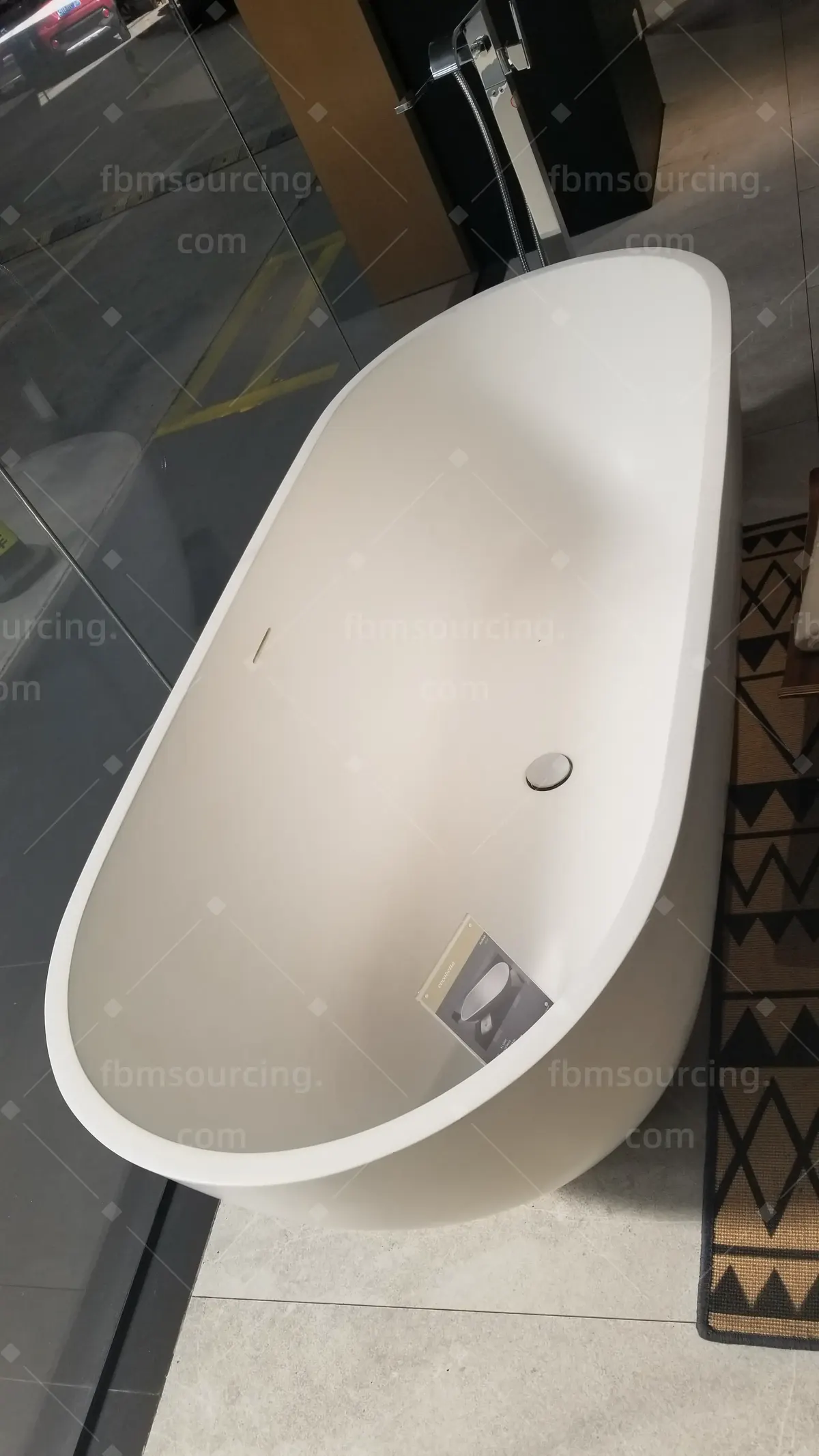
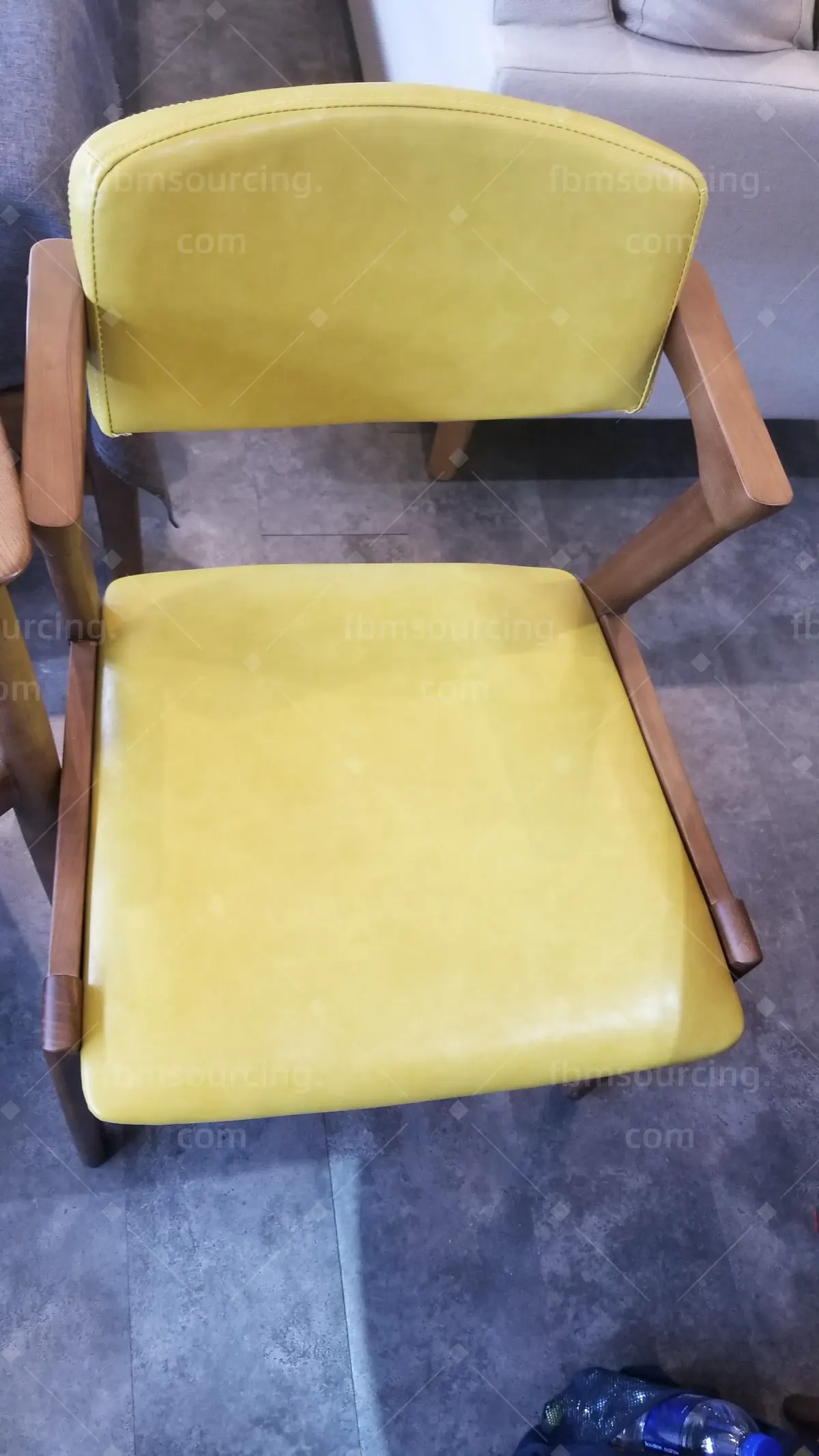
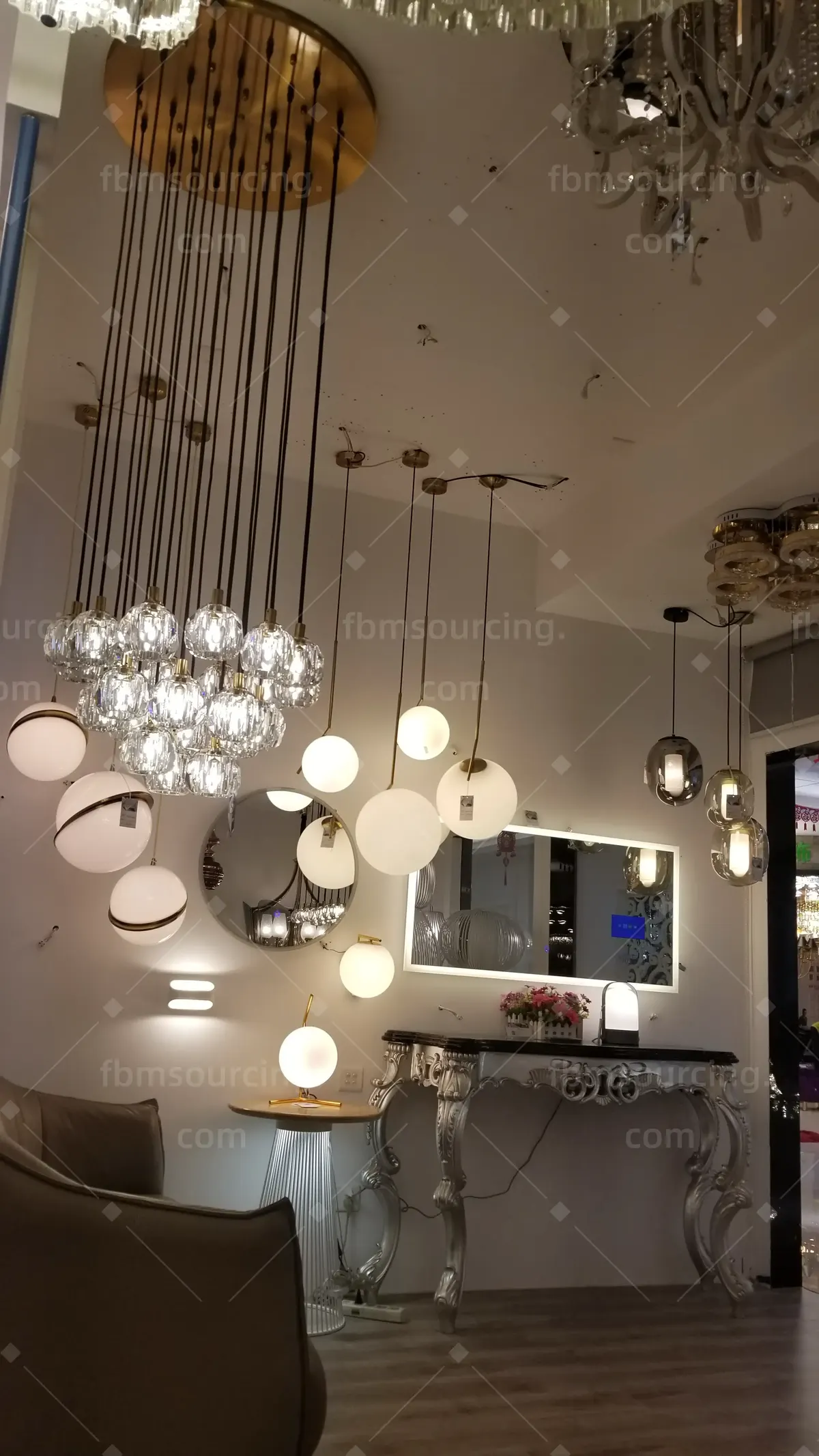
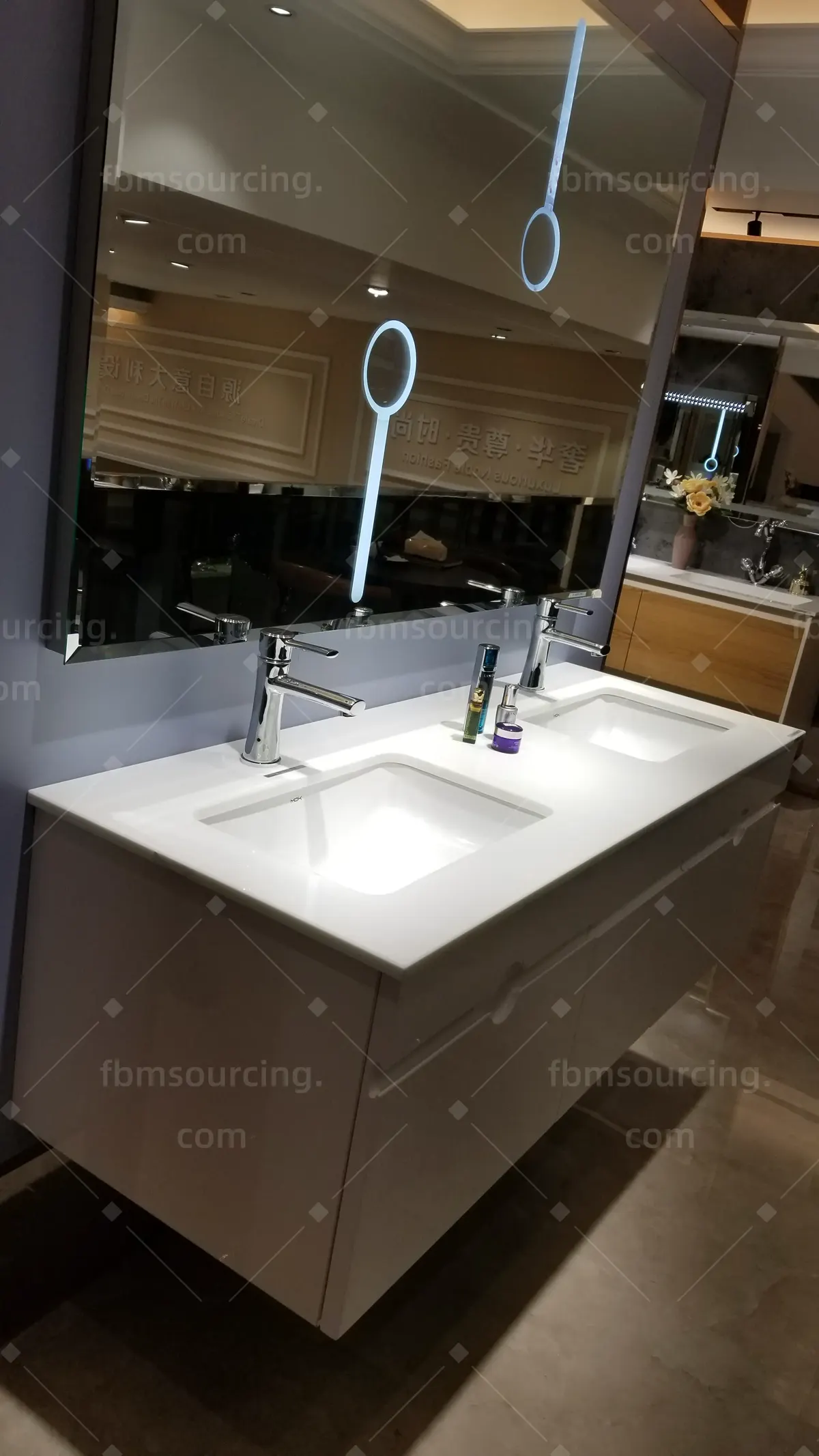

Planning a similar commercial project?
FBM Sourcing works with project owners, developers, main contractors and FF&E contractors on hotel, apartment, school, office and other commercial building projects. Send us your BOQ, drawings or product list — we’ll come back with a sourcing plan and budget estimate.
Order Confirmation and Production Scheduling
Orders were placed with more than ten specialist factories on one coordinated production schedule, timed so that sanitary ware, tiles and mosaics, lighting, fans, curtains, cabinets and furniture would all close production inside the same window. Purchase terms, deposits, technical drawings and order confirmations were managed centrally by FBM Sourcing — the client dealt with one team and one payment plan instead of a dozen separate Chinese suppliers with different banks, different Incoterms and different ideas about export packing. For builders and general contractors, this consolidation is what makes it practical to import building materials from China inside a live construction program: one schedule to track, not twelve.
Lead times were the scheduling constraint: tiles and mosaics close in two to three weeks, sanitary ware and lighting in three to four, while custom vanities, curtains and made-to-order furniture run five to seven weeks. Orders were therefore released in reverse sequence — longest lead time first — so all categories converged on the same consolidation week instead of early goods sitting in storage or late goods holding two booked containers at the yard. This kind of sequencing is routine on our hotel FF&E procurement programs and it is exactly what a project buyer cannot do when every supplier holds their own schedule.
Production Follow-Up and Quality Checks
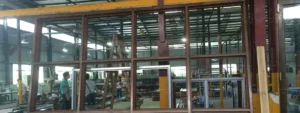
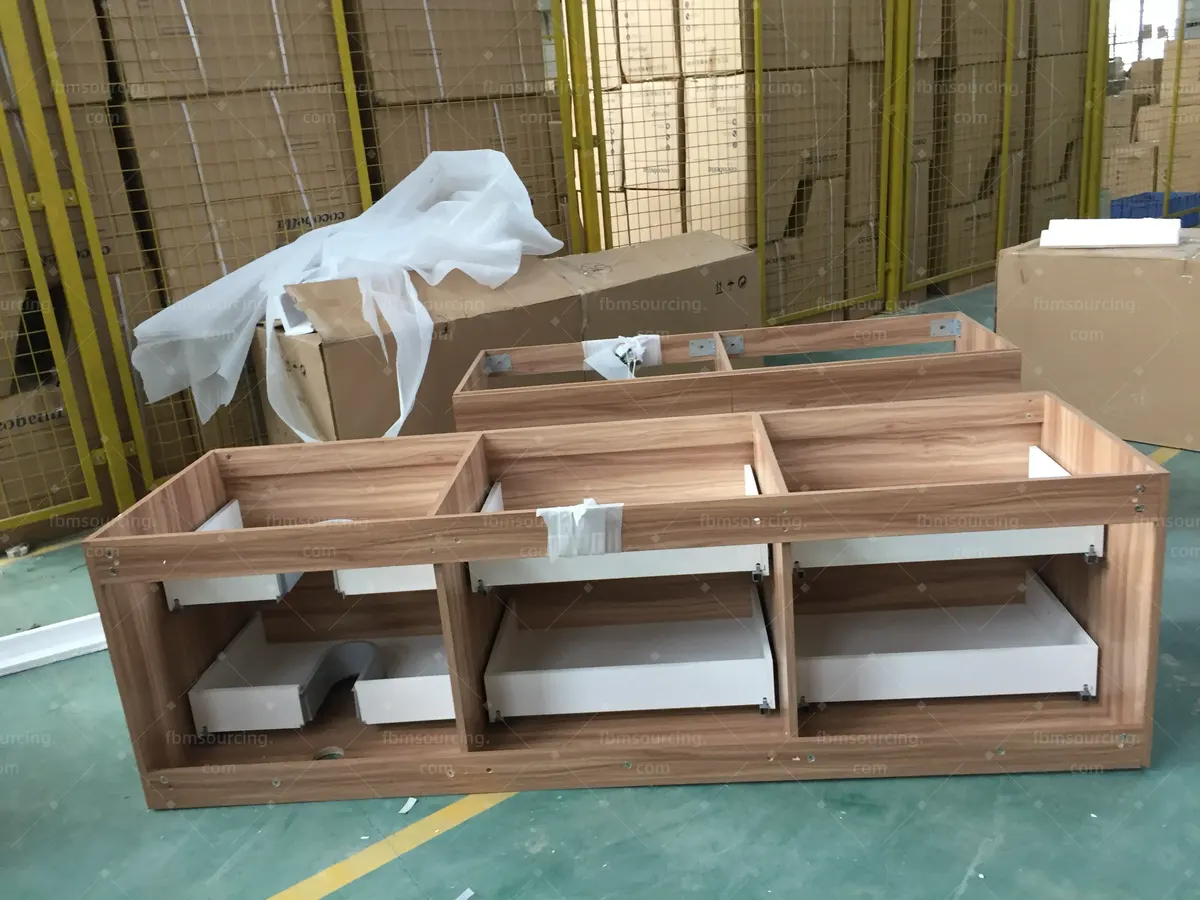
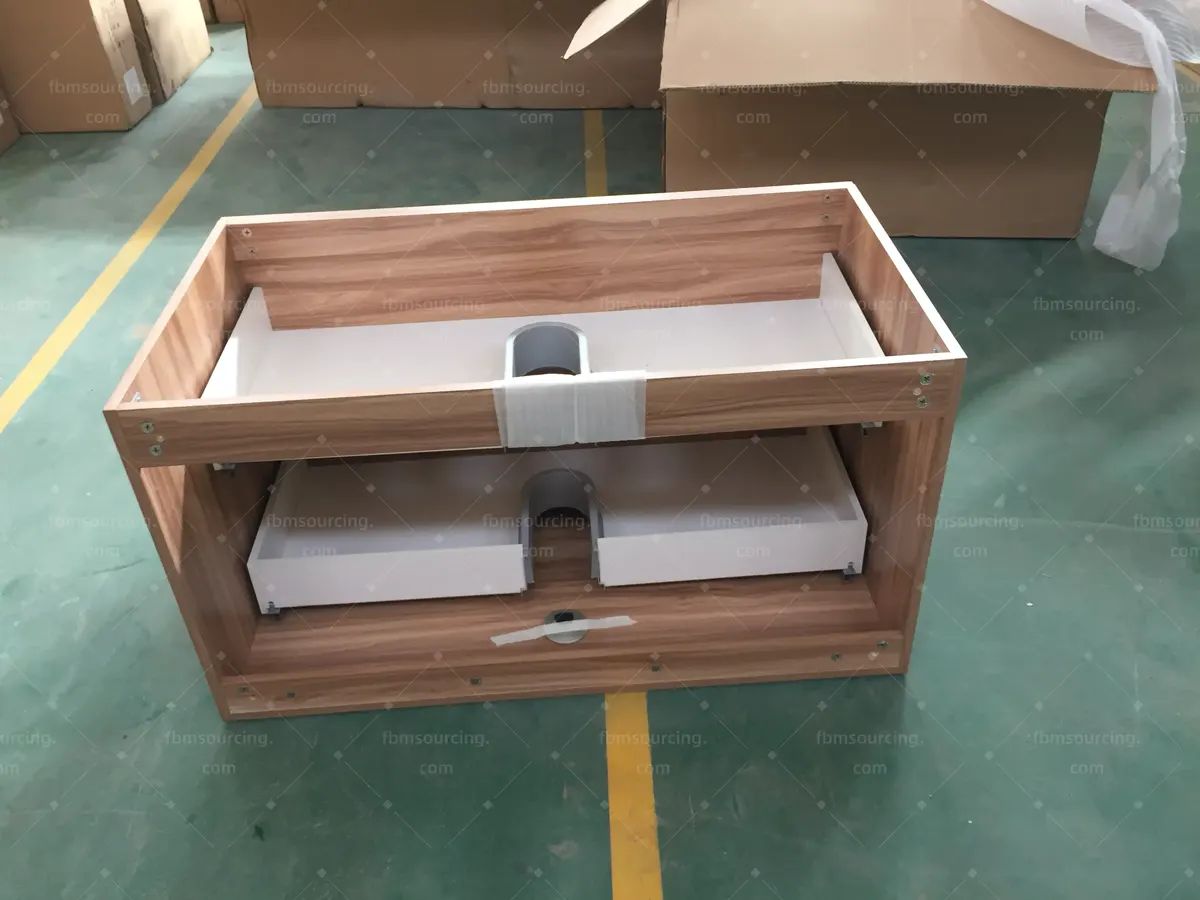
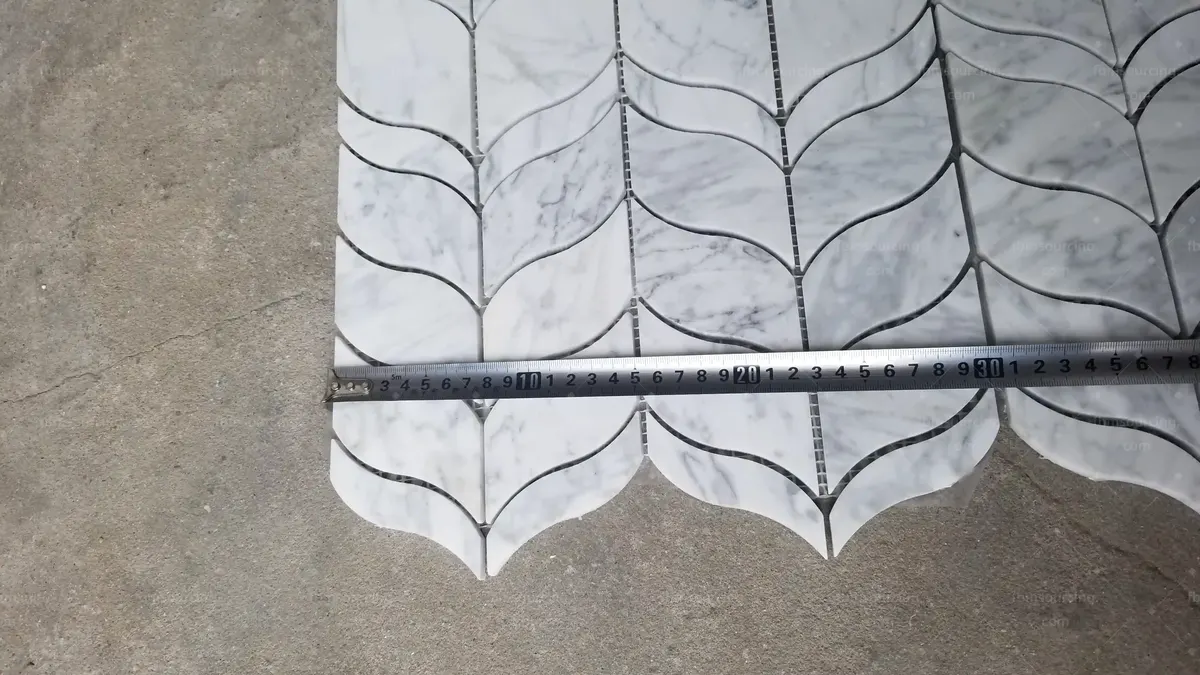
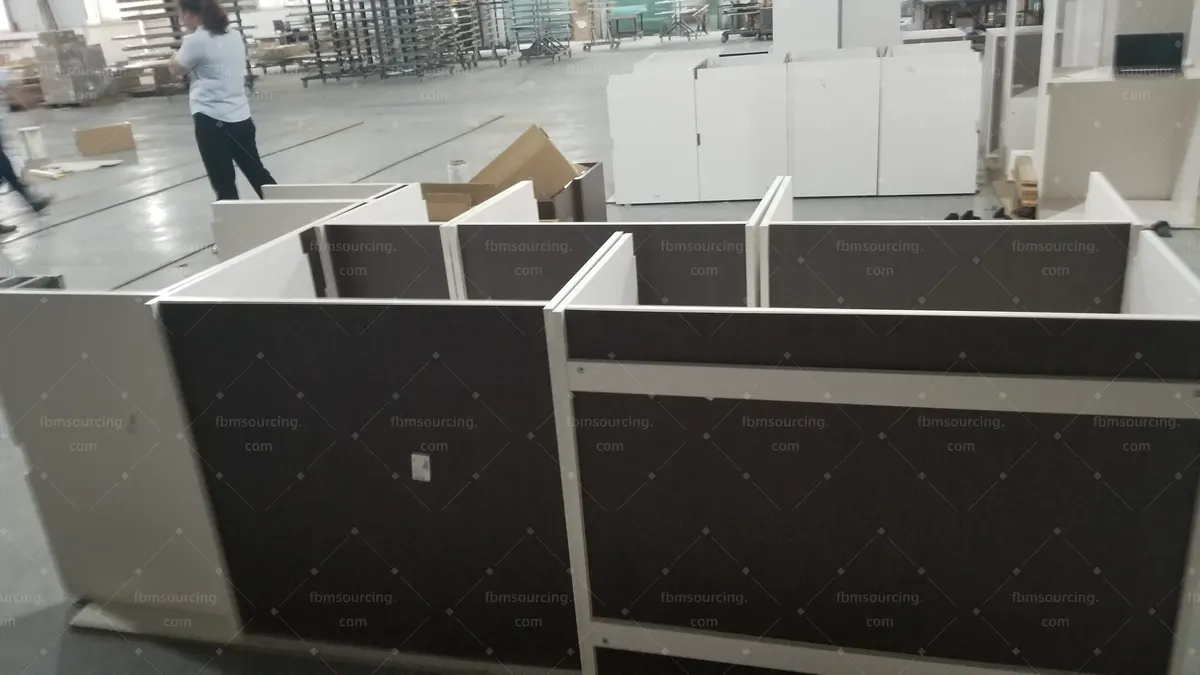
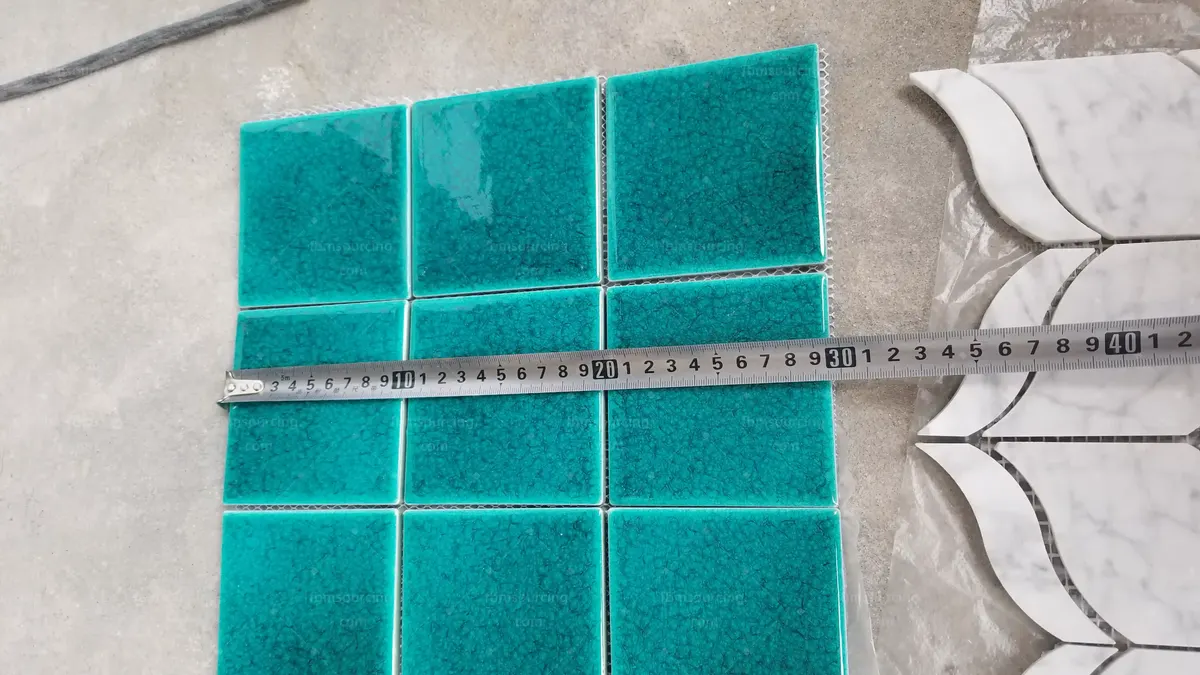
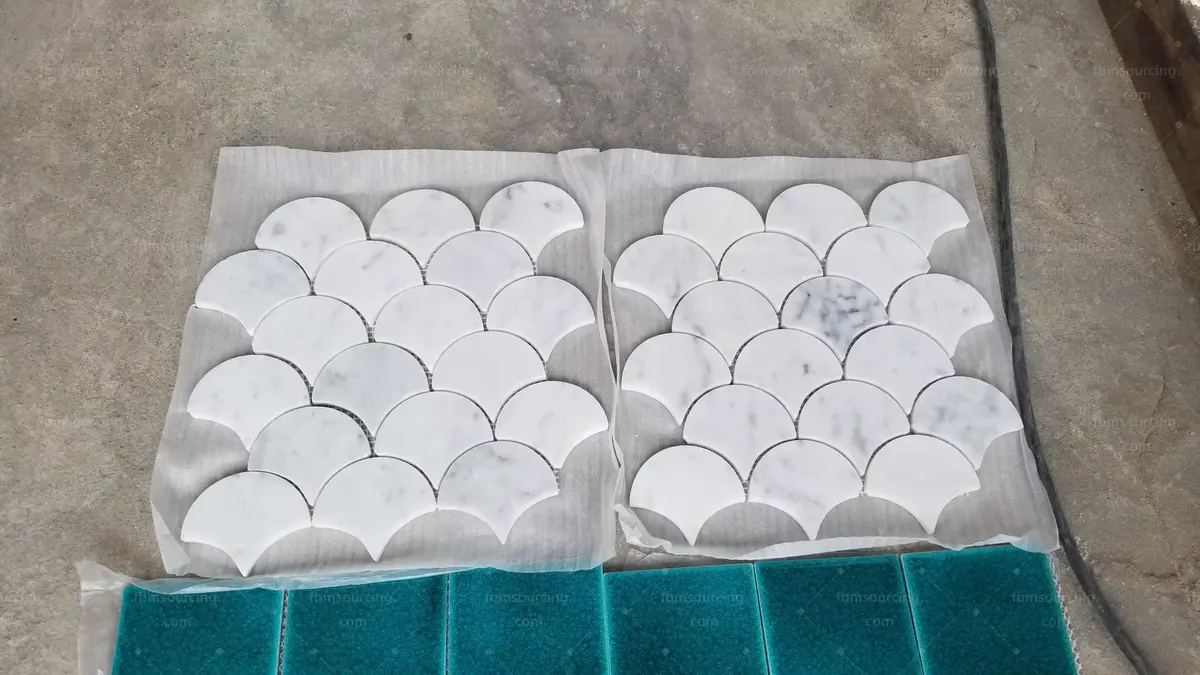
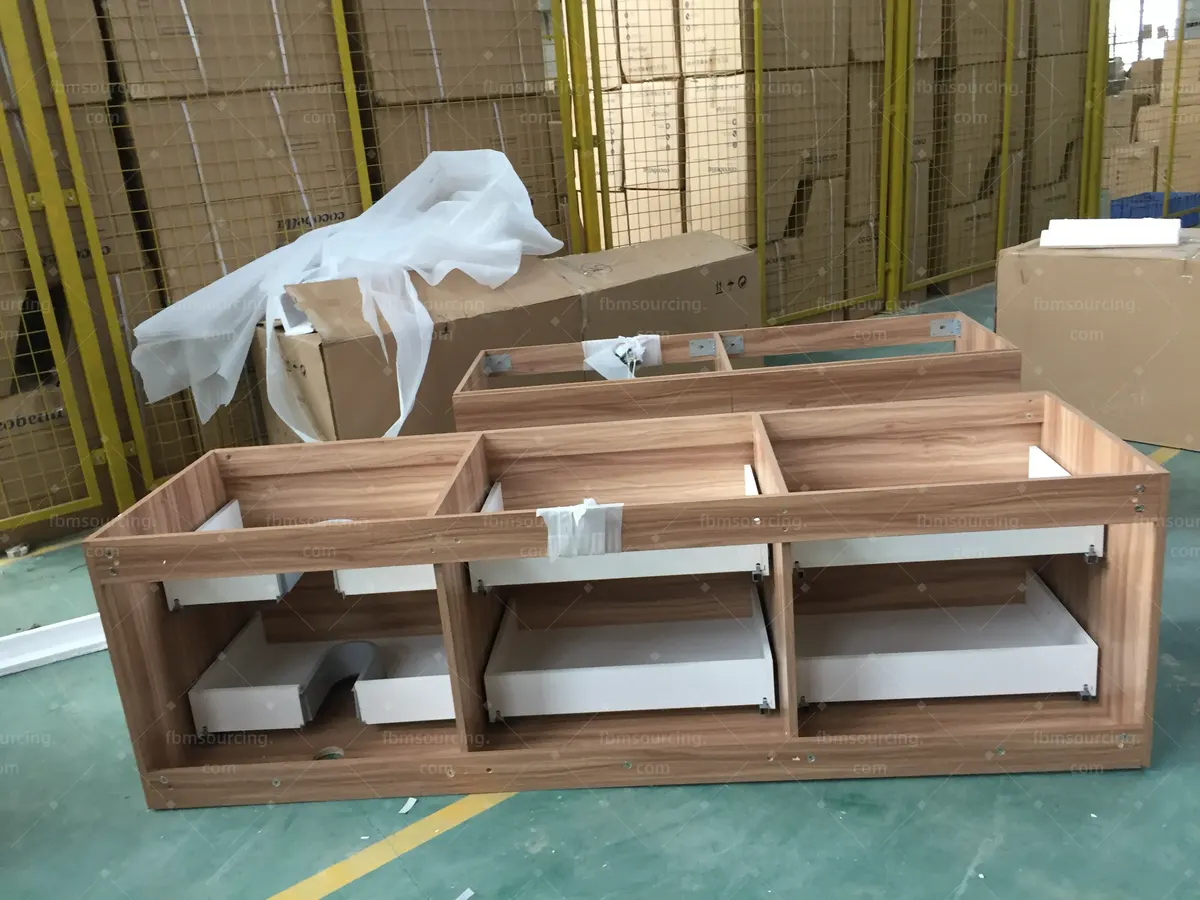
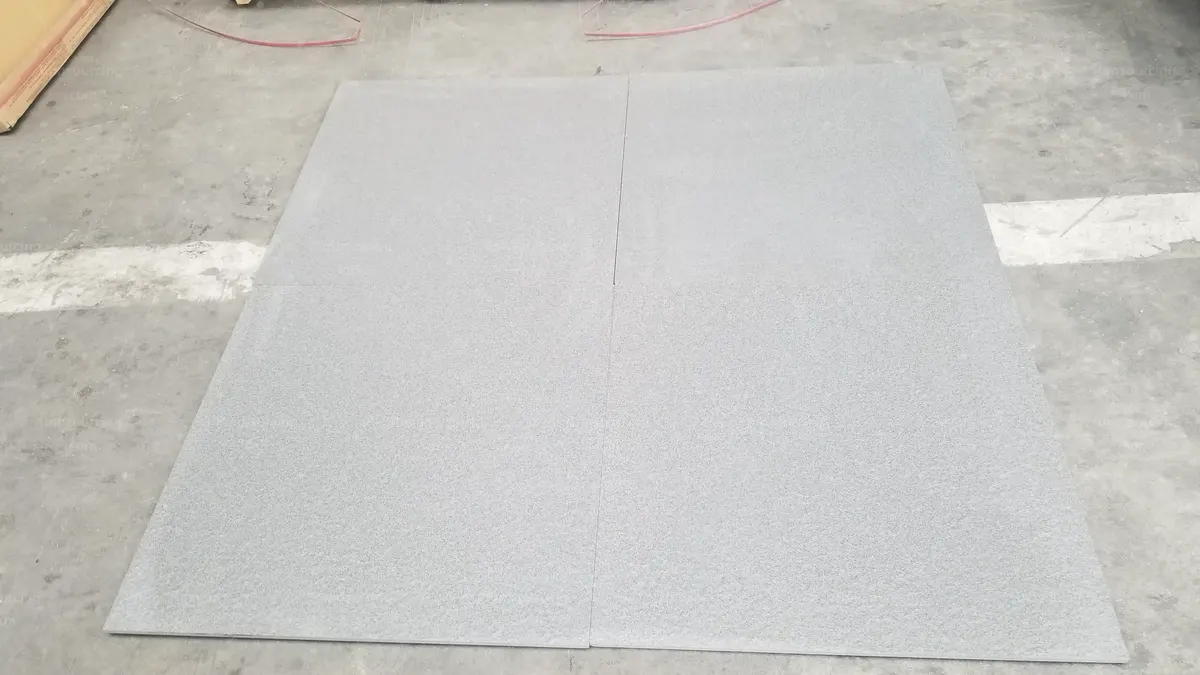
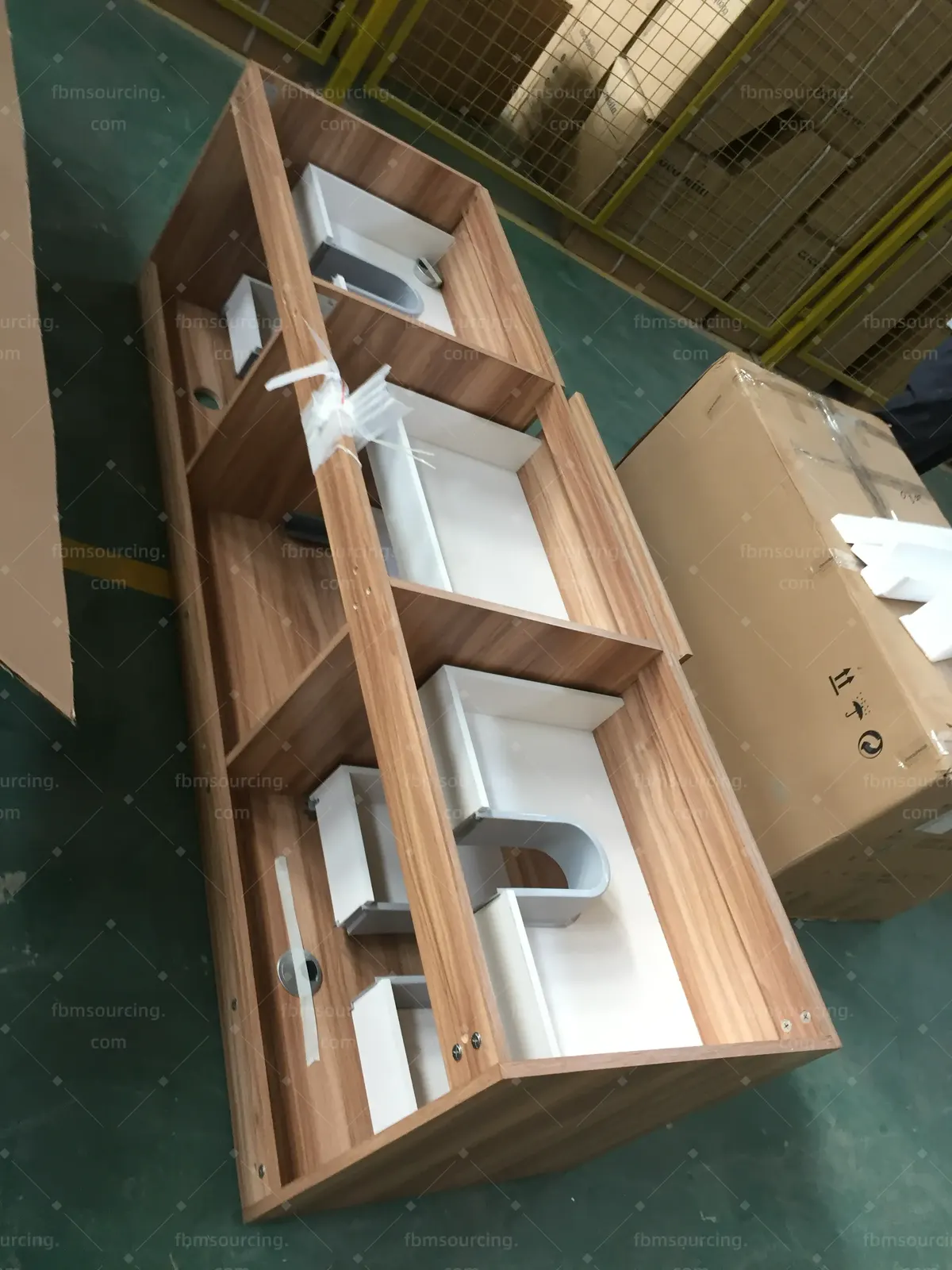
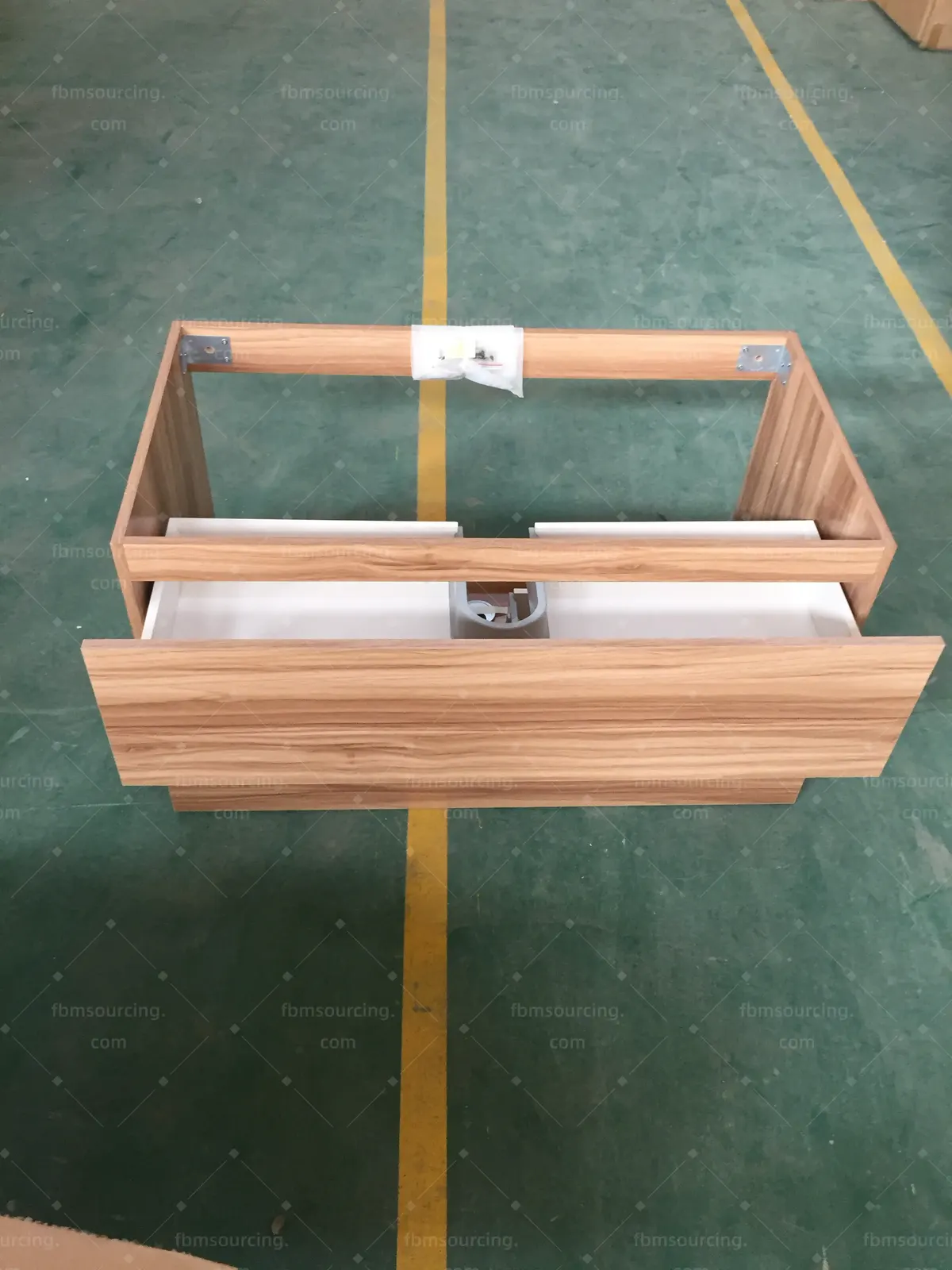
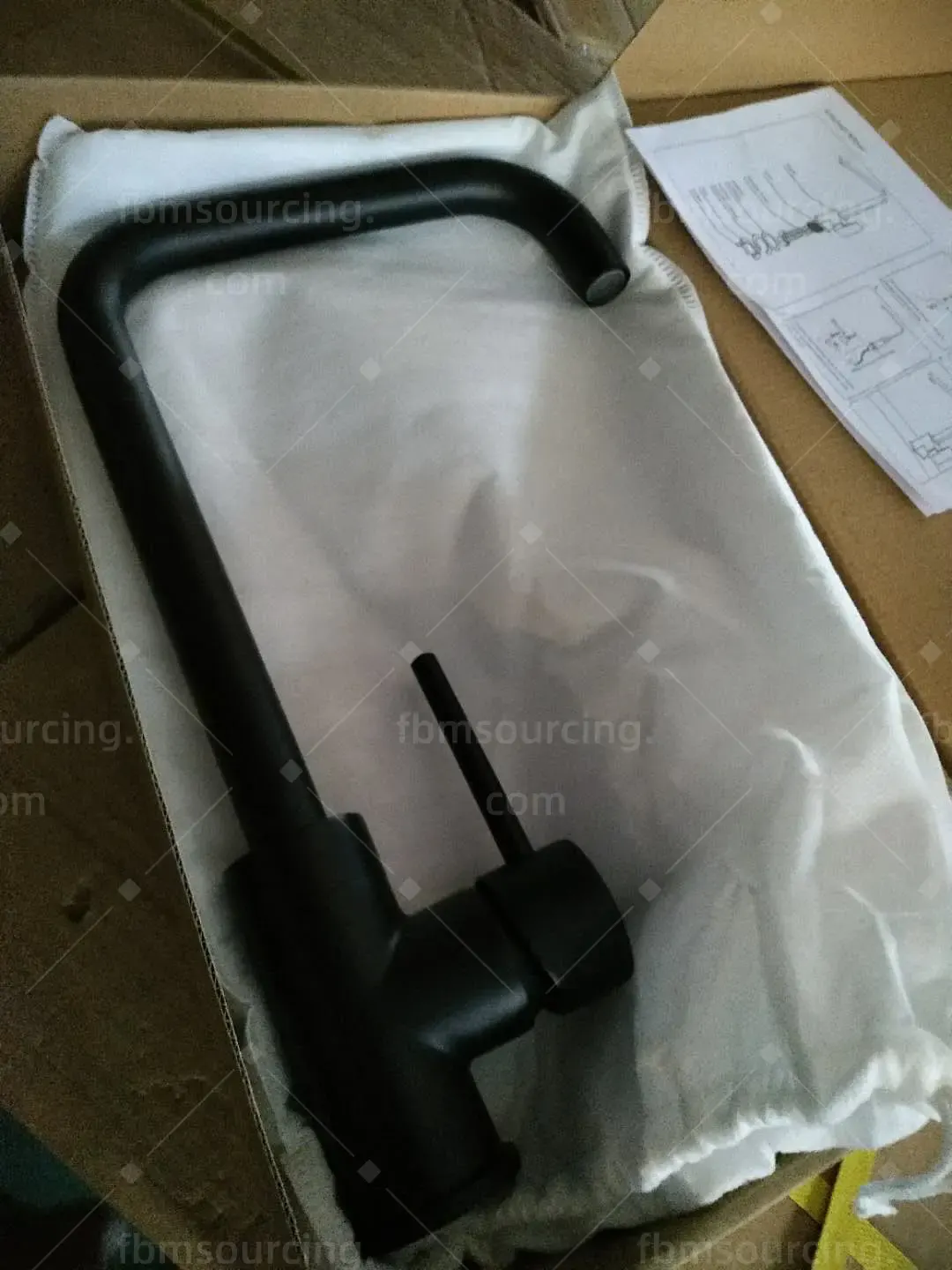
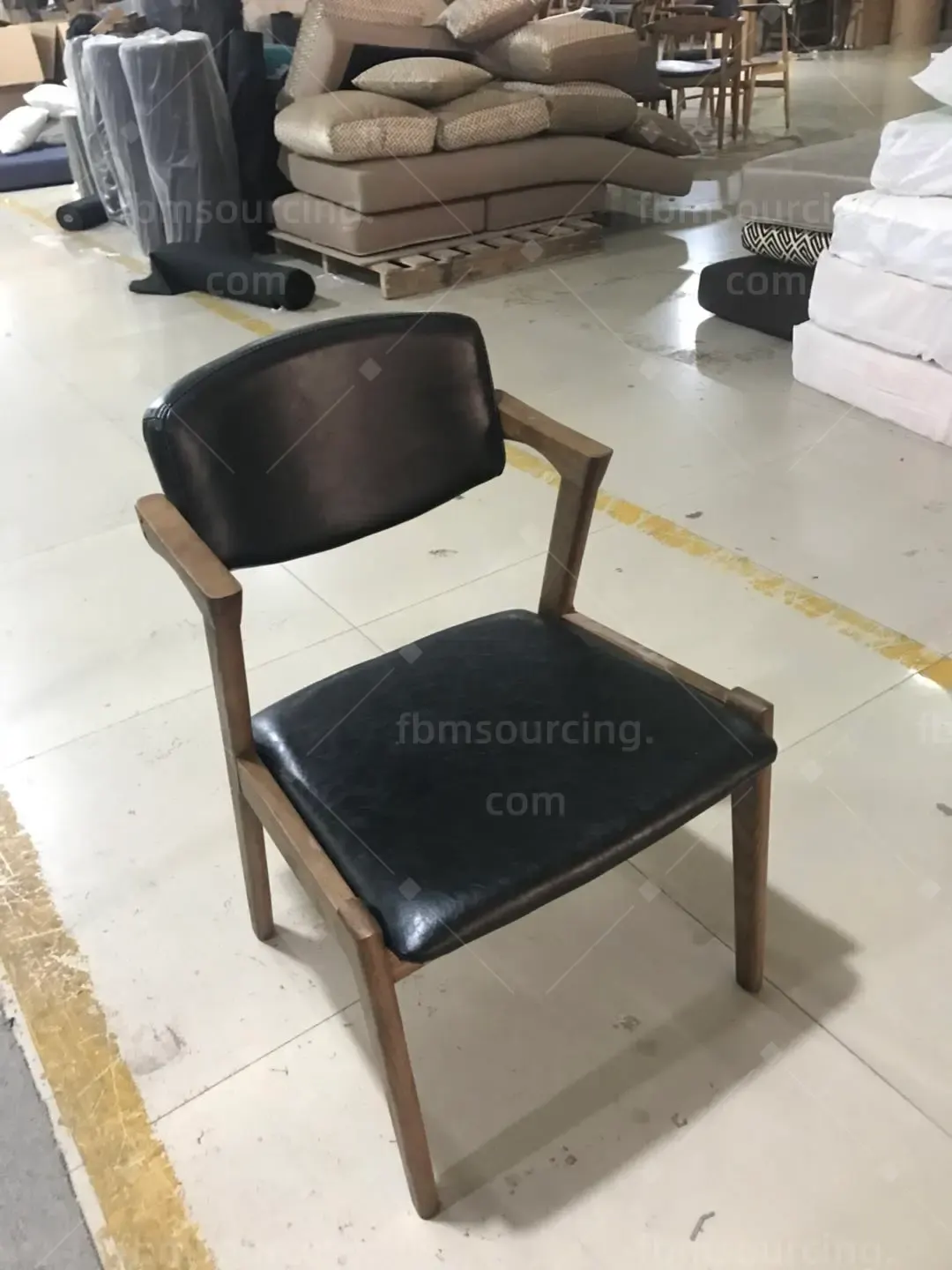
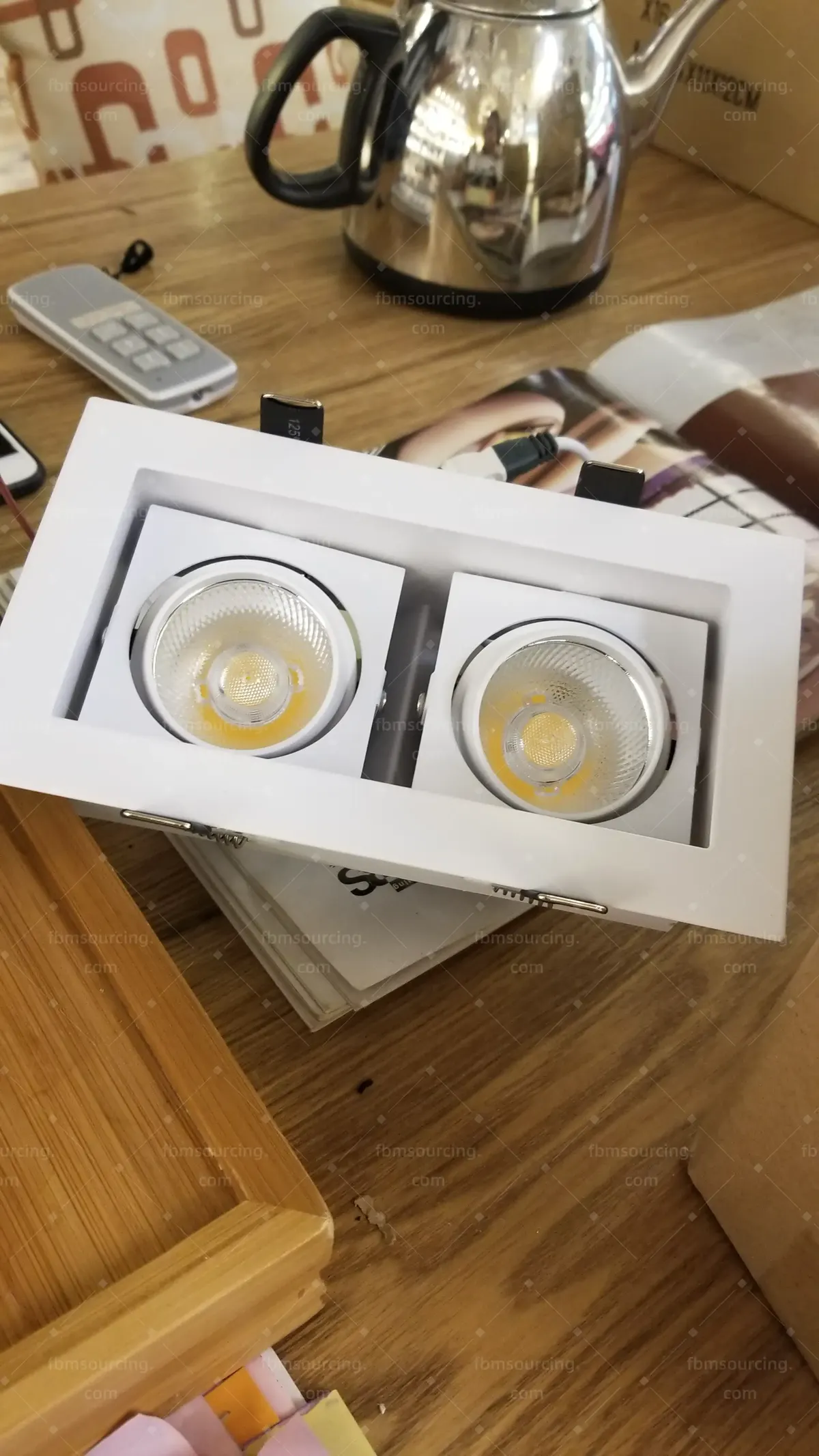
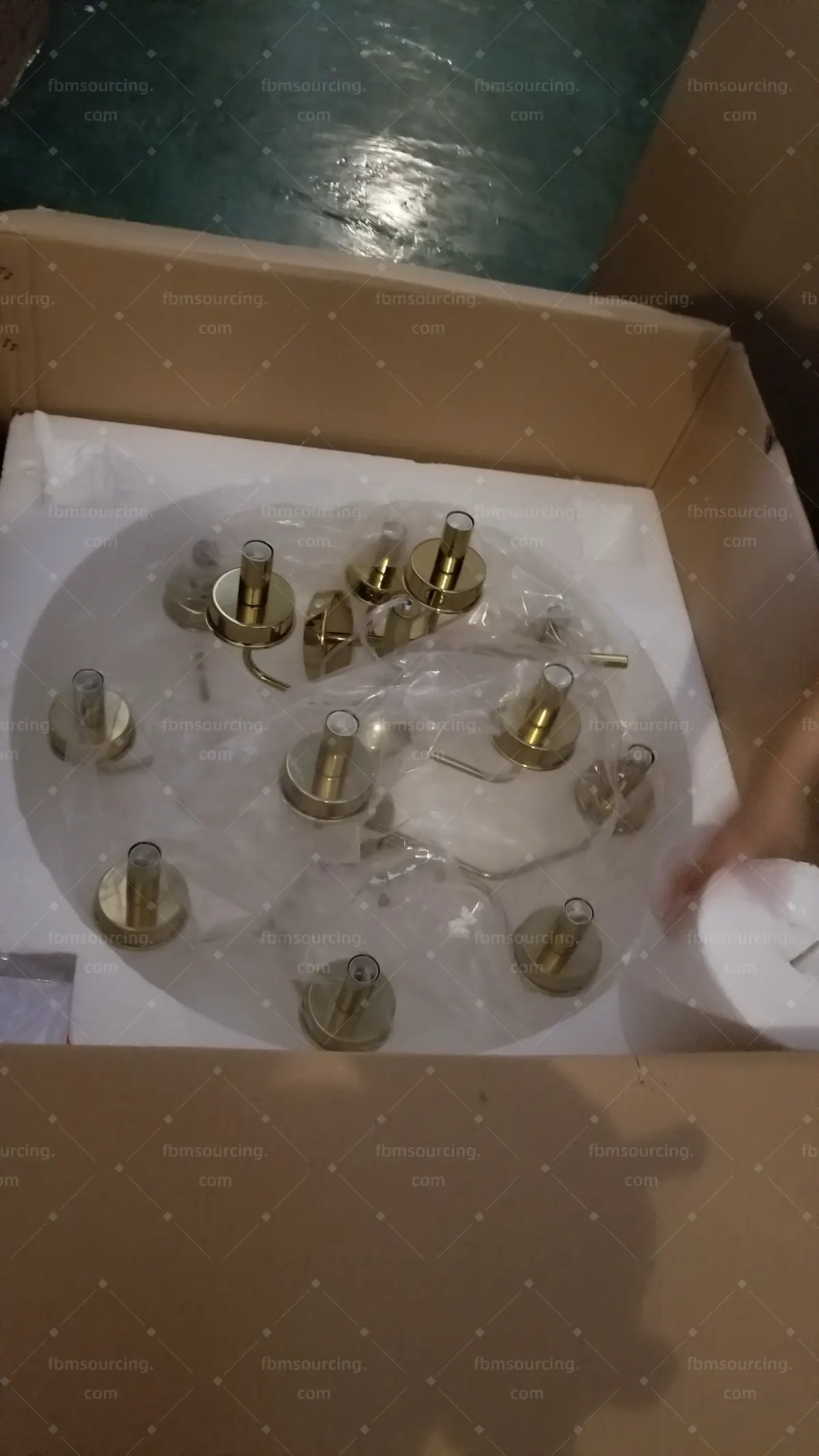
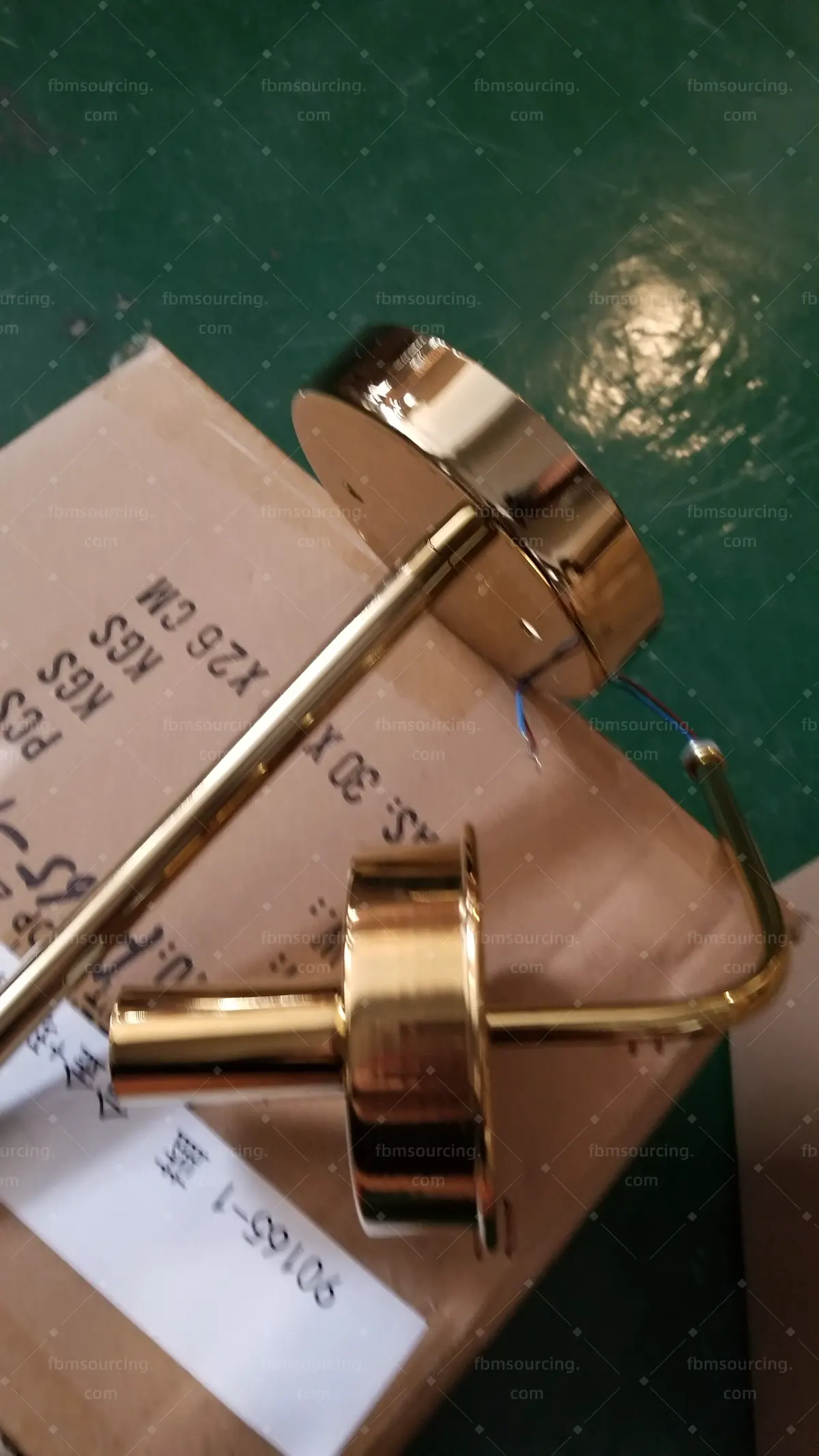
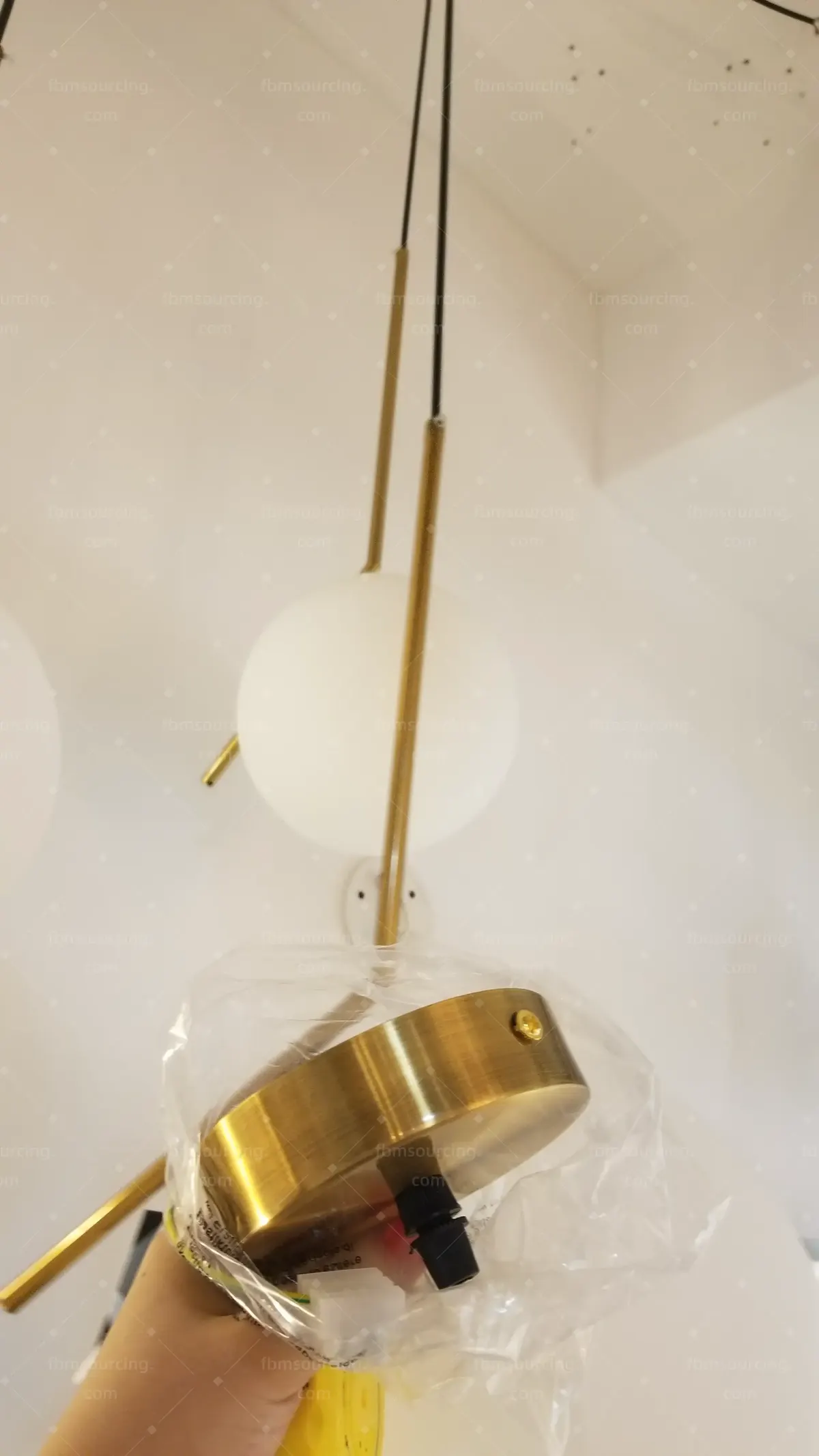
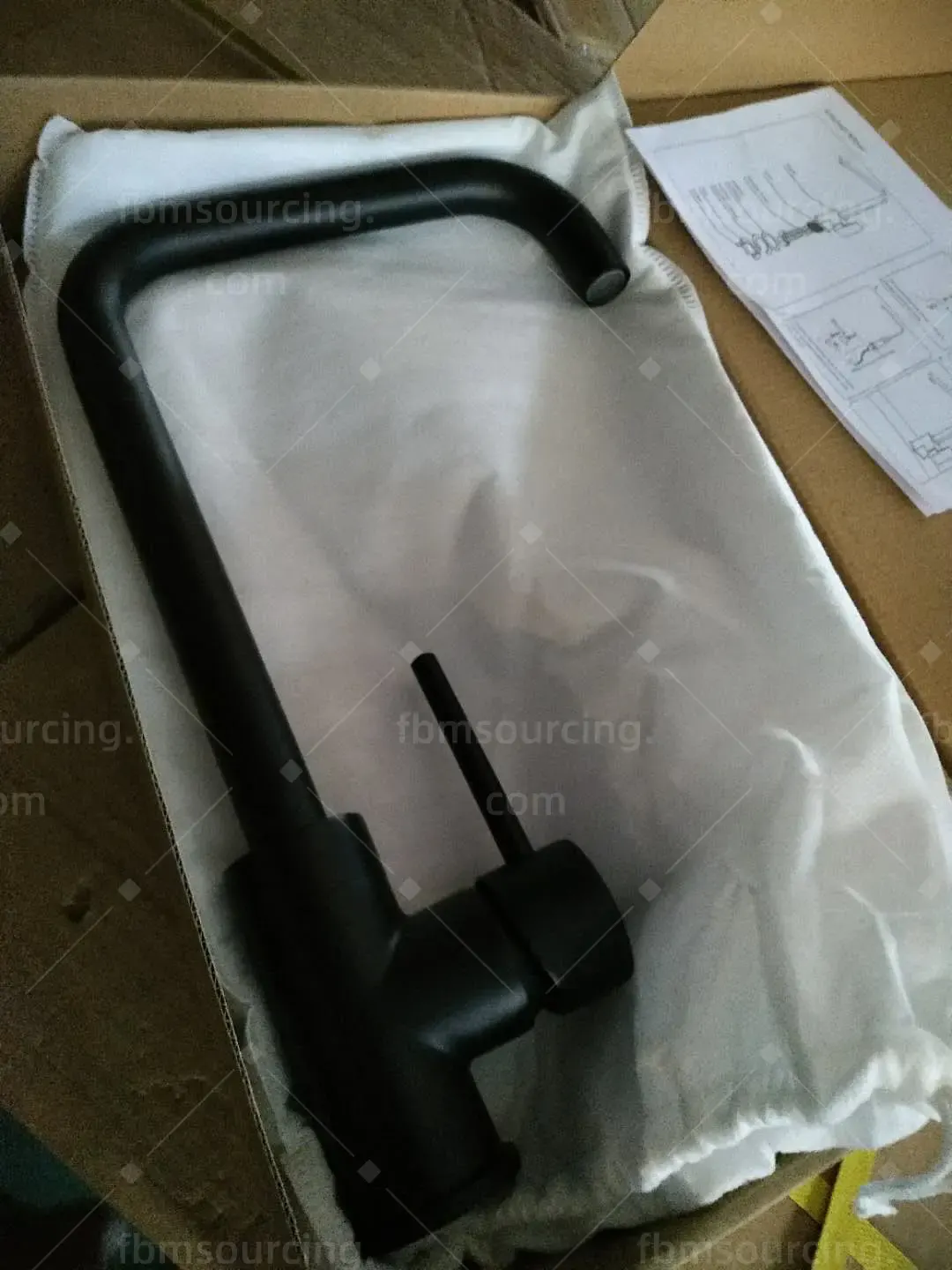
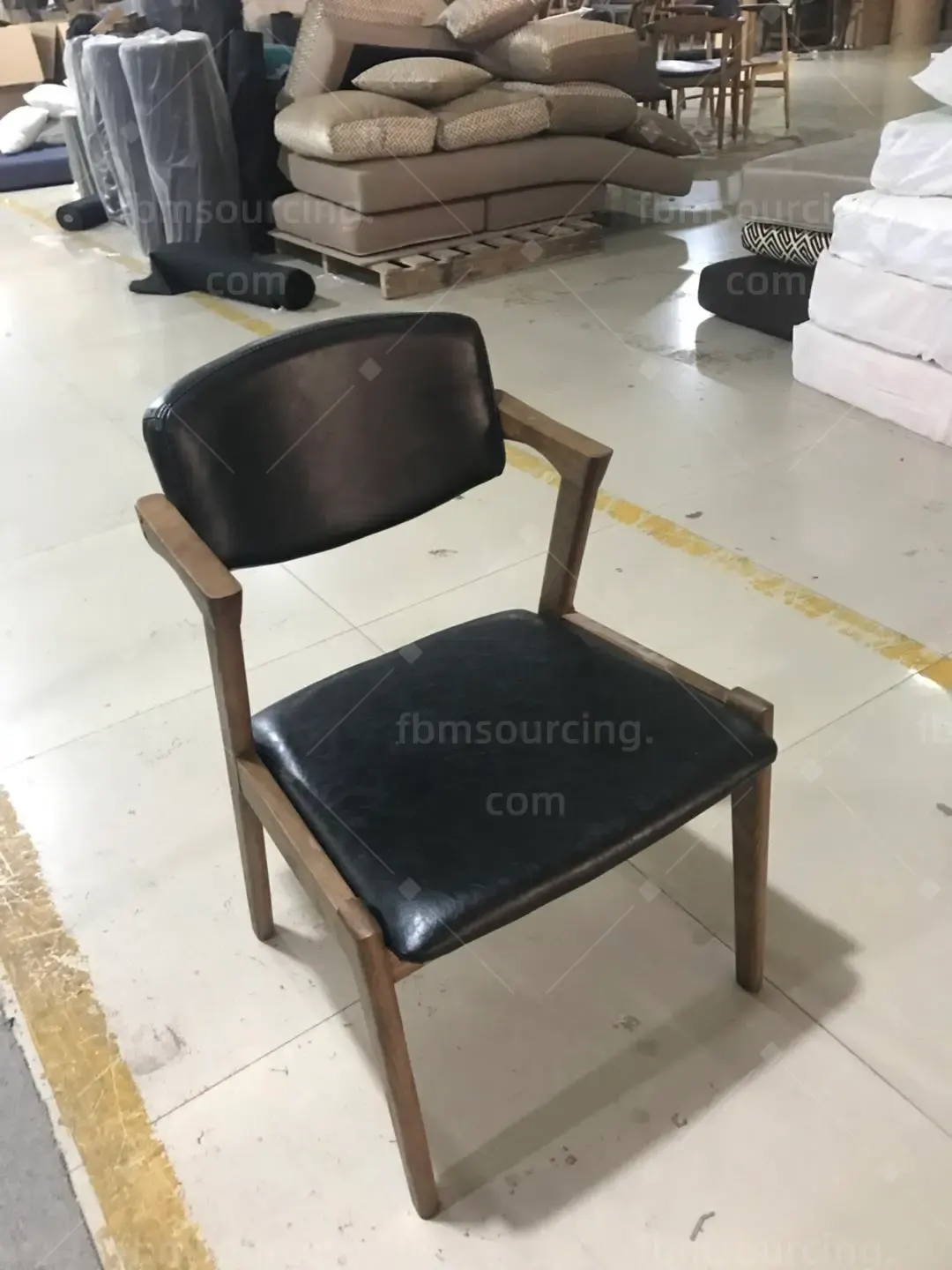
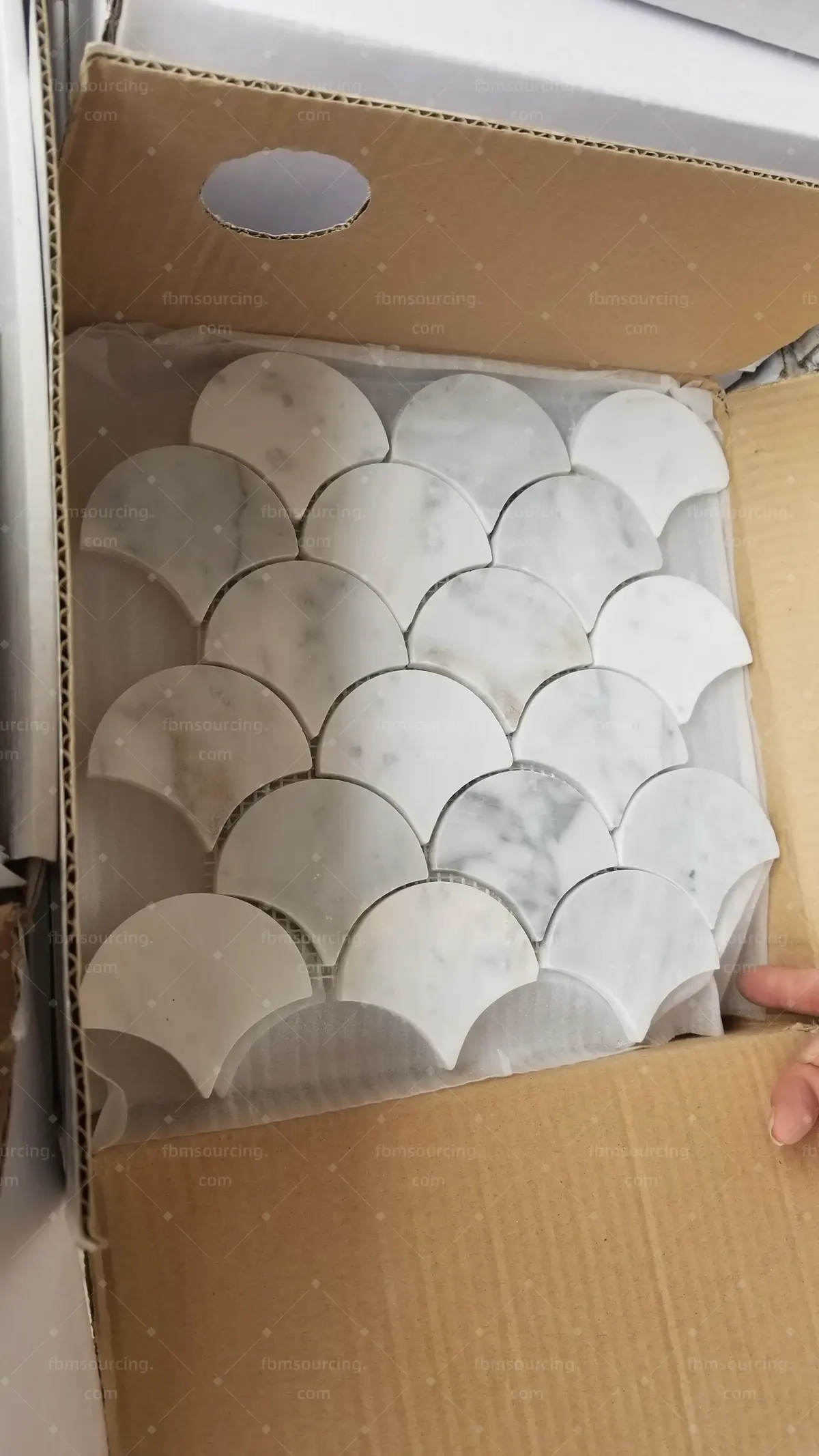
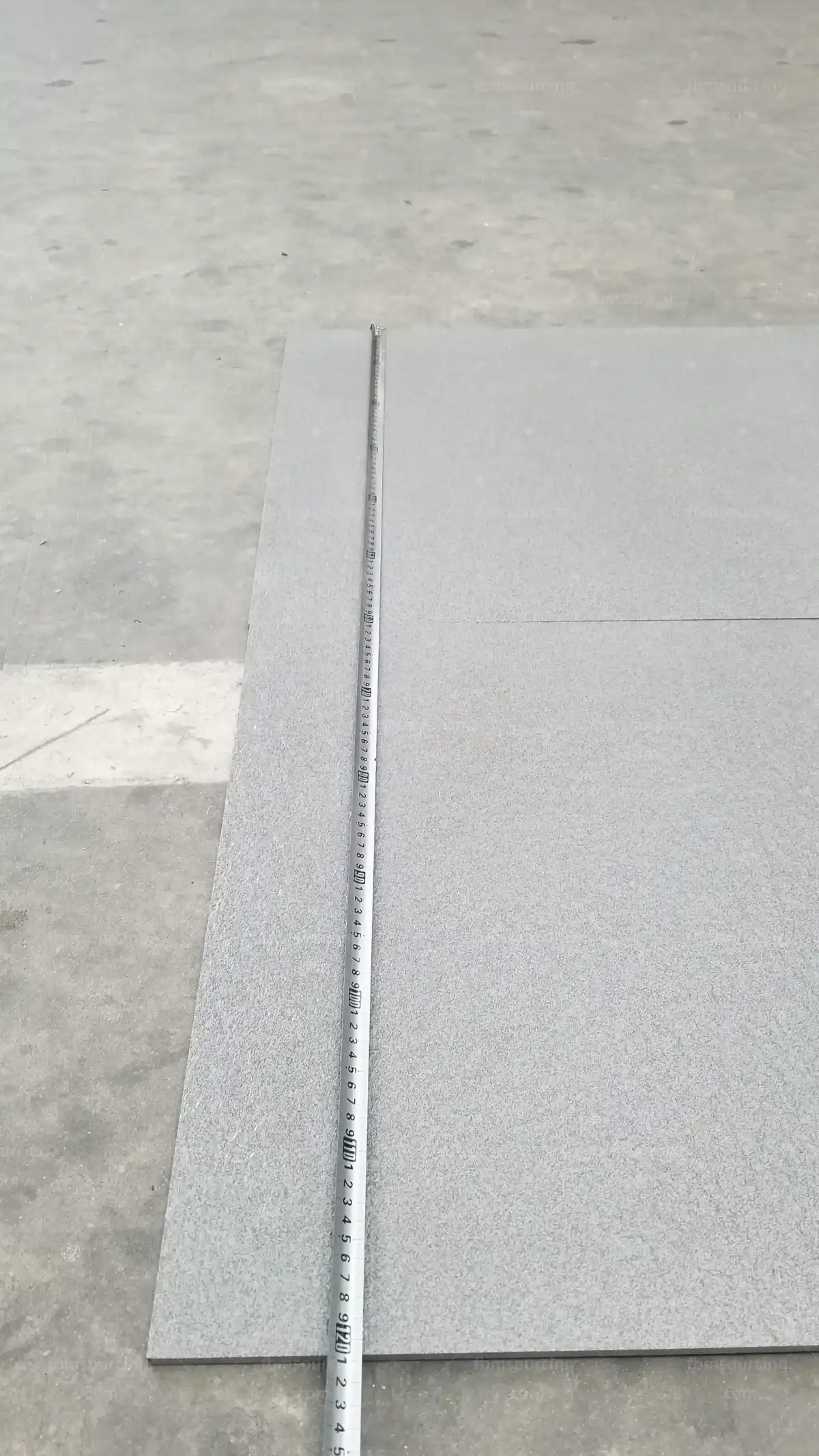
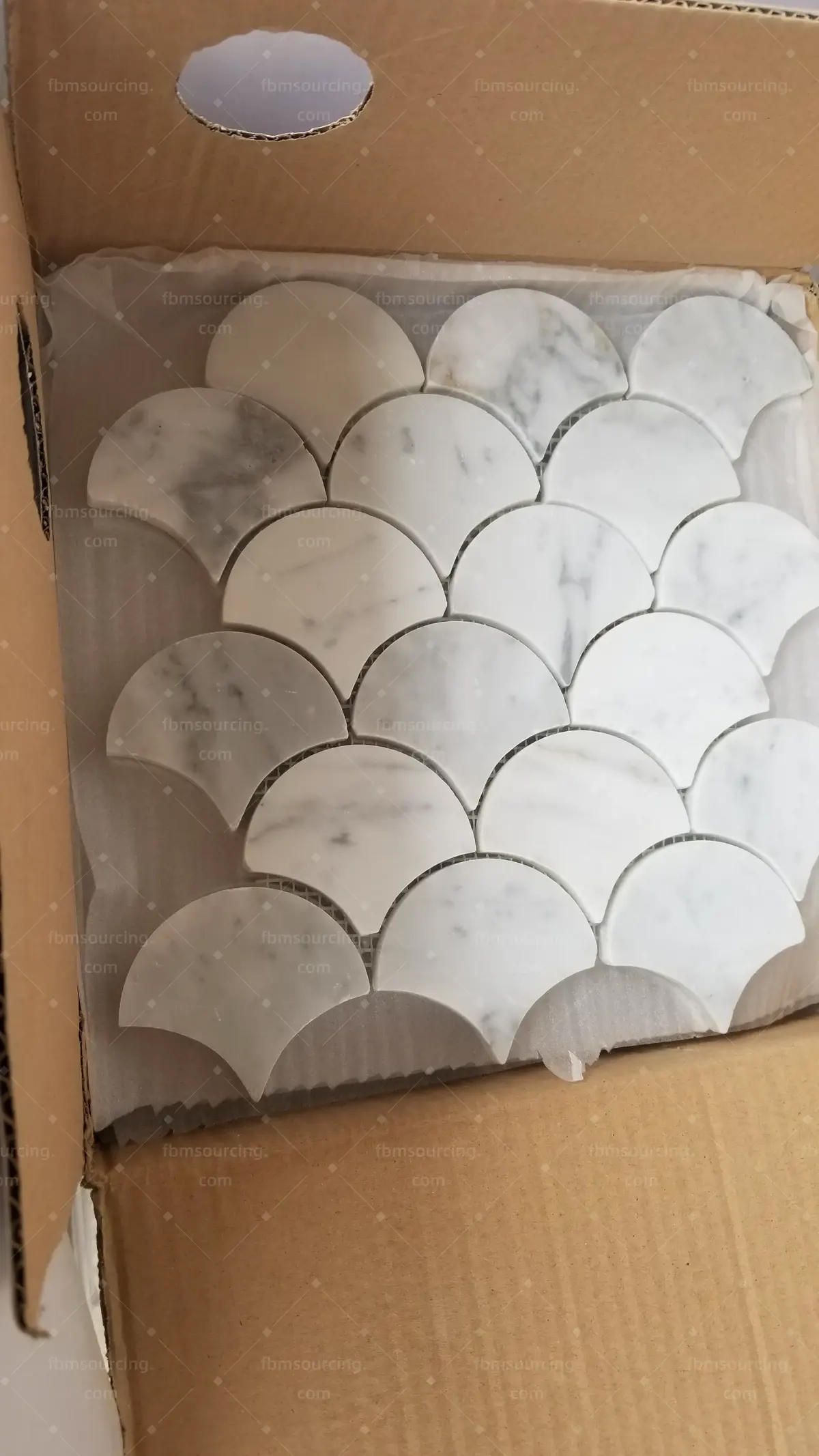
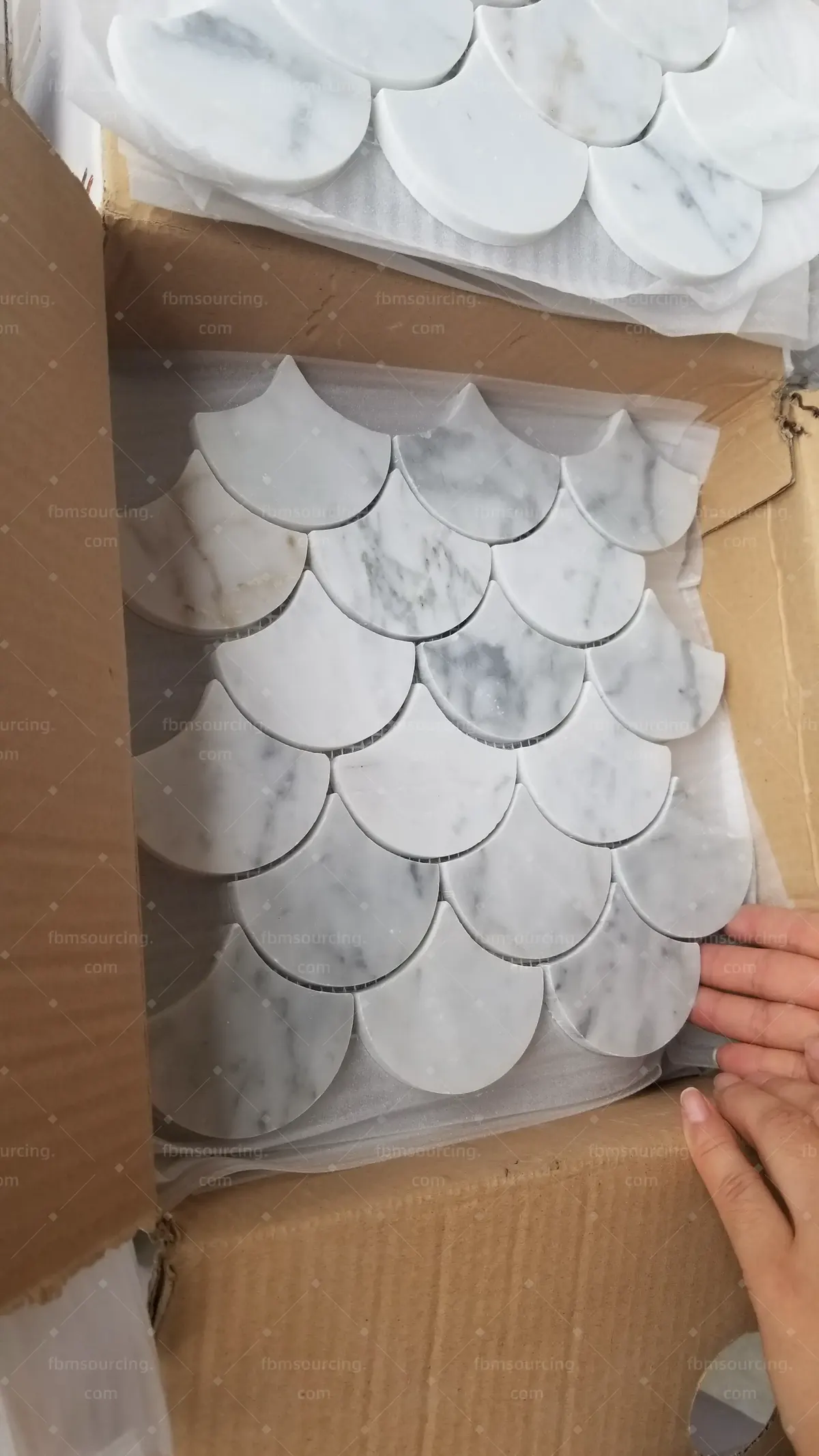
As each factory closed production, our inspectors ran product inspection in China against the approved samples — the same inspection discipline we apply on hotel FF&E procurement. Vanity cabinets were opened and measured: carcass dimensions, drawer runner action, basin cut-outs and board-edge sealing. Tapware and shower sets were unboxed and checked for finish consistency and certification marking. Tiles and mosaic sheets were gauge-measured for calibre, pattern alignment and mesh bonding; pool mosaics were checked for glaze consistency across production batches.
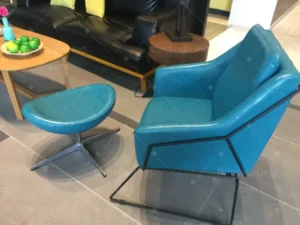
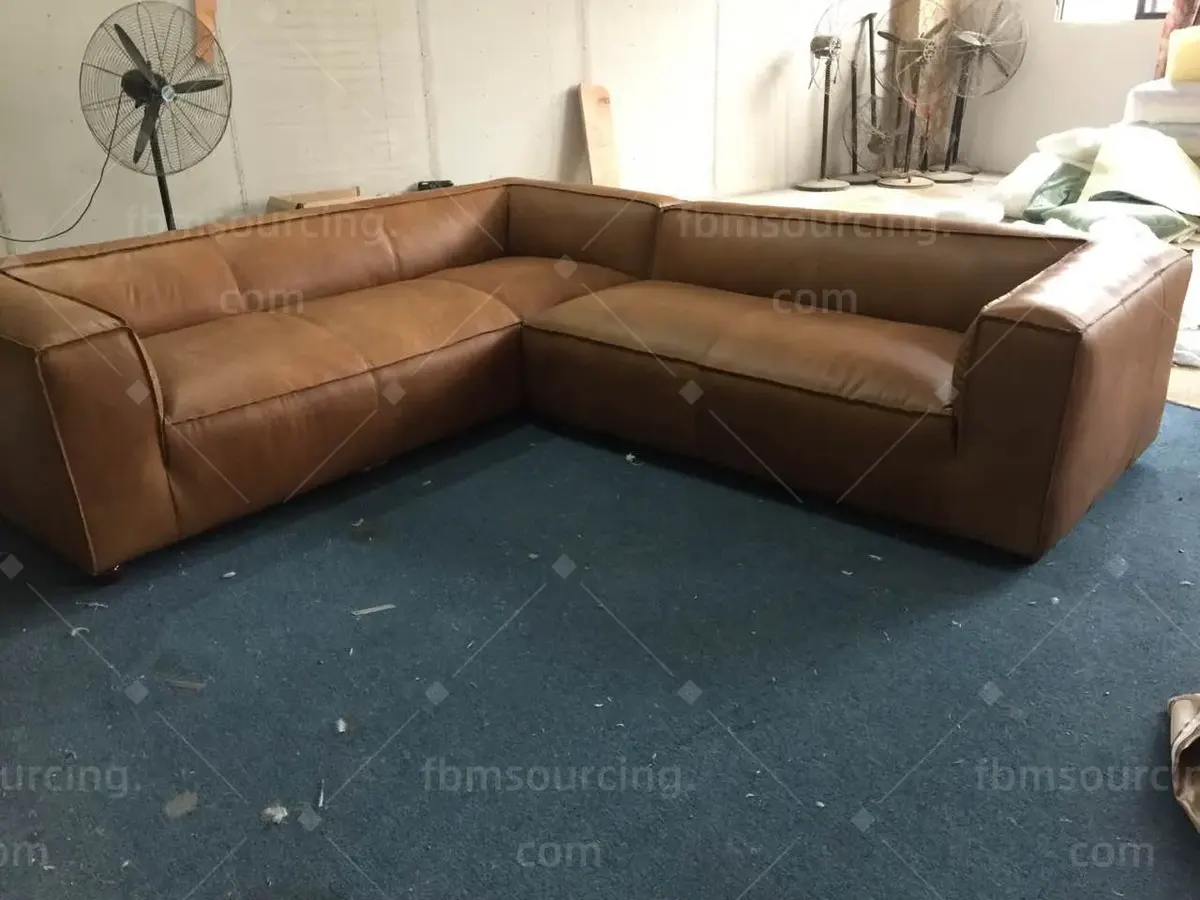
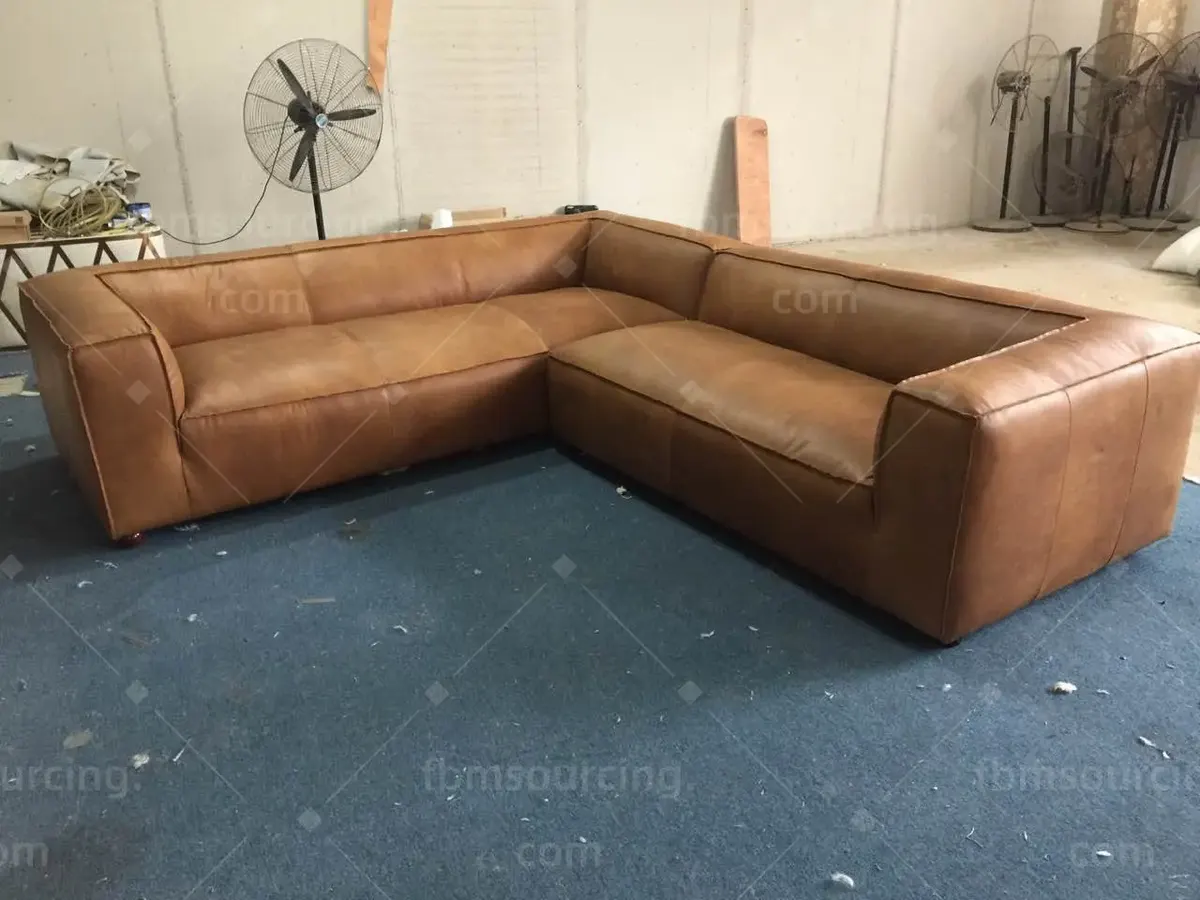
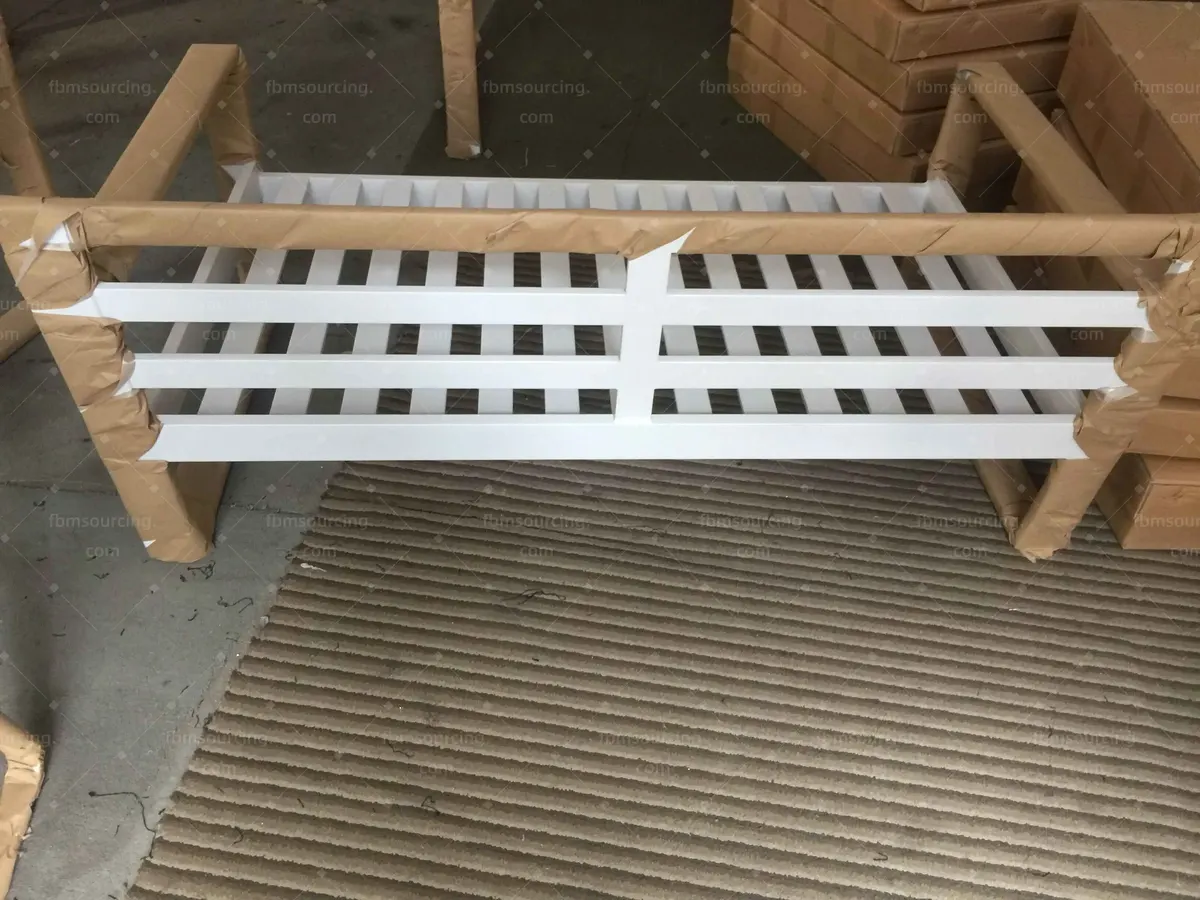
Downlights, pendants and ceiling fans were powered up and inspected together with their drivers and remotes. Curtains were checked against the confirmed drop, heading detail and stitch quality. The leather sectional sofa, dining chairs and outdoor furniture were inspected for frame integrity, stitching, foam density and finish. Defective pieces were rejected at the factory — before packing, while correction still costs the factory and not the project schedule. The photos below are from the actual factory inspections on this order.
Inspection on this order followed the same sampling logic we apply on commercial FF&E procurement: one hundred percent piece-check on high-value custom items — vanities, sofa, dining chairs — and statistical sampling with defined acceptance limits on volume categories such as tiles, mosaics and downlights. Every inspection produced a photographic record referenced back to the master procurement list, so the client approved each category from Australia with evidence, not assurances, before balance payments were released.

Container Loading and Shipping
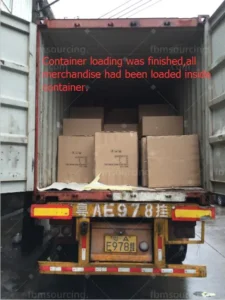
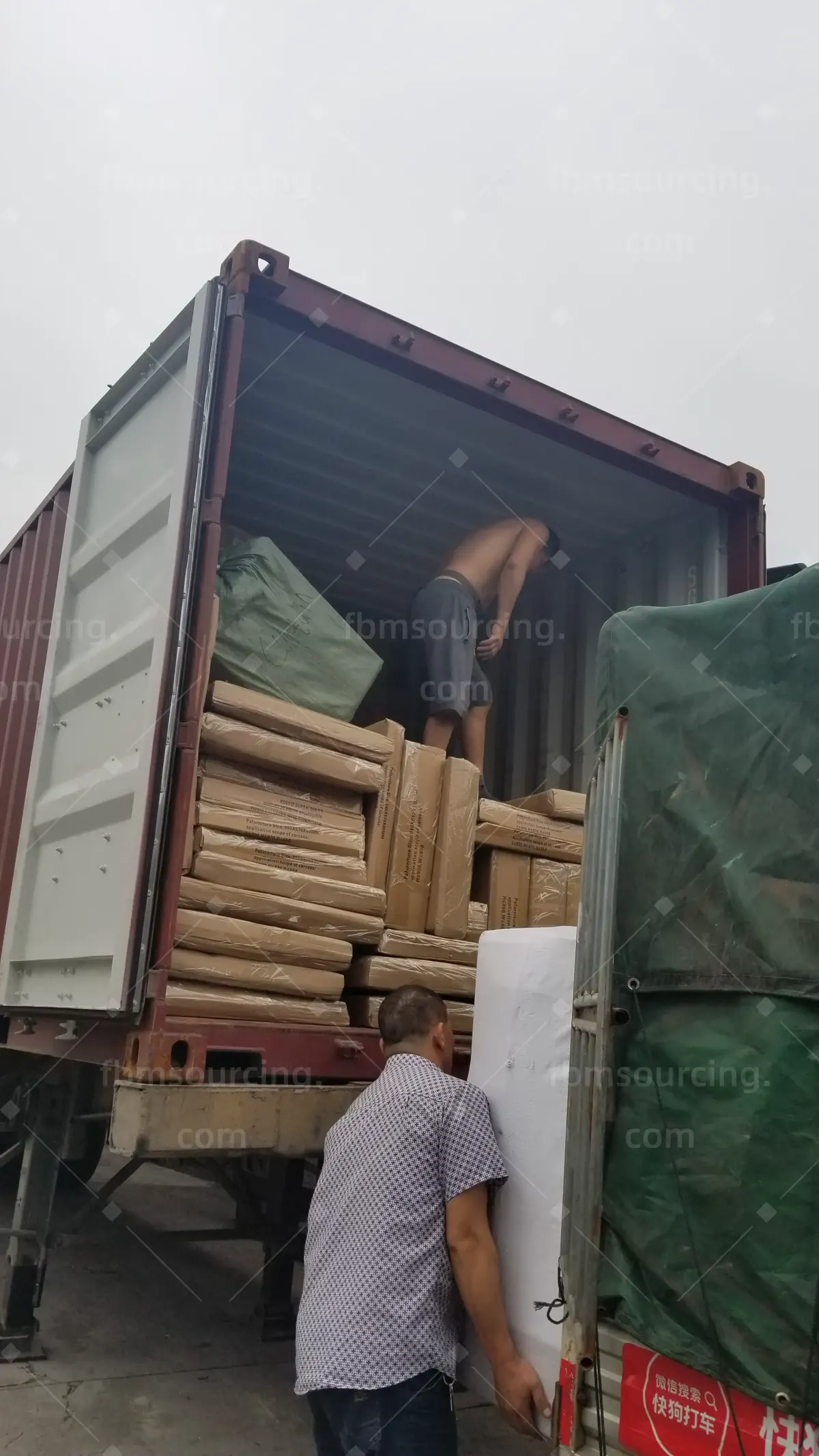
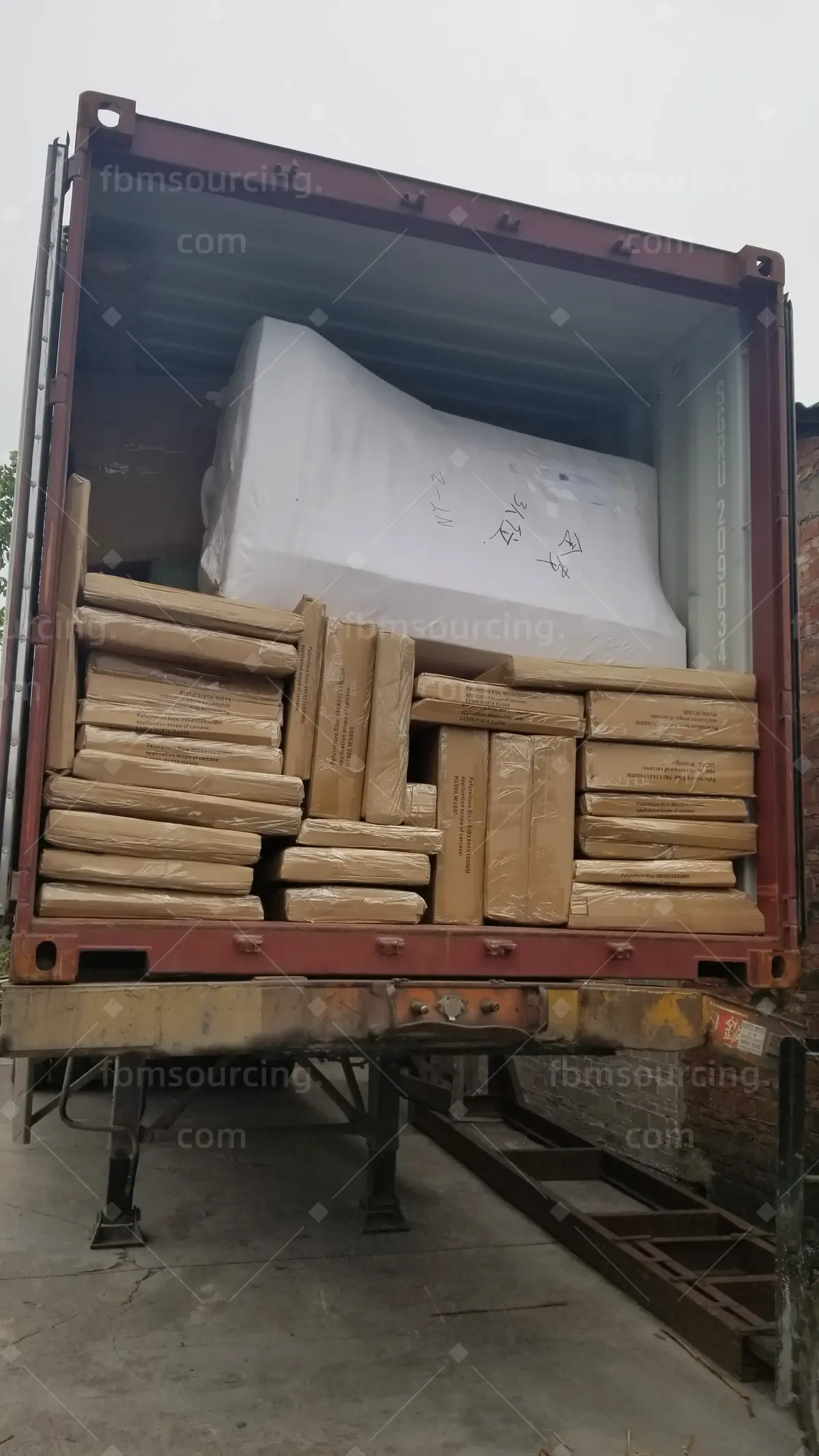
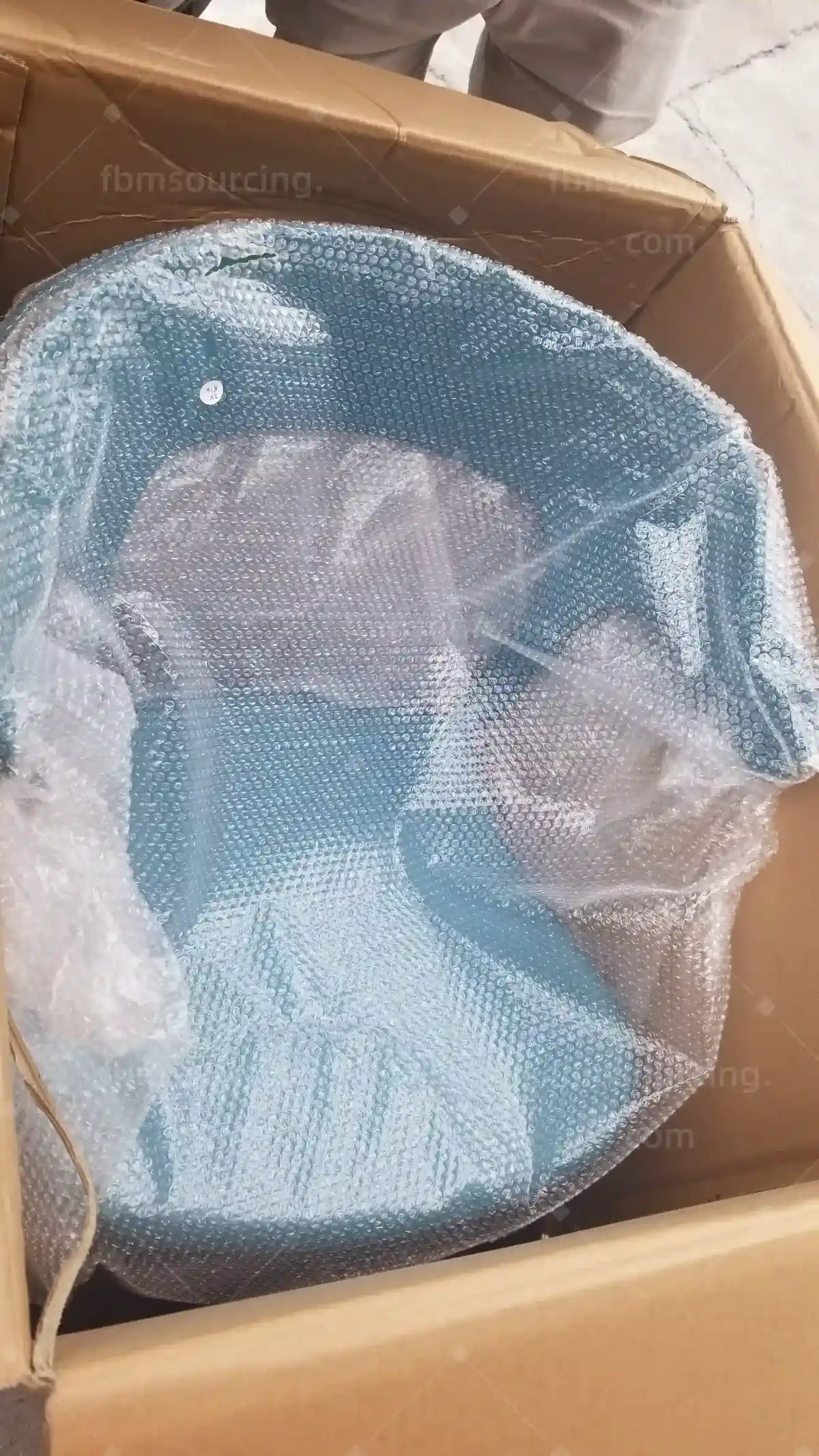
All categories were consolidated into one loading plan: tiles and mosaics palletised and strapped as bottom weight, cabinet carcasses and furniture wrapped with corner protection, sanitary ware and lighting buffered in reinforced cartons, and fragile pieces bubble-wrapped individually. The complete order shipped in two 40HQ containers.
Mid-project, the client needed to change the Australian destination port after production was already under way. Because FBM Sourcing controlled the freight booking and export documentation as part of the engagement, the routing was re-worked and documents re-issued without touching the factory schedule — the kind of flexibility a project buyer never gets when goods are scattered across a dozen unrelated suppliers, and a practical example of why experienced buyers appoint one China procurement agent to own the logistics chain end to end.
Container planning on a mixed order is a weight-and-volume exercise: tiles, mosaics and sanitary ware push a container to its payload limit long before it cubes out, while furniture, curtains and lighting fill volume at low weight. Splitting the order across two 40HQ containers with heavy palletised goods floor-loaded and light cartons stacked above kept both boxes inside road-legal axle weights at destination — a detail that avoids expensive re-handling at the port that first-time importers rarely see coming.
After-Sales Support
After shipment, FBM Sourcing remained the single point of contact for every category in the containers. Any transit damage or quality claim was handled by our team directly with the factory concerned — replacement parts or corrective action arranged on the factory’s account — so the client never had to negotiate with a Chinese supplier from Australia. On multi-category projects this matters more than any single unit price: accountability is only real when one party owns the outcome across the whole package.
Project Completion Photos
The complete package — bathroom vanities and toilets, WaterMark tapware and showers, floor and feature tiles, marble and pool mosaics, lighting, ceiling fans, curtains, cabinets, and indoor-outdoor furniture — was produced, inspected and shipped to schedule in two 40HQ containers, with a mid-project destination port change absorbed without delay to the build. One sourcing program replaced more than ten separate supplier relationships.
FBM Sourcing runs this model today for residential projects, apartment developments, hotels and commercial fit-outs across Australia, the USA, Europe and the Caribbean — see our floor and wall covering sourcing and living room furniture programs, or our Foshan furniture market guide for project buyers if you are planning a sourcing trip. To scope your own project, send your drawings, quantities, destination port and timeline — we respond with a supplier shortlist and preliminary cost frame within 3–5 business days.
From confirmed master list to container departure, the program ran approximately nine weeks — market selection and factory negotiation in week one, staggered order release across weeks two and three, production and rolling inspections through week eight, and consolidation, loading and export documentation in week nine. For a package spanning more than ten categories, that is a shorter critical path than most projects achieve managing three or four import suppliers directly, and every day of it was visible to the client through one point of contact.